 Ultimate guide
7 Reasons Personalized Dental Care Matters for Your Smile
Last Updated: November 4, 2026
Quick Summary
Personalized dental care matters because it targets your individual risks rather than the average patient's, so early detection, prevention, and treatment all fit your health history and goals. At Hour Dental, we build each plan around your medical history, risk factors, comfort needs, and preferences instead of a standard checklist.
- We review your dental history, medical history, and current medications before building your treatment plan.
- A staged treatment plan can spread care over time rather than requiring one large payment.
- We stabilize active problems first, then address function, and leave cosmetic work for last.
- Patients with gum disease or dry mouth often benefit from more frequent cleanings and closer monitoring.
- Ask which recommended item is most urgent and what happens if you delay each one.
Table of Contents
- What Personalized Dental Care Means in Practice
- 7 Reasons Personalized Dental Care Matters
- What Goes Into a Personalized Dental Treatment Plan
- How a Comprehensive Dental Exam Builds Your Health Picture
- Preventive Dental Care Matched to Your Risk
- Questions to Ask Your Dentist About Treatment Options
- Book a Visit That Starts With Your Story
- Frequently Asked Questions
What Personalized Dental Care Means in Practice
Personalized dental care is treatment built around your individual health history, risk factors, goals, and comfort rather than a standard checklist applied to every patient. At Hour Dental, we treat personalization as the starting point of every visit, not an upgrade. Below, we explain why personalized dental care matters and what a tailored appointment actually looks like.
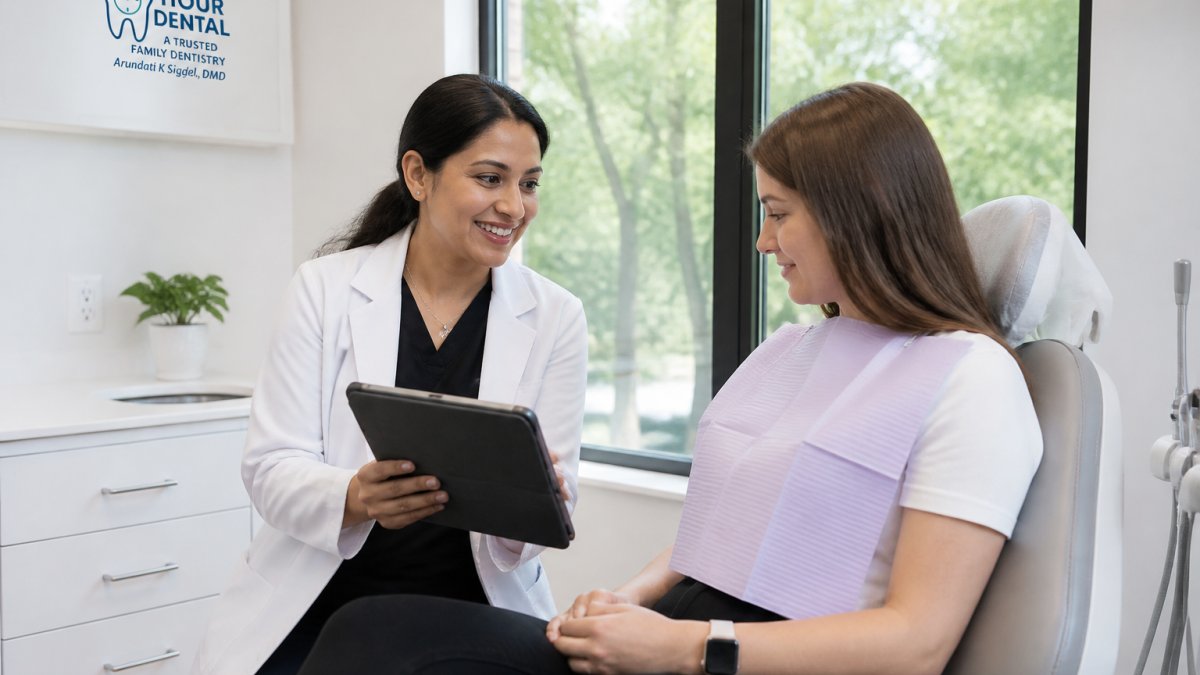
How a Tailored Visit Differs From a Routine Checkup
A routine checkup follows the same script for everyone: clean, count, and schedule the next visit. A tailored visit adjusts to you. We start by reviewing your dental history, medical history, and current medications, since conditions such as diabetes or dry mouth change how gums and teeth respond to treatment. We ask about habits like tooth grinding, diet, and flossing routines. Then we build an individualized treatment plan around what we find and what you want.
That difference shows up in small ways. Patients who feel anxious can ask about the pace of their visit and how their appointment is structured.
7 Reasons Personalized Dental Care Matters
Personalized dental care matters because it can target your individual risks rather than the average patient's. Here are seven reasons it can help:
- Early detection can improve. Knowing your history helps spot patterns, like recurring decay in the same area, before they become bigger problems.
- Prevention fits your risk level. Someone prone to gum disease needs a different recall schedule than someone with healthy gums and no history.
- Treatment recommendations match your goals. Cosmetic goals and restorative needs get weighed together, not handled in isolation.
- Comfort is planned, not improvised. Patients with dental anxiety get a visit structure designed to reduce stress.
- Costs can be planned. A staged treatment plan can spread care over time rather than requiring one large payment.
- Care works across life stages. Children, adults, and older patients have different needs, and one-size-fits-all dentistry ignores that.
- Long-term oral health can benefit. Consistent preventive care is generally associated with better lifelong dental health than reactive treatment alone.
Why One-Size-Falls-Short Dentistry Falls Short
The traditional one-size-fits-all approach assumes every mouth behaves the same way. It doesn't. Genetic factors, lifestyle factors, medications, and past treatment all shift your risk profile. When a practice skips the health history and treats every patient identically, early warning signs get missed and preventive care becomes generic advice.
A common mistake in busy offices is rushing patients through so fast that no one asks about grinding, diet changes, or a new medication. Those details are exactly what a patient-centered approach captures.
Here is a quick look at the seven reasons personalized dental care matters, as the article lays them out.
| Reason | What it means |
|---|---|
| Early detection | History helps spot patterns like recurring decay early |
| Prevention fits your risk | Recall schedule differs for gum disease vs healthy gums |
| Treatment matches goals | Cosmetic and restorative needs weighed together |
| Comfort is planned | Visit structure designed for anxious patients |
| Costs can be planned | Staged plan spreads care over time |
| Care across life stages | Children, adults, and older patients have different needs |
| Long-term oral health | Consistent preventive care linked to better lifelong dental health |
What Goes Into a Personalized Dental Treatment Plan
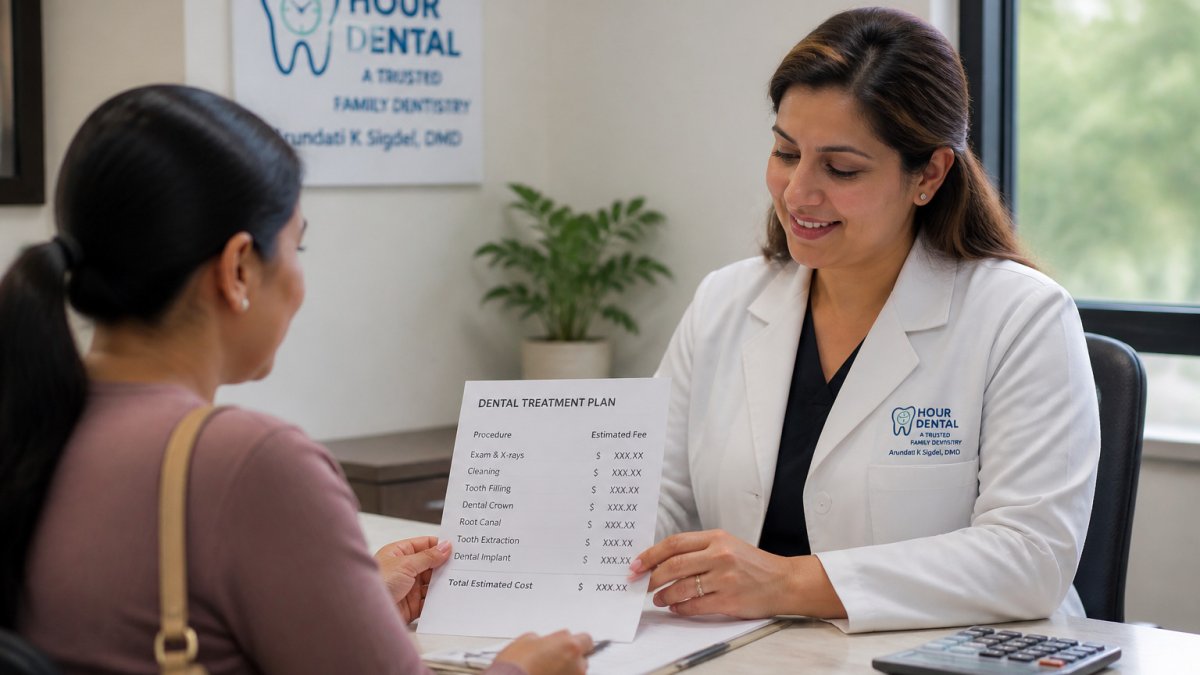
A personalized dental treatment plan is a written roadmap that sequences your care by urgency, risk, and preference, and the sequencing is the part that matters most. Two patients can have the same list of findings and still need different plans, because the order in which problems are addressed changes both the outcome and the cost.
A thorough plan typically includes:
- Health history review: medical conditions, medications, allergies, prior dental work, and any treatments (such as chemotherapy or bisphosphonate therapy) that affect healing or jaw health
- Risk assessment: your individual likelihood of tooth decay, gum disease, and enamel wear, based on history, diet, hygiene, saliva flow, and habits like tooth grinding
- Preventive schedule: how often you need routine dental check-ups and cleanings, calibrated to your risk rather than a fixed six-month calendar
- Restorative priorities: which issues need attention now, which can be monitored, and which depend on another treatment finishing first
- Cosmetic goals: how smile aesthetics fit alongside functional needs, and whether cosmetic work should wait until gum health and bite stability are addressed
- Comfort accommodations: sedation options, appointment pacing, or shorter visits for anxious patients
How the Pieces Become a Sequence
The plan is built in layers. First we stabilize active problems, active decay, infection, or bleeding gums, because elective work on an unstable foundation tends to fail.
That order is not arbitrary. A crown placed on a tooth with untreated gum disease may loosen as the gum and bone continue to change.
We build the plan with you, not for you. Patients often ask whether treatment can be staged around budget or comfort, and this is a reasonable question to raise with your dentist.
How a Comprehensive Dental Exam Builds Your Health Picture
A comprehensive dental exam is one way dentists build a picture of your oral health. Exams can include an oral cancer screening, gum health measurement, bite and jaw assessment, imaging, and a review of your medical and dental history.
That data turns into a picture of your oral health that we can track over time. Changes in gum pocket depths, new areas of wear from tooth grinding, or shifting restorations all tell a story. For a closer look at visit timing and what each appointment covers, our routine dental checkup frequency guide explains how often to go and what happens at each visit.
Preventive Dental Care Matched to Your Risk
Preventive dental care works best when it's calibrated to your risk level, not a fixed calendar. Patients with healthy gums and no decay history may do well with standard recall intervals. Patients with gum disease, dry mouth, or a history of frequent cavities often benefit from more frequent cleanings and closer monitoring.
What Risk-Matched Prevention Looks Like Across Life Stages
The same principle plays out differently depending on who you are and what your mouth is doing:
- Children and teens: prevention focuses on sealants, fluoride timing, and coaching on habits, with recall set by cavity history rather than age alone.
- Adults with stable oral health: standard cleanings and exams, with home care centered on brushing twice daily, flossing, and limiting sugary drinks.
- Adults with gum disease or dry mouth: shorter recall intervals, more frequent periodontal measurements, and home-care guidance aimed at plaque control and saliva support.
- Older adults: prevention accounts for medication-related dry mouth, root decay, and dexterity changes that affect brushing and flossing.
- Pregnancy: routine care is generally safe and often encouraged, but timing of elective treatment and any needed imaging should be discussed with both your dentist and prenatal provider.
- Patients with dental anxiety or accessibility needs: shorter, more frequent visits can replace longer appointments that patients avoid altogether.
At home, the basics still matter: brushing twice daily, flossing, and limiting sugary drinks. But the emphasis shifts by patient. Someone with enamel erosion needs different guidance than someone with active gum inflammation. Our preventive dentistry services and general dentistry services are described on their pages.
How Personalization Affects Cost and Insurance
Individualized plans can change what you pay, but not always in the direction patients expect.
A few practical points help patients make informed cost decisions:
- Ask how your plan's annual maximum and frequency limits apply to the recall interval your dentist recommends.
- Ask whether a recommended service is preventive, restorative, or elective, since coverage often differs.
- Ask for a phased plan when cost is a barrier, so urgent care happens first and elective work is scheduled later.
- Ask what happens if you wait, some monitoring is safe, and some is not, and the difference should be explained to you.
Personalization does not guarantee lower costs, and it is worth being skeptical of anyone who promises it does. What it can do is align spending with your actual risks, so money goes toward the problems most likely to affect you.
Watch out: a recommendation for more frequent cleanings should come with a reason, such as gum pocket measurements, dry mouth, or a history of recurring decay, so you can judge whether the added visits are worth the added cost.
Questions to Ask Your Dentist About Treatment Options
Good questions make shared decision-making possible. Before agreeing to any treatment, ask:
- What are my treatment options, and what are the trade-offs of each?
- Why do you recommend this option for me specifically?
- What happens if we wait or monitor this instead?
- How does my medical history affect this recommendation?
- What will this cost, and what does insurance cover?
- What can I do at home to improve my long-term oral health?
If dental anxiety makes it hard to speak up, say so. Our guide on how to manage dental anxiety covers breathing exercises, sedation options, and simple ways to talk to your dentist. A good clinician welcomes questions and adjusts the pace.
Watch out: skipping a second opinion or rushing into extensive treatment without understanding the alternatives can lead to unnecessary work. Ask for the reasoning behind each recommendation.
Book a Visit That Starts With Your Story
At Hour Dental, we serve the Dundalk, Highlandtown, and Baltimore County community, with same-day emergency dental care for urgent pain and a comfortable, modern environment for patients. Dr. Arundati Kharel Sigdel leads Hour Dental.
If you have been putting off care because past offices rushed you, we would like to change that. Reach out through our contact page to schedule a visit, and we will start by asking about your history, your goals, and what would make you comfortable.
Frequently Asked Questions
What does personalized dental care mean?
Personalized dental care means your dentist builds each visit and treatment recommendation around your health history, lifestyle, risk factors, goals, and comfort level rather than applying one standard routine to every patient. It starts with a comprehensive dental exam and a conversation about what matters to you, then shapes preventive care, restorative work, and cosmetic options around that picture. The result is care that fits your actual needs instead of a generic checklist.
What factors affect an individual dental care plan?
A personalized dental treatment plan considers your dental history, medical history, current medications, lifestyle factors like smoking or diet, genetic factors such as family patterns of gum disease, existing restorations, bite and grinding habits, and your own goals for your smile. Your comfort level and budget also shape which treatment options make sense. Because these factors change over time, the plan should be reviewed at regular dental visits rather than set once and forgotten.
How can personalized preventive care help protect oral health?
Preventive dental care works best when it matches your risk level. Someone with a history of gum disease may need more frequent cleanings and closer monitoring than someone with no decay history, while a patient who grinds their teeth may need a nightguard alongside routine care. Tailoring check-up frequency and home care guidance to your actual risk can help identify problems earlier, when they may be simpler to address.
What questions should I ask my dentist about my treatment options?
Ask what each option involves, how long it is expected to last, what happens if you wait, and what the total cost will be including any follow-up visits. Ask whether the recommendation is based on your specific risk factors or a standard protocol, and whether a less invasive option exists. It also helps to ask who will perform the work and what your insurance covers. Shared decision-making works best when you leave with clear answers.
Your smile has a history worth understanding. Get started with Hour Dental and a care plan built around you, from your first exam to lifelong preventive care.