 Ultimate guide
Routine Dental Checkup Frequency Guide
Last Updated: October 23, 2026
Quick Summary
Most adults and children should have a dental checkup every six months, which gives your dentist two chances a year to catch small problems before they become expensive ones. Your dentist may shorten or lengthen this interval based on your gums, cavity history, and medical history.
- Six months is the default recall interval for healthy adults and children with no active gum disease.
- Patients with periodontal disease may need periodontal maintenance at three- to four-month intervals instead of a routine cleaning.
- A dental checkup includes a medical review, visual exam, periodontal probing, X-rays when due, and a professional cleaning.
- Call your dentist before your scheduled visit if you notice bleeding gums, persistent bad breath, or a tooth sensitive to hot or cold.
- Book the next visit before you leave the office and ask for the next two recall dates at checkout.
Table of Contents
- How Often Should You Go to the Dentist?
- Why a Dental Checkup Every Six Months Is the Standard
- How Often Should You Get Your Teeth Cleaned?
- What Happens During a Dental Checkup
- Who Needs More Frequent Visits
- Signs You Should Not Wait for Your Next Scheduled Visit
- Building a Checkup Routine That Sticks
- Frequently Asked Questions
How Often Should You Go to the Dentist?
The short answer: most adults and children should have a dental checkup every six months. That schedule gives your dentist two chances a year to catch small problems before they become expensive ones, and it is the interval most U.S. dental practices build their recall systems around.
The longer answer depends on your gums, your history, and how your body responds to plaque. The honest version of this advice is that "every six months" is a starting point, not a universal rule. Below, we'll show you exactly how dentists decide on a recall interval, what happens at each visit, and the warning signs that mean you should not wait.
The Baseline: Every Six Months
Six months is the default recall interval for healthy adults and children with no active gum disease, no history of frequent cavities, and no conditions that affect oral healing. The reasoning is practical rather than magical: plaque hardens into tartar within roughly 24 to 72 hours if it is not disturbed, and tartar can only be removed with professional instruments. A six-month visit catches buildup before it drives gum inflammation deep enough to damage bone.
When Your Dentist May Adjust the Schedule
Your dentist may shorten or lengthen the interval based on what the exam and X-rays show. Common reasons to move to three or four months include a history of periodontal disease, dry mouth from medication, smoking, diabetes, or a run of cavities in a short window. Patients with excellent home care and no risk factors sometimes move to a nine- or twelve-month schedule, but that is a clinical decision, not a preference.
Why a Dental Checkup Every Six Months Is the Standard
The case for a dental checkup every six months rests on how quietly most dental disease progresses. Early cavities and early gum inflammation usually cause no pain. By the time something hurts, the problem has often moved past prevention and into restoration, which costs more and takes longer.
A six-month rhythm also matches how insurance plans and recall software are built, so appointments are easier to schedule and less likely to fall through the cracks. The real value, though, is diagnostic: two exams a year means a small cavity is caught while it is still small.
How Often Should You Get Your Teeth Cleaned?
Most patients should have their teeth professionally cleaned every six months, paired with the exam. That is the standard prophylactic cleaning for someone with healthy gums.
If you have been diagnosed with periodontal disease, your dentist may recommend periodontal maintenance instead of a routine cleaning, typically at three- to four-month intervals. That is a different procedure with a different goal: managing an active condition rather than preventing one. Our team walks patients through which type of cleaning they are actually receiving, because the two are often confused and the distinction matters for both your gums and your budget.
What Happens During a Dental Checkup
A dental checkup is a structured assessment of your teeth, gums, bite, and soft tissues, followed by a professional cleaning. The exam portion is diagnostic; the cleaning is preventive. Both usually happen in the same visit, but they are not the same service.
Here is what a typical visit looks like:
- Medical and medication review. New prescriptions, conditions, and allergies change what your dentist looks for and how treatment is planned.
- Visual exam of teeth and soft tissues. Your dentist checks each tooth surface and screens the tongue, cheeks, and palate for unusual changes.
- Periodontal probing. A small measuring tool checks the pocket depth between each tooth and the gum. Deeper pockets suggest gum disease.
- X-rays, when due. Bitewing X-rays catch decay between teeth that a visual exam cannot see. Your dentist decides the interval based on your risk.
- Professional cleaning. Plaque and tartar are removed above and, where appropriate, just below the gumline, then the teeth are polished.
- Fluoride or sealants, if indicated. These are recommended based on cavity risk, not applied automatically.
- Findings and a plan. You should leave knowing what was found, what (if anything) needs treatment, and when to return.
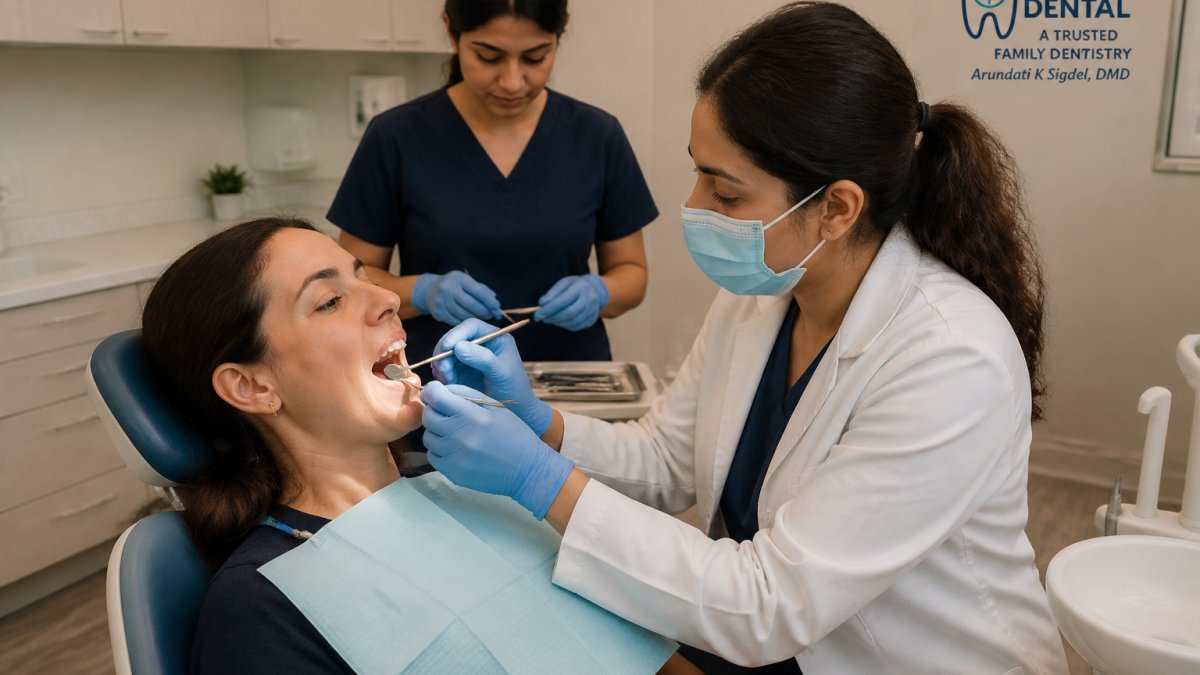
The Exam and the Cleaning Are Two Different Appointments
Many patients assume the cleaning is the whole visit. It is not. The cleaning removes what your brush missed; the exam is what determines whether anything is wrong. If you ever leave a visit without anyone looking at your gums or asking about changes since last time, that is worth raising.
Who Needs More Frequent Visits
Some patients genuinely need a shorter recall interval, and skipping it is where problems compound. You likely need visits more often than every six months if you:
- Have been treated for periodontal disease
- Smoke or use tobacco products
- Have diabetes or another condition that affects healing and infection risk
- Take medications that cause dry mouth
- Have had multiple cavities filled in the past year
- Are pregnant, since hormonal changes can affect gum tissue
- Wear braces or clear aligners
If any of these apply, ask your dentist what interval they recommend and why. A good answer will reference your specific pocket depths, cavity history, or medical history, not a generic policy.
Signs You Should Not Wait for Your Next Scheduled Visit
Pain is not the first symptom of most dental problems, it is a late one. Call your dentist before your scheduled visit if you notice:
- Bleeding gums when you brush or floss
- Persistent bad breath that does not improve with brushing
- A tooth that is sensitive to hot or cold and the sensitivity is getting worse
- A visible chip, crack, or dark spot on a tooth
- Swelling, a bad taste, or throbbing near a tooth
- Jaw pain or clicking that has started recently
For patients dealing with sudden pain or a broken tooth, Hour Dental offers same-day emergency dental care so you are not left waiting weeks for relief.
Building a Checkup Routine That Sticks
The hardest part of preventive dentistry is not the appointment, it is the habit of booking the next one. A routine that survives a busy year has three parts: book the next visit before you leave the office, put it on the same calendar you actually check, and pair it with something you already do twice a year, such as a seasonal change or a school break.
For families, scheduling everyone's visits in the same week cuts down on the number of trips and makes the routine easier to remember. If you have been putting off care because of dental anxiety, say so when you book. A practice that takes anxiety seriously will explain each step before it happens and give you ways to pause.
If you are searching for a dentist near me in the Dundalk or Highlandtown area, look for a practice that will tell you your pocket depths and cavity history outright. That transparency is what makes a recall interval meaningful rather than arbitrary.
Dental care only works as prevention when the visits actually happen on schedule. If you are due for a dental checkup or have been putting one off, Hour Dental can help: our team provides routine cleanings and exams, same-day emergency dental care, and treatment for the whole family in one comfortable, modern office. We would be glad to make your next visit an easy one. Book online with Hour Dental and get your recall schedule back on track.
Frequently Asked Questions
How often should you get a routine dental checkup?
For most adults and children with healthy teeth and gums, the standard recommendation is a dental checkup every six months. That schedule gives your dentist a chance to catch small problems, like early decay or gum inflammation, before they become painful or expensive to fix. Your own interval can differ: people with gum disease, a history of cavities, or certain health conditions are often seen every three to four months. Ask your dentist what interval fits your mouth rather than assuming six months applies to you.
Do you really need a dental checkup every six months?
Six months is a default, not a rule written in stone. The evidence does not show that every person needs exactly two visits a year, and professional organizations generally tie the interval to your individual risk. Someone with no decay, healthy gums, and good home care may safely stretch to once a year if their dentist agrees. Someone with active gum disease or frequent cavities benefits from shorter gaps. The useful question is not whether six months is universal but whether your risk level supports it.
Can your dentist recommend checkups less often than every six months?
Yes. If your exams and X-rays show no new decay, your gums are stable, and your home care is consistent, your dentist may suggest annual visits instead of twice a year. This is a clinical judgment based on your history, not a cost-cutting shortcut. It usually comes with conditions: keep brushing and flossing daily, watch for changes like bleeding gums or sensitivity, and come in sooner if something feels wrong. Ask what would trigger a return to the six-month schedule.
How long does a dental checkup and cleaning take?
A routine visit that combines an exam and a cleaning typically runs 30 to 60 minutes. A straightforward cleaning on healthy gums may take 20 to 30 minutes, while a first visit, a patient with heavy tartar, or one who needs X-rays can take closer to an hour. If your dentist finds something that needs treatment, they will usually schedule that as a separate appointment rather than extending the current one. Plan for the full hour on your first visit so you are not rushed.
What is the difference between a dental checkup and a teeth cleaning?
A checkup is the diagnostic part: your dentist examines your teeth, gums, and soft tissues, reviews X-rays, and looks for decay, gum disease, and other problems. A cleaning is the preventive part, usually performed by a hygienist, which removes plaque and tartar above the gumline and polishes the teeth. Most offices combine both in one visit, but they answer different questions. The exam tells you what is happening; the cleaning addresses the buildup that causes problems in the first place.
When should you see a dentist between routine checkups?
Call before your next scheduled visit if you notice bleeding gums when brushing, a tooth that aches or reacts to hot and cold, a chip or crack, a loose tooth, swelling in your face or jaw, or a mouth sore that has not healed in two weeks. Pain that wakes you up or swelling that spreads deserve same-day attention rather than a wait-and-see approach. Catching these early usually means simpler treatment. Do not put off a call because your six-month appointment is close.