 how-to
How to Manage Dental Anxiety: 7 Steps That Help
Table of Contents
- Why Dental Anxiety Happens: Causes and Your Stress Response
- Step 1: Build a Pre-Appointment Routine That Lowers Stress
- Step 2: Try Breathing Exercises for Dental Anxiety
- Step 3: Learn How to Talk to Your Dentist About Anxiety
- Step 4: Explore Dental Sedation Options With Your Provider
- Step 5: Use Distraction and Relaxation Techniques During Your Visit
- Step 6: Manage Anxiety After Your Appointment and Between Visits
- Step 7: Find a Dental Provider Who Treats Nervous Patients Well
- Frequently Asked Questions
Last Updated: September 18, 2026
Why Dental Anxiety Happens: Causes and Your Stress Response
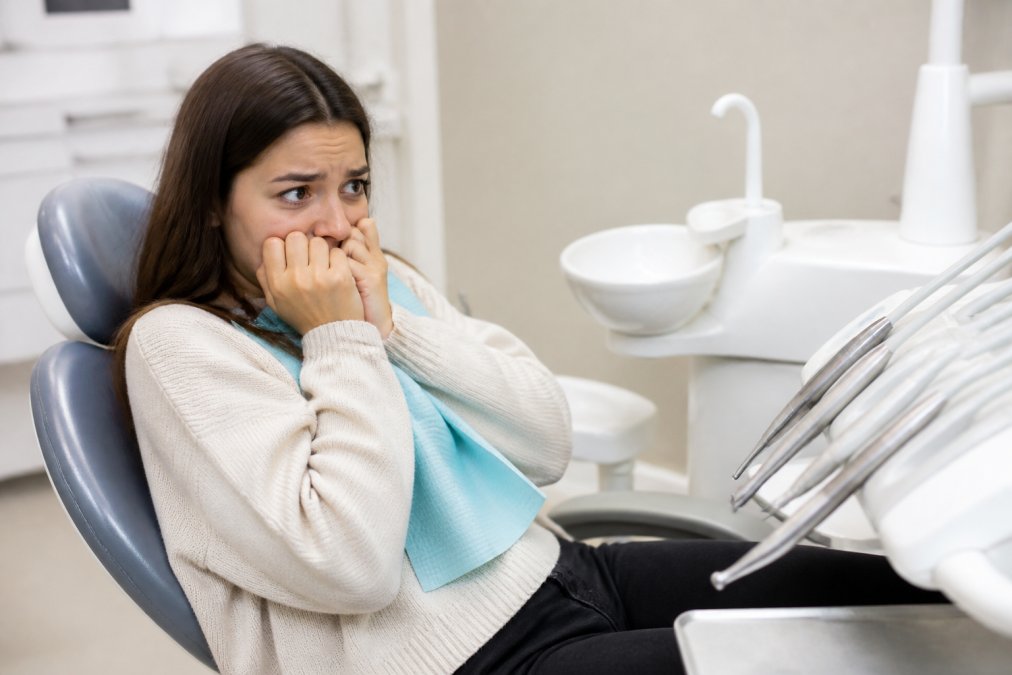
Dental anxiety is a real, common fear that triggers your body's stress response before you even sit in the chair, racing heart, sweaty palms, a tight stomach. This guide from Hour Dental breaks down seven practical steps to help you manage it.
Common Triggers: Needles, Drills, and Loss of Control
Three triggers come up again and again: fear of needles, fear of drills, and a feeling of losing control. The clinical environment adds to it, bright lights, unfamiliar sounds, and the smell of a dental office all signal your brain that something is wrong.
Step 1: Build a Pre-Appointment Routine That Lowers Stress
A steady pre-appointment routine is one of the most effective ways to manage dental anxiety, starting the night before and carrying through to the waiting room.
Try these habits:
- Schedule morning visits when you're rested
- Eat a light, protein-rich meal beforehand
- Skip caffeine, which raises cortisol levels and can worsen jitteriness
- Pack headphones, a stress ball, or a comforting item
- Arrive 10 minutes early so you're not rushed
- Tell the front desk you're nervous
Step 2: Try Breathing Exercises for Dental Anxiety
Breathing exercises for dental anxiety work because slow, controlled breathing activates your parasympathetic nervous system. That's the part of your body that calms you down.

The 4-7-8 method is simple:
- Breathe in through your nose for 4 counts
- Hold for 7 counts
- Exhale slowly through your mouth for 8 counts
- Repeat four times
Step 3: Learn How to Talk to Your Dentist About Anxiety
Learning how to talk to your dentist about anxiety is the single most underrated step. Most patients stay silent. That silence makes everything harder.
Here's what to say at the start of your visit:
- "I have dental anxiety and I need you to know that."
- "Please explain what you're doing before you do it."
- "I'd like to agree on a hand signal to pause."
- "Can we break the appointment into smaller steps?"
Step 4: Explore Dental Sedation Options With Your Provider
Dental sedation options range from mild to deep, and the right level can change the entire experience for an anxious patient. The goal is not to knock you out but to lower your arousal enough that the procedure stops feeling threatening. Your provider can match the level to the work and your health history.
The Four Levels, and What Each One Actually Feels Like
- Nitrous oxide (laughing gas): You breathe it through a small mask over your nose. Onset is fast, usually within a few minutes, and the effects wear off quickly once the gas is turned off, which is why most patients can drive themselves home after a short nitrous visit. You stay awake and can talk. Best for short visits and mild nerves.
- Oral sedation: A pill, often a benzodiazepine such as diazepam or triazolam, taken about an hour before your appointment. You stay awake but groggy and relaxed. Because the drug is still active for hours, you will need a responsible adult to drive you home and stay with you. Best for moderate anxiety and longer visits.
- Local anesthesia: A numbing injection at the treatment site, the standard for most routine procedures. It blocks pain but does nothing for the anticipatory fear, which is why it is often combined with one of the other options.
- IV sedation: Medication delivered through a vein, titrated by the dentist throughout the visit. It produces a deeper, more reliable calm and is often used for high anxiety, complex work, or long appointments. You will need an escort and should not plan to work or drive for the rest of the day.
| Option | How It Works | Onset / Duration | Best For |
|---|---|---|---|
| Nitrous oxide | Inhaled gas through a nose mask | Minutes / wears off in minutes | Short visits, mild nerves |
| Oral sedation | Pill taken about an hour before | ~1 hour / several hours | Moderate anxiety, longer visits |
| Local anesthesia | Numbing injection at the site | Minutes / 1-3 hours | Most routine procedures |
| IV sedation | Delivered and titrated through a vein | Minutes / rest of the day | High anxiety, complex or lengthy work |
Who Is Not a Good Candidate
Sedation is not right for everyone, and a good provider screens you first. It is often avoided or modified for patients who are pregnant or breastfeeding, have significant heart or lung conditions, take interacting medications, or have a history of substance use. Some oral sedatives are also inappropriate for very young children. Be honest about every medication, supplement, and recreational substance you use, the screening exists to keep you safe, not to judge you.
The Practical Details Nobody Mentions
Two logistics trip up more patients than the sedation itself. First, the escort rule: with oral or IV sedation you cannot safely drive yourself home, and many practices will not begin without a confirmed driver. Second, the fasting rule: most providers ask you to avoid food for several hours beforehand to reduce nausea and aspiration risk. Confirm both when you schedule, not the morning of.
Cost and Insurance
National Institute of Dental and Craniofacial Research on dental care
Step 5: Use Distraction and Relaxation Techniques During Your Visit
Distraction methods during procedures can lower your perception of pain by giving your brain competing input.
Try these during your appointment:
- Listen to a podcast or playlist with headphones
- Squeeze a stress ball or grip a small object
- Count backward from 100 by sevens
- Focus on your breathing rhythm
- Ask for a weighted blanket if available
Step 6: Manage Anxiety After Your Appointment and Between Visits
Most guides stop when you leave the chair. That is a mistake: post-appointment anxiety is real, and so is the financial dread that keeps people from booking at all. This section covers both.
The Hours After: Why You Still Feel Wired
Your body does not switch off the stress response when the appointment ends. Cortisol and adrenaline can stay elevated for hours, which is why patients often feel shaky, tearful, or inexplicably exhausted after a visit that went fine. That is a normal physiological lag, not a sign something went wrong.
A short recovery routine helps:
- Sit somewhere quiet for 10 minutes before driving. Do not rush straight into traffic or a meeting.
- Drink water and eat something light. Low blood sugar amplifies the shaky feeling.
- Run one round of the 4-7-8 breathing you practiced beforehand. Your body already knows the pattern.
- Write down two things that went better than you expected. This is not journaling for its own sake, it is evidence you can reread before the next visit.
- Schedule your next appointment before the memory fades. Booking while the relief is fresh breaks the avoidance cycle.
Between Visits: Build Control, Not Dread
Anxiety grows in the gap between appointments. The antidote is a steady routine that gives you control over your own mouth: brush twice a day, floss once, and log anything that changes, a sensitive tooth, a new spot, a twinge. Arriving with notes shifts you from passive patient to informed participant, and that shift lowers fear.
Financial Anxiety Is a Root Cause, Not a Side Issue
For many anxious patients, the fear is not the drill, it is the bill. Cost uncertainty drives avoidance and is rarely addressed directly. Treat financial transparency as a clinical tool, not an afterthought.
Before treatment, ask for:
- A written treatment plan with itemized costs, not a verbal estimate.
- A clear breakdown of what your insurance covers and what you will owe out of pocket.
- Whether the practice offers payment plans, third-party financing, or a membership/discount plan for uninsured patients.
- Whether treatment can be staged, for example, addressing the urgent tooth first and the elective work later, so the cost is spread over time.
The Long Game
Every visit you complete without avoiding it weakens the fear. The goal is not to feel nothing but to prove, one appointment at a time, that you can sit through it and walk out fine. That evidence accumulates.
Step 7: Find a Dental Provider Who Treats Nervous Patients Well
Finding the right dental provider makes every other step easier. The best provider for anxious patients listens first and treats second.
Ask these questions when you call:
- Do you offer sedation options?
- How do you handle patients with dental anxiety?
- Can I meet the dentist before scheduling treatment?
- What's your policy on pausing during a procedure?
- Do you offer same-day emergency care?
Frequently Asked Questions
How can I overcome my fear of the dentist?
Start by naming what scares you, whether it is needles, drills, or feeling out of control. Then build a plan: schedule a morning visit when you are rested, bring headphones, and tell your dentist exactly what worries you. Many practices offer dental sedation options, from nitrous oxide to oral sedation, that can take the edge off. Regular, shorter visits also help your body learn the chair is not a threat.
What are the most effective techniques to manage dental anxiety?
Research and clinical practice point to a few reliable methods: slow diaphragmatic breathing, progressive muscle relaxation, guided imagery, and distraction like music or podcasts. Choosing a provider who explains each step before doing it also reduces the startle response. For higher anxiety, sedation dentistry such as nitrous oxide or oral sedation can be combined with these techniques for a calmer visit.
What options do dentists offer for patients with high anxiety?
Dentists commonly offer a range of dental sedation options: nitrous oxide (laughing gas), oral sedation with medications like diazepam, and in some cases IV sedation. Beyond medication, many practices use a tell-show-do approach, agree on a hand signal to pause treatment, and schedule extra time so nothing feels rushed. Ask what is available and who administers it before you book.
How can I communicate my dental fears to my dentist?
Be direct and specific. Tell the dentist what triggers your anxiety (for example, the sound of the drill or the sight of a needle), what has helped in the past, and what you need during the visit, such as a break signal or numbing gel before an injection. Writing it down beforehand can help if talking about it makes you nervous. A good provider will adjust their approach based on what you share.
Dental anxiety doesn't have to keep you out of the chair. With a steady routine, the right breathing tools, and a provider who listens, you can take back control of your dental health. At Hour Dental, we build in extra time, explain every step, and offer sedation options to match your comfort level. Our same-day emergency care and family-friendly approach mean you never have to bounce between offices. Get started with Hour Dental and book your visit online today.