 How-to
How to Pay for Dental Procedures: 7 Options That Work
Table of Contents
- Start With a Dental Treatment Cost Estimate
- How Dental Insurance Pays for Procedures
- How to Pay for Dental Work Without Insurance
- Dental Payment Plans That Spread Out the Cost
- The Maryland Healthy Smiles Dental Program
- How to Negotiate Dental Costs and Ask the Right Questions
- Frequently Asked Questions
Last Updated: October 20, 2026
Start With a Dental Treatment Cost Estimate
Knowing how to pay for dental procedures starts with one number: the total cost. You cannot pick a payment method until you know what you owe. At Hour Dental, we tell every patient the same thing. Get the estimate first, then choose how to pay.
A dental treatment cost estimate is a written breakdown of what a procedure will cost before work begins. It should list each service, the code for that service, and your expected share after insurance.
Ask for these three things:
- An itemized quote, not a single lump sum
- The dental procedure codes, so you can check coverage yourself
- A note on what changes if the dentist finds more work mid-procedure
Costs vary widely by treatment and by city. A simple cleaning and a multi-visit restoration sit at very different price points. That is why we quote each patient individually instead of posting a flat list.
How Dental Insurance Pays for Procedures
Dental insurance is a cost-sharing plan, not a full bill payer. Most plans pay a set share of each procedure, and you cover the rest.
Here is how the pieces usually fit together:
| Plan Feature | What It Usually Means |
|---|---|
| Deductible | You pay this amount before benefits start |
| Annual maximum | The plan stops paying after this cap each year |
| Preventive care | Cleanings and exams often covered at the highest share |
| Basic care | Fillings and extractions covered at a middle share |
| Major care | Crowns and bridges covered at a lower share |
| Waiting periods | Some procedures require a set time on the plan |
Two terms matter most. The annual maximum is the most your plan pays in a year. The coinsurance is your share of each bill, shown as a percentage.
Check your plan's summary of benefits and coverage before scheduling. It lists your deductible, maximum, and covered services in plain language. Confirm whether your dentist is in-network, since out-of-network care often costs more.
How to Pay for Dental Work Without Insurance
You have real options when you need to know how to pay for dental work without insurance. None of them require a policy.
The most common paths:
- Pay in full at the visit. Many offices offer a small discount for same-day payment.
- Use a payment plan. Split the cost into monthly amounts, often interest-free for shorter terms.
- Apply for a dental membership plan. A flat yearly fee covers cleanings and exams and discounts other care.
- Use a health savings or flexible spending account. These let you pay with pre-tax dollars if your employer offers one.
- Look into dental school clinics. Supervised students provide lower-cost care.
- Check community health centers. Many offer sliding-scale fees based on income.
Ask each office which of these it accepts. Not every practice offers a membership plan or in-house financing.
At Hour Dental, we serve budget-conscious families across Baltimore County and talk through payment options before treatment starts.
Dental Payment Plans That Spread Out the Cost
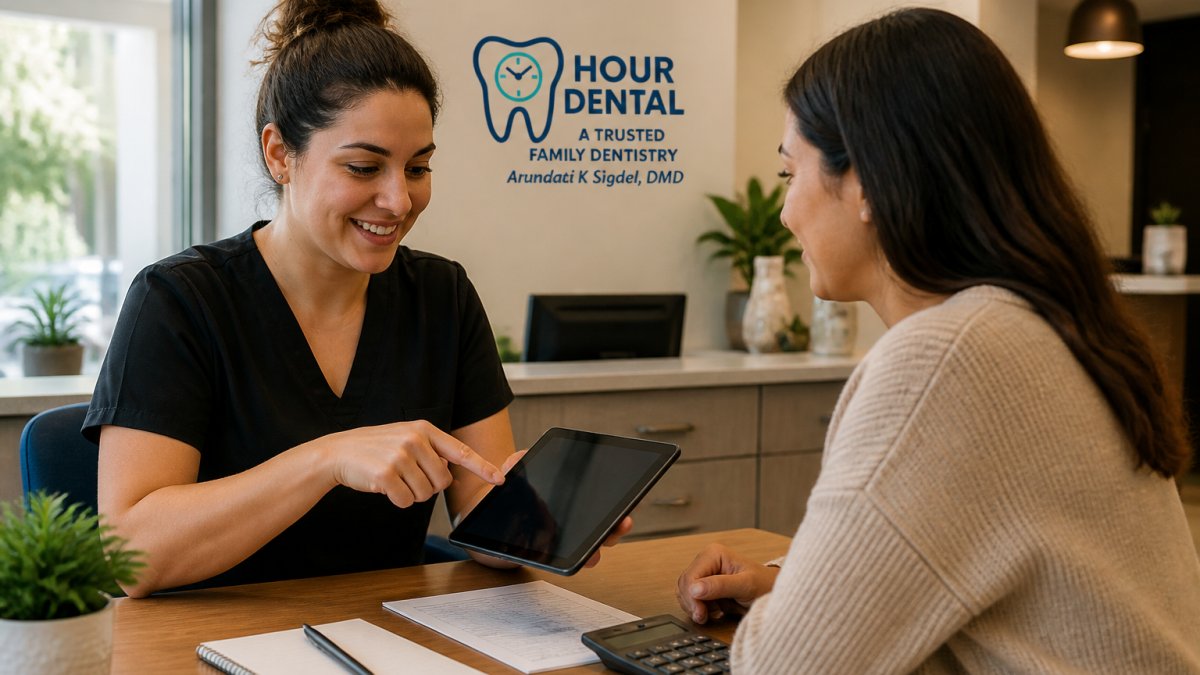
Dental payment plans break a large bill into smaller monthly payments. They help when a procedure costs more than you can pay at once.
There are two main types:
In-house plans. The dental office splits your balance over an agreed number of months. Terms vary by practice, so ask about interest, the down payment, and what happens if you miss a payment.
Third-party financing. A lender pays the office and you repay the lender. These plans often come with promotional periods, but interest can apply after the promo ends. Read the fine print.
Before you sign, ask:
- Is there interest, and when does it start?
- What is the minimum monthly payment?
- Are there late fees?
- Does paying early cost anything?
A payment plan only helps if the monthly amount fits your budget. Stretch the term if you need to. A longer plan with a smaller payment beats a short one you cannot keep up with.
The Maryland Healthy Smiles Dental Program
The Maryland Healthy Smiles Dental Program is the state's Medicaid dental program for eligible children and adults. It covers a range of services for members, including checkups, cleanings, fillings, and other needed care.
Eligibility depends on income and other factors. Coverage details and covered services can change, so confirm your status directly.
Here is how to check:
- Visit the Maryland Department of Health dental program page for current details
- Call your Medicaid caseworker to confirm you are enrolled
- Ask the dental office whether it accepts Healthy Smiles before booking
Do not guess at coverage or income limits. The program's rules are set by the state and updated over time. Always check the official source for the current figures.
If you are not eligible, ask the office about other options. Many practices, including ours, help patients find a plan that fits.
How to Negotiate Dental Costs and Ask the Right Questions
You can often lower a dental bill by asking. Most people never try.
Start with these questions at the front desk or on the phone:
- "Is there a cash discount if I pay in full today?"
- "Can we stage the treatment over several visits to spread the cost?"
- "Is this procedure covered, and what is my exact out-of-pocket share?"
- "Do you offer an in-house payment plan?"
- "Are there lower-cost alternatives that still fix the problem?"
Staging treatment is a real option. Some work can safely be done in phases, which spreads the cost over months. Ask your dentist whether that fits your case.
Get a second opinion for large treatment plans. It is normal and smart, especially for crowns, implants, or full-mouth work. A good dentist will not push back.
At Hour Dental, we walk patients through every estimate line by line. No pressure, no hidden fees. Just a clear plan you can afford.
Dental costs can feel overwhelming, but you have more control than you think. Get a written estimate, check your coverage, and ask about payment plans before treatment. Hour Dental serves Dundalk, Highlandtown, and the wider Baltimore area with same-day emergency care, gentle family dentistry, and a comfortable setting built to ease dental anxiety. We have cared for this community, backed by consistent 5-star reviews. Book online with Hour Dental and get a clear, affordable plan for your smile.
Frequently Asked Questions
Can I make monthly payments for dental work?
Many dental offices offer in-house dental payment plans that split a procedure into monthly installments, often with little or no interest for shorter terms. Third-party financing companies also let you apply for a line of credit you repay over time. Ask the office to put the plan terms in writing, including the length of the term, any interest or fees, and what happens if a payment is late. Confirm the total amount you will pay over the full term, not just the monthly figure.
Does Maryland Medicaid cover dental care for adults?
Maryland's Medicaid dental program for adults is called the Maryland Healthy Smiles Dental Program. It covers a set of services for enrolled adults, and the exact list can change, so confirm your specific procedure with the program or your Medicaid managed care organization before treatment. Coverage also depends on whether you are enrolled and which plan you are in. If you are not sure whether you qualify, the program's official page is the place to check current eligibility rules and covered services.
How can I get a dental treatment estimate before starting care?
Ask for a written dental treatment cost estimate after your exam and X-rays. A good estimate lists each procedure by name and dental code, the fee, what your insurance is expected to pay, and your estimated out-of-pocket share. Ask whether the estimate assumes your deductible has been met and whether it includes follow-up visits. If the plan involves several appointments, request the estimate broken out by visit so you can budget. Keep the written copy and compare it to the final bill.
Are dental payment plans or financing a good idea?
They can be when the alternative is delaying care that is getting worse. Compare the total cost of each option, not just the monthly payment. Zero-interest in-house plans are usually the cheapest route if the office offers one. Third-party financing may carry deferred interest, which means you owe back interest if you do not pay off the balance within the promotional window. Read the terms, confirm the payoff date, and only borrow an amount you can realistically repay.