 Ultimate guide
How to Choose a Family Dentist: A 2026 Guide
Table of Contents
- What to Look for in a Family Dentist
- Questions to Ask a Dentist Before You Book
- Dental Insurance and Payment Options to Review
- Choosing a Pediatric Dentist for Younger Children
- Preventing Cavities in Children: What the Whole Family Should Know
- How to Choose a Family Dentist in Baltimore, MD
- Conclusion
- Frequently Asked Questions
Last Updated: October 17, 2026
What to Look for in a Family Dentist
Choosing a family dentist in Baltimore comes down to three things: verified credentials, a communication style that fits your household, and reliable access when something goes wrong. Get those right and you have a dental home you can keep for decades. Get them wrong and you'll be transferring records again in a year.
Here's how to avoid that.
Credentials, Licensure, and Experience
Licensure is your baseline, not your differentiator. Every practicing dentist in Maryland must hold a current license from the Maryland State Board of Dental Examiners. Verify it directly on the board's lookup tool rather than trusting a website badge.
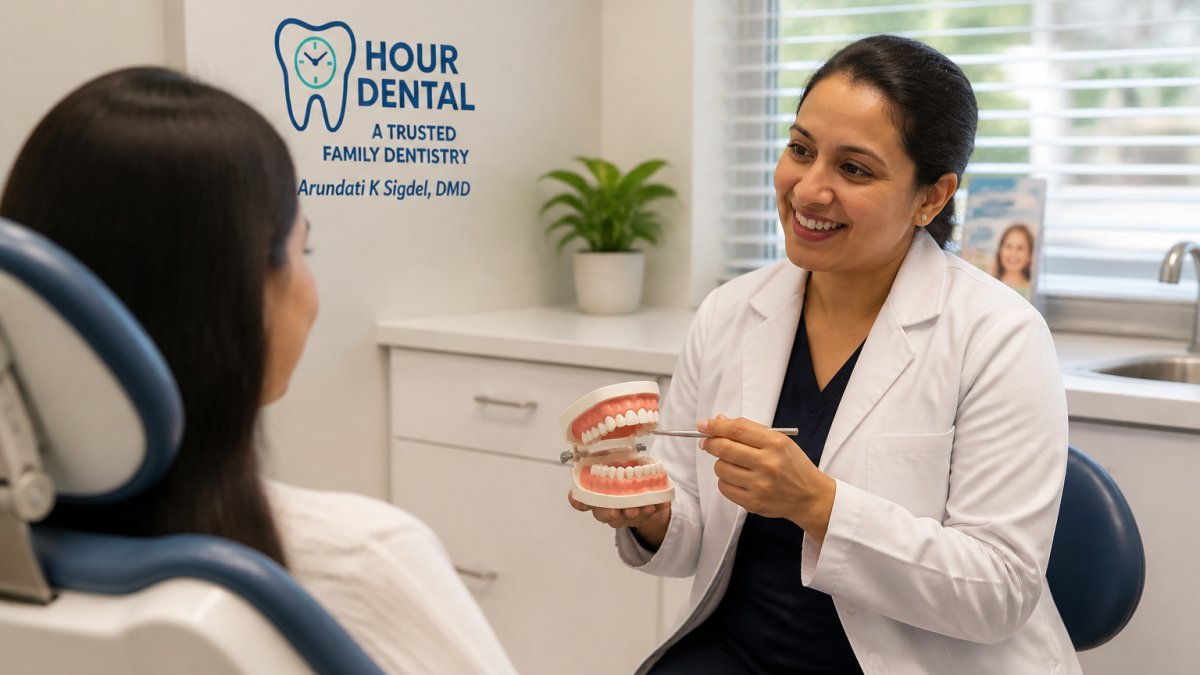
Beyond licensure, ask about continuing education in the areas your family needs. A dentist who regularly trains in pediatric behavior management or anxiety-reducing techniques will handle a nervous six-year-old very differently than one who doesn't. Experience with your specific situation matters more than the number of years on the plaque.
Comfort, Communication, and Emergency Access
A common mistake is treating the first visit as a formality. Treat it as an interview. Watch how the front desk handles scheduling, whether the hygienist explains each step, and whether the dentist sits down to talk before picking up an instrument.
Emergency access deserves a direct question. Many practices advertise emergency care but route after-hours calls to voicemail. Ask plainly: if my child chips a tooth on a Saturday, who answers, and how quickly can we be seen? Same-day emergency dental care is the standard we'd suggest holding any practice to.
Questions to Ask a Dentist Before You Book
The right questions separate a practice that fits your family from one that merely has an opening. Bring a written list and expect clear answers, not deflections.

The questions we hear most often from new patients, and the ones worth asking any office:
- Who will actually treat my family, and is that the same provider at every visit?
- What happens if we need a specialist, and do you coordinate the referral?
- How do you handle nervous patients, and what comfort options do you offer?
- What is your policy on treatment planning: do you explain costs before work begins?
- Can you see all ages, from toddlers to grandparents, under one roof?
- How do you reach patients after hours, and what qualifies as an emergency?
A practice that stumbles on the first two questions is telling you something. Clear, unhurried answers signal an office that has thought about continuity of care.
Dental Insurance and Payment Options to Review
Insurance questions trip up more families than clinical ones. Before booking, confirm three things: whether the practice is in-network with your plan, what your plan covers for preventive versus restorative care, and how the office handles claims.
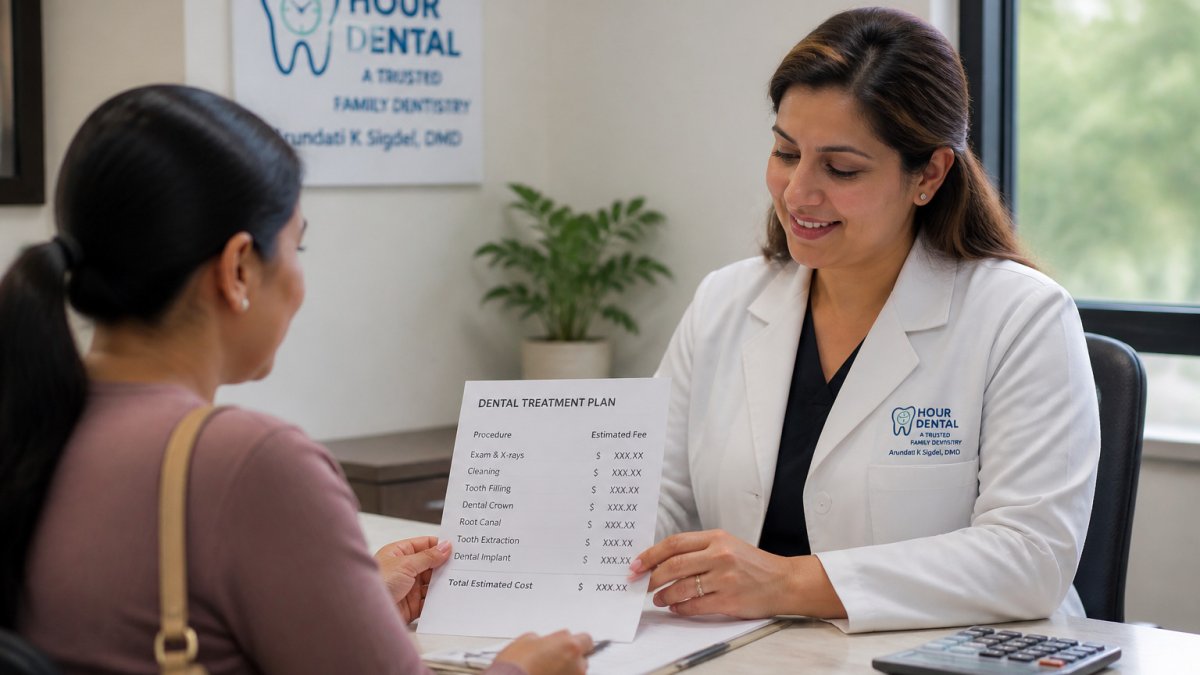
Ask the front desk to run a benefits check before your first appointment. A reputable office will tell you your estimated out-of-pocket cost for a cleaning or filling before you sit in the chair, not after. If a practice can't explain your coverage in plain language, that's a warning sign.
For uninsured families, ask directly about payment plans and what a routine visit actually costs. Pricing varies by treatment and provider, so request a written estimate for your specific needs rather than relying on general figures.
Choosing a Pediatric Dentist for Younger Children
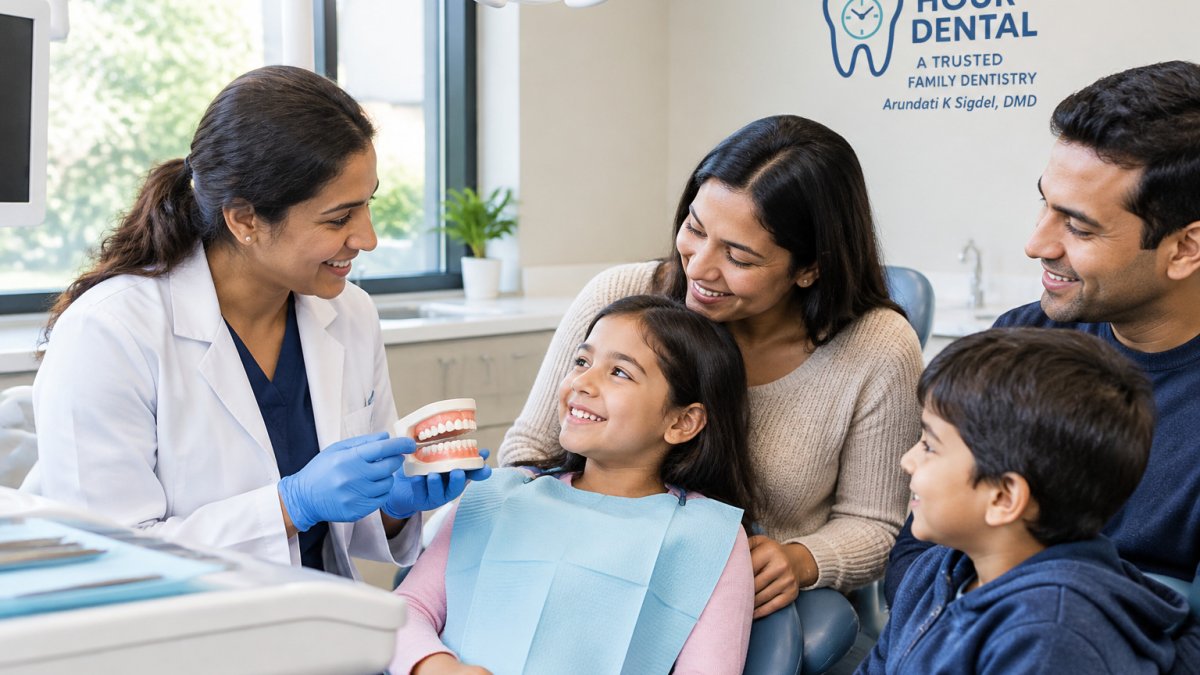
A pediatric dentist completes additional residency training focused on children's oral development, behavior guidance, and treating patients with special health care needs. For most children, a family dentist comfortable with kids is entirely sufficient. For a child with significant anxiety, complex medical needs, or extensive early decay, a pediatric specialist is worth the referral.
When evaluating either option, watch for child-sized language. Good pediatric care uses tell-show-do: explain the tool, demonstrate it, then use it. Ask how the office handles a first visit for a toddler. The answer should involve lap exams, short appointments, and zero pressure to complete treatment that day.
Preventing Cavities in Children: What the Whole Family Should Know
Cavities are largely preventable, and the habits that prevent them are household habits, not dental-office ones. The American Dental Association recommends brushing twice daily with fluoride toothpaste and attending regular checkups, starting with a child's first tooth.
What actually moves the needle at home:
- Supervise brushing until age eight. Children lack the dexterity for thorough brushing before then.
- Limit juice and sugary snacks to mealtimes. Frequency of sugar exposure matters more than total amount.
- Ask about sealants. They protect the chewing surfaces of back teeth where decay starts most often.
- Model the behavior. Kids copy what they see, so brush alongside them.
The same preventive logic applies to adults. Families that book cleanings together tend to keep them.
How to Choose a Family Dentist in Baltimore, MD
Local logistics decide whether a good practice becomes your long-term dental home. A forty-minute drive each way sounds manageable until you're making it three times a year with three kids.
Start with geography. If you're in Dundalk or Highlandtown, a practice in Baltimore County that you can reach in fifteen minutes beats a downtown office with better reviews and worse parking. Then check the practical details: appointment availability that fits school and work schedules, Saturday hours if you need them, and how the office handles records transfers if you're switching.
Ask about continuity. A practice that has served the same community for decades tends to have deep roots in local referrals and specialist relationships. That history usually shows up in how smoothly the office runs.
Finally, read reviews with a filter. Look for patterns across many reviews rather than one glowing or one angry post. Consistent five-star feedback across years is a stronger signal than a single rave.
Conclusion
Finding a dental home that works for every member of your family takes a little homework, but the payoff is years of consistent, comfortable care. Start with verified licensure, ask the questions that reveal how an office actually operates, and confirm the insurance and emergency details before you book.
If you're in Baltimore and want a practice built around families, Hour Dental offers same-day emergency dental care, comprehensive general and cosmetic services for all ages, and a comfort-focused environment designed for nervous patients. Dr. Arundati Kharel Sigdel has served the Dundalk and Highlandtown communities for over 40 years.
Book online with Hour Dental and give your family a dental home you won't need to replace.
Frequently Asked Questions
What should I look for when choosing a family dentist?
Look for four things: current state licensure and a clean disciplinary record, a scope of services that covers every age in your household, a schedule that includes same-day or next-day emergency slots, and a written insurance and payment policy you can review before the first visit. Ask how many hygienists work each day, because that number shapes appointment availability. A practice that treats children and adults under one roof saves you from juggling multiple offices and records.
What questions should I ask a family dentist before making an appointment?
Ask who will actually treat each family member, how long a routine cleaning appointment lasts, and what happens if you call with sudden pain on a Saturday. Request the practice's policy on transferring records from your current dentist, and ask whether they bill insurance directly or expect payment upfront. Finally, ask how they handle nervous patients: a specific answer, such as longer appointments or a step-by-step walkthrough, tells you more than a general promise to be gentle.
Can one dentist treat both children and adults?
Yes. A general family dentist can handle cleanings, exams, fillings, crowns, and most routine care for every age. Some children with complex needs, or adults requiring specialized procedures, may be referred to a pediatric dentist or specialist. Ask upfront which treatments the practice handles in-house and which it refers out, so you know before you book whether you will still need a second office for orthodontics or oral surgery.
How do I compare dental insurance and payment options between practices?
Start by confirming whether the practice is in-network with your plan, then ask for a written estimate of what a routine cleaning and exam will cost you after insurance. Ask whether they offer an in-house membership or payment plan for uninsured care, and whether financing is available for larger restorative work. Get the answers in writing. Comparing two written estimates side by side is far more reliable than comparing what two front desks tell you over the phone.
How can I help my child feel comfortable at the dentist?
Schedule a first visit before any problem appears, and keep the language neutral: describe it as a checkup, not a procedure. Ask whether the practice allows a parent in the room and whether hygienists use a tell-show-do approach, explaining each tool before using it. Morning appointments work better for most young children. If your child has already had a difficult experience, tell the office in advance so they can plan extra time and a slower pace.
How important are office location, hours, and emergency availability?
They matter more than most families expect. A practice within a short drive of home or school makes routine visits easier to keep, which directly affects how often your family actually goes. Evening or Saturday hours help working parents. Emergency availability is the one to test directly: call and ask whether same-day appointments exist for sudden pain or a chipped tooth, rather than assuming the website's wording means round-the-clock coverage.