
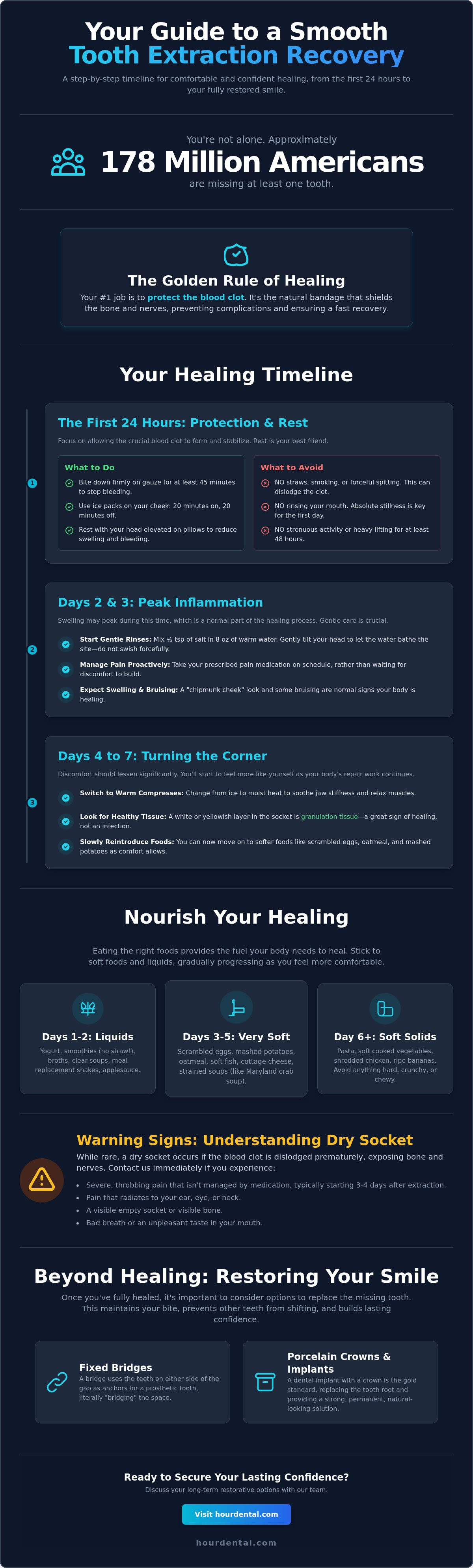
Did you know that approximately 178 million Americans are currently missing at least one tooth? While you are certainly not alone in this experience, we know that the prospect of recovery after tooth extraction can feel overwhelming, especially when you're worried about the sharp sting of a dry socket or wondering when you can finally enjoy a meal with your neighbors in Dundalk or Baltimore again. It's perfectly natural to feel a bit of anxiety about missing work or local events while your body heals, but our practice serves as a safe haven where clinical expertise meets neighborly care.
We agree that your comfort should always come first, and you deserve a clear path back to your confident, pain-free smile. This expert-led guide provides you with a comprehensive day-by-day timeline for 2026, including the latest ADA-recommended pain management strategies and specific nutrition tips to keep you nourished. You'll learn exactly how to protect your healing site, which soft foods are safest for your recovery, and the practical steps needed to return to your normal routine without the fear of complications. Secure your Lasting Confidence today.
Key Takeaways
- Protect your healing site by understanding the critical role of the blood clot as a biological bandage during the first 24 hours.
- Manage swelling and jaw stiffness with our expert timeline that guides you through using ice and warm compresses effectively.
- Navigate your meals safely with a tiered nutrition plan, moving from soothing liquids to local favorites like strained Maryland crab soup.
- Ensure a smooth recovery after tooth extraction by learning the specific warning signs of a dry socket and how to avoid dislodging the protective clot.
- Explore restorative options like fixed bridges or porcelain crowns to maintain long-term oral stability and build Lasting Confidence once your healing is complete.
The First 24 Hours: Protecting the Blood Clot for Safe Healing
The first 24 hours determine the success of your recovery after tooth extraction. Think of this initial window as the foundation for your new, healthy smile. Your primary goal is to protect the blood clot that forms in the socket immediately after the procedure. This clot acts as a biological bandage; it protects the underlying bone and nerve endings while providing a scaffold for new tissue to grow. A successful dental extraction requires this clot to remain undisturbed to prevent the painful condition known as dry socket.
Before you leave our office, we'll place a sterile gauze pad over the site. Biting down firmly for at least 45 minutes is non-negotiable. This steady pressure is what stops the bleeding and allows that vital clot to stabilize. If you're still seeing active, bright red bleeding after the first hour, replace the gauze with a fresh, damp pad and maintain firm pressure for another 30 minutes. Remember that a small amount of pink-tinged saliva is normal and expected during this timeframe.
Immediate Steps After Leaving the Office
Once you arrive home, your focus shifts to comfort and inflammation control. Apply an ice pack to the outside of your face near the extraction site using a 20-minutes-on, 20-minutes-off rotation. This cycle is most effective during the first 24 hours for minimizing swelling. When it’s time to rest, keep your head elevated with extra pillows. Propping yourself up, even while sleeping, reduces localized blood pressure and helps prevent throbbing or additional bleeding throughout the night.
What Not to Do: The "No-Fly" List
Protecting your clot means avoiding any action that creates a vacuum in your mouth. Using a straw, smoking, or even aggressive spitting can pull the clot right out of the socket. We also ask our Dundalk patients to skip the gym or any heavy lifting for at least 48 hours. Increased heart rates can lead to renewed bleeding at the surgical site. Don't rinse your mouth at all during this first day. While you'll eventually use a gentle saltwater solution, your mouth needs absolute stillness for the first 24 hours to ensure a smooth recovery after tooth extraction.
Be mindful of the lingering numbness from the local anesthetic. It's easy to accidentally bite your cheek or tongue while you can't feel them, so avoid eating until the sensation returns completely. Set up a recovery station before you arrive home. Keep your medications, a bottle of water, your ice packs, and a few soft towels nearby. Having everything within reach allows you to rest and let your body focus entirely on the healing process. This gentle approach ensures you move toward long-term personal confidence and a pain-free smile.
Your Recovery Timeline: What to Expect During the First Week
The first 24 hours were about stabilization. Now, your body shifts into active repair mode. While the initial anxiety often fades as the bleeding stops, many patients feel a new wave of concern when they see their reflection on the second morning. Understanding the milestones of recovery after tooth extraction helps you stay calm and focused on your long-term oral stability. This week is a journey from clinical protection to returning to your favorite Baltimore routines with a sense of ease and comfort.
Days 2 and 3: The Peak of Inflammation
Expect swelling to reach its maximum on day two or three. This "chipmunk cheek" look is a sign that your immune system is working hard at the site. You might also notice some minor bruising on your cheek or jaw, which is perfectly normal for many patients. To keep the area clean, start using gentle saltwater rinses. Mix half a teaspoon of salt in eight ounces of warm water and let it bathe the site by tilting your head; don't swish aggressively. Following a strict tooth extraction aftercare schedule for your pain relief is better than waiting for discomfort to return, as it keeps your comfort levels steady and predictable.
Days 4 through 7: Turning the Corner
By day four, the sharp discomfort usually transitions into a dull ache or jaw stiffness. This is the perfect time to switch from ice packs to warm compresses to relax the muscles. You might see a white or yellowish patch forming in the socket. Don't panic; this is granulation tissue, a healthy sign of new skin and blood vessels forming, not an infection. If you had stitches, they might start to feel slightly loose or even dissolve toward the end of the week. This is also when Dundalk residents often feel ready for light walks or social visits, though you should still avoid heavy lifting or high-impact cardio.
Even as the pain disappears, the site will feel "different" for a while. Your tongue will naturally want to explore the gap, but try to remain patient as the tissue matures. If you have questions about your progress or need a professional eye on your healing, our team is always here to provide emergency dental care or routine follow-up support to ensure your peace of mind. By day seven, most patients feel a significant boost in their emotional confidence, knowing the hardest part of recovery after tooth extraction is officially behind them.
Nutrition and Comfort: The Ultimate Soft Food Guide for Recovery
Nourishing your body is just as vital as the clinical procedure itself. While you might be dreaming of a thick steak or crunchy local favorites, your recovery after tooth extraction depends on a gentle approach to eating. Choosing the right foods prevents irritation and protects the delicate site while it heals. It is not just about what you eat, but how you eat it. Small seeds, spicy seasonings, and sharp chips are hidden dangers that can lodge in the socket, potentially leading to a painful dry socket or unwanted infection. Staying hydrated is your best tool for flushing out bacteria, but remember to sip directly from a cup. Straws are strictly off-limits for at least a week to protect that precious blood clot.
The Three Phases of Post-Extraction Eating
Phase 1 begins the moment you arrive home on your first day. Stick to cold or room-temperature liquids like fruit smoothies, protein shakes, and yogurt to soothe the surgical area. On days two through four, you move into Phase 2. You can introduce soft solids like creamy mashed potatoes, scrambled eggs, or well-cooked oatmeal that require zero chewing effort. By day five, you enter Phase 3. This is when you can gradually return to your normal Dundalk diet, starting with tender pasta or flaky fish before moving back to firmer foods as your comfort allows.
Pro Tips for Meal Prep and Comfort
Maintaining high protein intake is essential for tissue repair, yet it can be tricky on a soft diet. Try mixing unflavored protein powder into your mashed potatoes or choosing Greek yogurt for a nutritional boost. Temperature control is another vital factor during this time. Lukewarm is the magic word for healing tissue. Extreme heat can increase blood flow to the site or even dissolve the protective blood clot prematurely, which stalls your recovery after tooth extraction.
For a local touch, many of our Baltimore neighbors find that a bowl of Maryland-style crab soup is incredibly comforting. Just ensure it is thoroughly strained to remove any small bits of shell, corn, or firm vegetables. This safe, neighborly approach to meal prep ensures you stay full and satisfied without risking your healing progress. By following these simple nutritional steps, you move closer to long-term personal confidence and a healthy, pain-free smile.
Preventing Complications: Understanding Dry Socket and Warning Signs
While most patients enjoy a smooth recovery after tooth extraction, staying vigilant is the best way to ensure your long-term oral stability. Knowledge acts as your best defense against complications. We want you to feel empowered to recognize when your body needs a little extra help from our expert team. Most minor discomfort is a natural part of the healing process, but certain signals indicate that your "biological bandage" needs professional attention. Our goal is to move you away from technical worries and toward Lasting Confidence.
Dry socket is the most common complication, occurring in approximately 3-4% of routine extractions. This happens when the protective blood clot is lost or dissolves before the wound has healed. Instead of the manageable dull ache we discussed in the timeline section, you'll experience an intense, radiating throb. This pain often spreads toward your ear or neck and feels significantly sharper than standard post-op soreness. If you notice a foul taste or persistent bad breath, these are often early warning signs of trapped debris or a developing infection. We are committed to providing emergency tooth pain relief in Dundalk to address these issues immediately.
Is This Normal? A Quick Checklist
- Oozing vs. Active Bleeding: Pink-tinged saliva is expected for the first 48 hours. However, active, bright red bleeding that doesn't stop with pressure requires a call to our office.
- The Day 4 Pain Spike: If your comfort was improving but suddenly takes a sharp turn for the worse on day four or five, it is a major red flag for dry socket.
- Jaw Stiffness: Some tightness is normal, but a total inability to open your mouth, known as trismus, is a complication that Dr. Sigdel should evaluate.
When to Call Your Dundalk Dentist
Systemic symptoms like fever, chills, or severe nausea should never be ignored during your recovery after tooth extraction. These signs suggest your body is fighting a broader infection that requires clinical intervention. Sometimes, discomfort in the area isn't about the extraction site itself. It is possible that 7 warning signs you need a root canal are appearing in an adjacent tooth that was already compromised. Dr. Sigdel will perform a gentle, thorough exam to identify the exact source of your pain. If you're feeling uncertain about your symptoms, don't hesitate to reach out for emergency dental care to protect your smile and your peace of mind.
Beyond the Extraction: Restoring Your Smile in Dundalk and Baltimore
Completing the initial week of recovery after tooth extraction is a major milestone, but it's actually the beginning of a broader journey toward long-term personal confidence. Leaving a gap in your smile does more than just affect your appearance; it impacts your oral structure. Without a tooth root to stimulate the area, the jawbone can begin to resorb, leading to bone loss. Nearby teeth often shift into the empty space, which can misalign your bite and create new dental challenges over time. Our practice serves as a safe haven where we help you navigate these changes with comfort and clarity.
While initial gum healing takes about two weeks, full bone maturation typically requires three to six months. We use this time to partner with you on a restorative plan. Exploring affordable dental crowns in Baltimore is a popular choice for many of our neighbors looking to regain their biting strength. Fixed bridges are another excellent solution, as they utilize the strength of adjacent teeth to "bridge" the gap; this effectively maintains your natural facial structure and prevents that sunken look that often follows tooth loss.
Maintaining Your Long-Term Oral Health
Realizing that a painless tooth extraction in Baltimore is just the start of your journey helps you stay proactive. Our focus is on serving entire multi-generational families and building enduring, trust-based relationships. We believe the best way to avoid future extractions is through a comprehensive dental check-up in Dundalk. During these exams, Dr. Sigdel identifies small issues before they become urgent problems, helping Dundalk families stay confident and healthy for years to come.
Your Next Steps at Hour Dental
We recommend scheduling a two-week follow-up appointment to ensure your socket is healing perfectly. This visit is a relaxed, low-pressure opportunity to discuss tooth replacement options that fit your specific budget and lifestyle needs. Whether you choose full and partial dentures or a porcelain bridge, we are here to guide you with gentleness and clinical clarity. Building a relationship with a dentist who understands your anxiety is key to a lifetime of healthy smiles. Your recovery after tooth extraction is a partnership, and we are honored to be your trusted local experts as you pursue Lasting Confidence.
Take the Next Step Toward Your Healthy Smile
Your journey to a restored and healthy smile doesn't end when you leave our office. By prioritizing the critical first 24 hours of rest and following our phased nutrition guide, you ensure a smooth recovery after tooth extraction. We've discussed how to identify warning signs like dry socket early and the importance of planning for restorative care to maintain your long-term oral stability. These steps are essential for protecting your jawbone and keeping your surrounding teeth perfectly aligned. Restoring your smile is a partnership between clinical excellence and your own daily care.
Led by Dr. Arundati Kharel Sigdel, DDS, our practice remains a safe haven for Dundalk and Baltimore families seeking compassionate, neighborly care. We understand that dental procedures can cause anxiety, so we offer a relaxed environment and same-day emergency appointments for those who need immediate solutions. Our team is dedicated to building enduring, trust-based relationships that span generations. You deserve to feel cared for and understood throughout every step of your healing process. Our local expertise ensures you always have a reliable community fixture to turn to.
Schedule your gentle extraction consultation at Hour Dental today to begin your path toward Lasting Confidence. We are ready to help you rediscover the joy of a pain-free, beautiful smile.
Frequently Asked Questions
How long does it take for the hole to close after a tooth extraction?
You'll typically see the gum tissue close over the extraction site within one to two weeks. While the surface looks healed relatively quickly, the deeper bone structure takes between three and six months to fill in completely. It's important to keep the area clean during this initial window to ensure a smooth recovery after tooth extraction. We'll monitor this progress during your follow-up visit to ensure your jaw is ready for future restorative options like fixed bridges.
What are the symptoms of dry socket and when do they start?
Dry socket symptoms typically emerge between day three and day five after your procedure. You'll notice a sharp, radiating pain that often travels toward the ear and doesn't respond well to standard over-the-counter relief. You might also see visible bone in the socket instead of a dark blood clot. If you experience this sudden spike in discomfort, contact our Dundalk office immediately for gentle, urgent care to restore your comfort and peace of mind.
Can I brush my teeth the day after a tooth extraction?
You can and should brush your other teeth the day after surgery to keep your mouth clean and healthy. However, you must be extremely careful to avoid the surgical site itself for the first 24 to 48 hours. Use a soft-bristled brush and don't spit aggressively; instead, let the toothpaste fall out of your mouth into the sink. This gentle approach helps prevent accidental trauma to the healing tissue while maintaining your overall oral hygiene.
When can I stop worrying about dry socket?
Most patients can stop worrying about dry socket after the first seven to ten days of healing. Once the granulation tissue has fully covered the exposed bone and the site has stabilized, the risk of losing the clot drops significantly. If you've followed your aftercare instructions and made it through the first week without a pain spike, you're likely in the clear. Your recovery after tooth extraction is nearly complete at this stage, bringing you closer to Lasting Confidence.
Is it normal to have a bad taste in my mouth after surgery?
A slight metallic taste from minor oozing or a mild change in taste is common during the first few days of healing. However, a persistent, foul taste or a very bad odor often signals trapped food particles or a developing infection. If this is accompanied by new swelling or a fever, it's time to visit our Baltimore area office. We can gently flush the site to ensure your healing stays on the right track and prevents further complications.
How much pain is normal on day 3 of recovery?
Day three is often the peak for swelling and general soreness, but your pain should still be manageable with your recommended medication. You might feel a dull ache or significant pressure as the inflammation reaches its height in your jaw. If the pain feels unbearable or is getting worse rather than better after this point, it could indicate a complication. We prioritize your comfort and can provide immediate guidance if your symptoms feel unusual or alarming.
When can I return to work after having a tooth pulled?
Most patients return to work within one to two days, though this depends on the complexity of your extraction and your specific job duties. If your role involves heavy lifting or intense physical activity, we recommend taking a full 48 to 72 hours off to prevent secondary bleeding. For office-based work, many of our neighbors feel ready to return once the initial numbness and heaviest swelling have subsided. We'll provide a personalized recommendation based on your unique case.
Can I drink coffee or tea during my recovery week?
You can enjoy coffee or tea starting the day after your procedure, but you must keep the temperature lukewarm. Hot liquids can dissolve the blood clot or cause increased swelling in the sensitive healing tissue. Additionally, never use a straw, as the suction can lead to a dry socket. Stick to sipping directly from a mug to stay safe while enjoying your favorite morning brew in Dundalk. This small adjustment protects your site while keeping you comfortable.


