
What if the dental procedure you fear the most is actually the one thing that can rescue your natural smile from permanent loss? Most people associate a root canal with pain, but the truth is that this treatment is designed to stop your discomfort and save your tooth. If you've been feeling a sharp throb or a dull ache lately, you're likely searching for the specific signs you need a root canal to see if your situation is urgent. It's a common concern, especially when you're worried about the potential costs or the prospect of losing a tooth entirely.
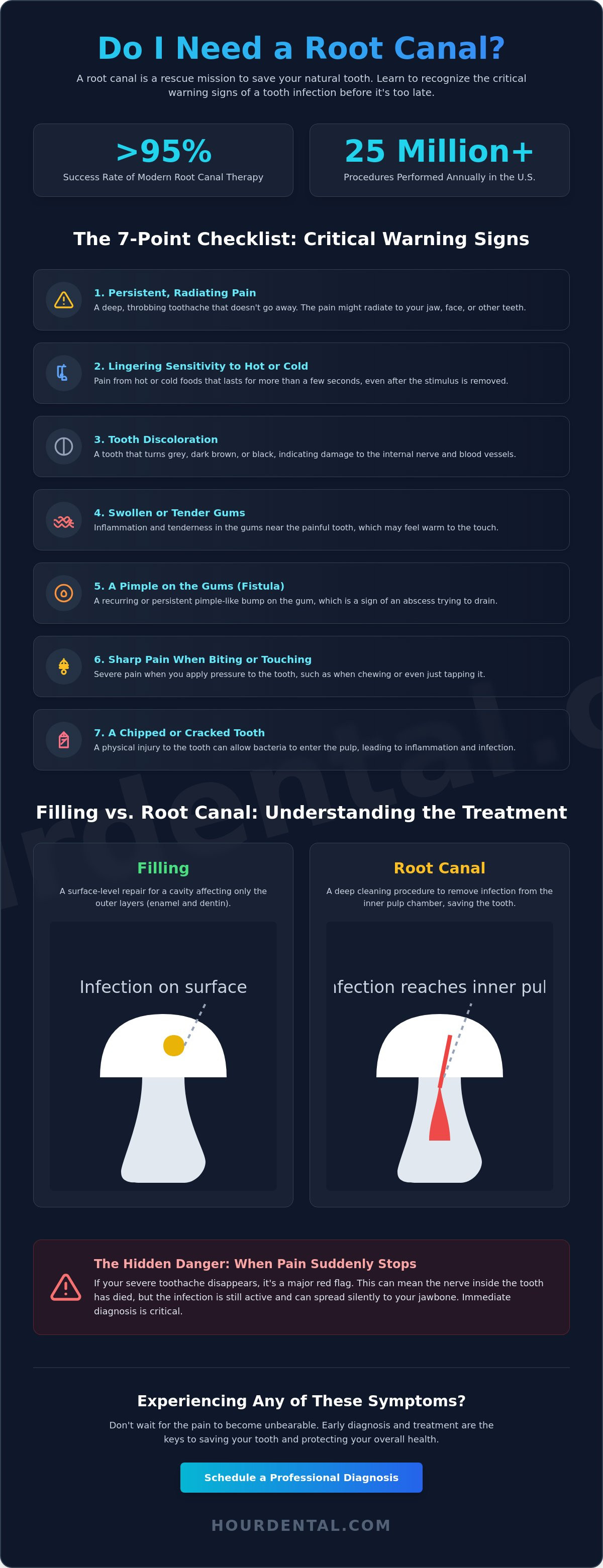
We know that dental anxiety is real, especially for our neighbors in Dundalk and the surrounding Baltimore areas who want reliable care that fits their budget. This guide will walk you through the seven critical warning signs of a tooth infection, helping you understand when a simple filling isn't enough. With more than 25 million of these procedures performed annually in the United States and a success rate exceeding 95 percent, modern root canal therapy is a highly predictable way to restore your health. We'll look at everything from gum tenderness to 2026 clinical standards for diagnosis so you can move forward with confidence and peace of mind.
Key Takeaways
- Understand how root canal therapy acts as a rescue mission by removing infected pulp to preserve your natural smile.
- Learn to identify the seven critical signs you need a root canal, including persistent radiating pain and lingering sensitivity to temperature.
- Discover why a sudden lack of pain doesn't always mean the problem is gone and how to spot silent infections before they lead to tooth loss.
- Explore the modern diagnostic process that uses digital imaging and local anesthesia to ensure your treatment is both precise and comfortable.
- Find out how accessible emergency dental care in Dundalk can provide immediate relief and long-term confidence for your entire family.
What is a Root Canal? Understanding the "Rescue Mission" for Your Tooth
Many people think of a root canal as a scary event, but it's actually a sophisticated rescue mission for a tooth that's under attack. To understand What is a Root Canal? and its purpose, you first need to look at what's happening inside your smile. Every tooth has three layers: the hard outer enamel, the middle layer of dentin, and the soft inner core called the pulp chamber. This chamber contains the nerves and blood vessels that kept the tooth alive while it was growing. When this area becomes compromised, it can lead to the specific signs you need a root canal that many patients notice during their morning routine.
When we talk about a root canal, we're actually referring to the natural space inside the root of your tooth. Root canal therapy is the professional cleaning of this space to remove bacteria and infected tissue. The ultimate goal isn't just to stop the pain. It's to preserve your original tooth structure so you don't have to face an extraction. By removing the infection and sealing the space, we can help you keep your natural smile for decades to come.
The Difference Between a Filling and a Root Canal
It's helpful to think of a composite filling as a surface repair. When decay only affects the enamel or dentin, we can simply remove the cavity and seal it up. However, if bacteria reach the sensitive pulp, a filling isn't enough because the infection is now trapped deep inside the tooth. This is usually when you'll start noticing the unmistakable signs you need a root canal, such as a deep, throbbing ache. At this stage, the internal cleaning of root canal therapy is the only way to remove the source of the infection and save the tooth. A filling cannot fix an infected nerve; it only addresses the exterior layers.
Why Saving Your Natural Tooth Matters
Choosing to save your tooth instead of pulling it is an investment in your long term health. Your natural teeth are designed to last a lifetime, and they play a vital role in keeping your jawbone strong. When a tooth is removed, the surrounding bone can begin to shrink, and nearby teeth often shift into the empty space. This leads to bite problems and changes in your facial structure. While we offer high quality fixed bridges and dentures for those who need them, keeping your original tooth is often the most cost-effective and comfortable solution. Our team here in Dundalk is dedicated to making this process feel as gentle and stress-free as possible. If you are experiencing sudden, severe pain, we also provide emergency dental care in Dundalk to ensure you get the relief you need right away.
The 7-Point Checklist: Signs You Need a Root Canal
Recognizing the early warning signs of an infection is the best way to protect your smile and avoid more complex procedures later. While every patient's experience is unique, certain clinical red flags consistently point toward a need for professional intervention. If you're experiencing any of the following, it's time to reach out to a trusted local expert for a closer look. Our goal is always to keep you comfortable and informed as we work together to save your tooth.
- Persistent, deep-seated pain that radiates from the tooth to your jaw, ear, or even your temple.
- Extreme sensitivity to heat or cold that continues to throb long after you've finished your coffee or ice water.
- Discoloration or darkening of the tooth, often appearing as a grey or dark brown shadow beneath the enamel.
- Swollen, tender, or darkened gums around a specific tooth, which may feel warm to the touch.
- A recurring "pimple" or bump on the gums, known as a fistula, which may release a bitter-tasting fluid.
- Sharp pain when biting down or applying even light pressure to the tooth during meals.
- A cracked or chipped tooth that has allowed bacteria to reach the sensitive internal pulp.
Pain Patterns: Sharp, Throbbing, or Referred?
One of the most confusing signs you need a root canal is referred pain. This happens when the infection in your tooth nerve sends signals that feel like a headache or sinus pressure. This makes it difficult to pinpoint exactly which tooth is the culprit. We often hear from patients in Dundalk who say their pain gets significantly worse at night or when they lie down. This is because blood flow to the head increases in that position, putting more pressure on the inflamed pulp. According to the American Dental Association, understanding these signs you need a root canal can help you seek treatment before the infection spreads to the surrounding bone.
Visual Changes to Teeth and Gums
Not all symptoms are about how you feel; some are about what you see in the mirror. When the internal pulp of a tooth dies, it stops receiving blood flow, which causes the tooth to turn grey or dark. This "grey tooth" effect is a clear signal that the internal structure is compromised. Another major red flag is the dental abscess, which often looks like a small pimple on the gum line. This is a drainage point for the infection and requires immediate attention to prevent the bacteria from entering your bloodstream. If you've noticed any shifting in your smile or a new bump on your gums, scheduling a professional dental exam is the most reliable way to get an accurate diagnosis and find relief.
Hidden Symptoms: When a Root Canal is Needed Without Pain
Many of our Dundalk neighbors believe that if a tooth doesn't hurt, it isn't an emergency. This is a common misconception that can unfortunately lead to tooth loss. While we've already covered the obvious signs you need a root canal, such as sharp pain or swelling, there are several "hidden" symptoms that are just as critical. A tooth can harbor a deep-seated infection for months or even years without causing a single twinge of discomfort. This happens when the body manages to wall off the infection temporarily, or when the damage progresses so slowly that the nerves don't register it as an acute threat. These asymptomatic cases are exactly why regular checkups are so important for long term confidence.
A "silent" infection can also cause referred pain in other areas of your face, making it hard to identify the true source of the problem. While some might mistake this for a simple headache or sinus pressure, it's often one of the subtler signs you need a root canal. Because competitors often treat all pain as equal, they may overlook these localized infections that don't present with typical throbbing. We take a more detailed approach, looking for the quiet indicators that your tooth's health is at risk.
The "Ghost" Toothache: Why Disappearing Pain is Dangerous
It's a confusing experience when a severe toothache suddenly vanishes on its own. You might feel relieved, but this "ghost" toothache is often a major red flag. When the internal pulp dies completely, the nerve can no longer send pain signals to your brain. However, the bacteria that caused the death are still present and multiplying in the root canal space. Without a healthy blood supply to fight them off, these bacteria thrive. Left untreated, this infection can spread into your jawbone or even your bloodstream, leading to systemic health complications. If a persistent ache suddenly goes quiet, we strongly encourage you to visit Hour Dental for a professional evaluation. We want to ensure that a temporary lack of pain doesn't lead to a permanent loss of your tooth.
What an X-Ray Reveals That You Can’t See
Since you can't always feel a "silent" infection, we rely on advanced diagnostic tools to see what's happening beneath the enamel. During a routine exam, our team looks for telltale dark shadows at the very tip of the tooth's root, a clinical sign known as radiolucency. These shadows suggest that an abscess has formed and is beginning to affect the surrounding bone structure. Our practice utilizes the latest diagnostic imaging in Dundalk to catch these issues in their earliest, most treatable stages. Digital X-rays are the most accurate tool for endodontic diagnosis because they provide high-resolution views of the internal tooth structure. To better understand What to Expect during your diagnostic visit, remember that these images are the only way to detect internal resorption or asymptomatic abscesses. By identifying these symptoms early, we can perform a gentle procedure that stops the infection before it causes structural damage.
What to Expect: Your Path from Diagnosis to Relief
Once you've identified the signs you need a root canal, the next step is moving toward a solution that restores your comfort and confidence. We understand that the idea of any dental procedure can bring up a bit of anxiety, but our goal is to provide a relaxed and neighborly environment where you feel completely cared for. Modern root canal therapy is a highly organized, five step process designed to eliminate infection while saving your natural tooth. By following this roadmap, our team ensures that your journey from initial discomfort to long term health is as smooth as possible.
- Step 1: Diagnostic Exam. We begin with digital imaging to confirm the extent of the infection and map out the unique anatomy of your tooth's canals.
- Step 2: Local Anesthesia. We carefully numb the area using advanced techniques to ensure you don't feel a thing during the procedure.
- Step 3: Disinfection. Our experts gently remove the infected pulp and thoroughly clean the internal chambers to eliminate harmful bacteria.
- Step 4: Sealing. We fill the empty canals with a biocompatible material called gutta-percha to prevent future reinfection.
- Step 5: Restoration. Finally, we protect the structural integrity of your tooth with a temporary or permanent affordable dental crown to ensure you can eat and speak with ease.
Is a Root Canal Painful? Setting the Record Straight
The biggest hurdle for many of our Baltimore area patients is the outdated myth that root canals are painful. In reality, the procedure is what *stops* the pain caused by the infection. With the gentle numbing techniques used at our clinic, most patients report that the experience feels no different than getting a standard filling. If you're still feeling a bit apprehensive, it helps to look at the clinical evidence. You can explore Is Root Canal Treatment Safe? Facts vs Myths to better understand how modern technology has made this one of the most predictable and comfortable treatments in dentistry. Our focus is always on your personal well being rather than just the technical steps.
Aftercare and Recovery
After your treatment, it's normal for the area to feel slightly tender or "bruised" for about 24 to 48 hours as your body heals. Most of our neighbors find that simple over the counter pain management is more than enough to handle any minor discomfort during this brief window. We'll provide specific tips on which foods to avoid while your temporary restoration is in place. Remember that the final crown is the most important part of the process; it acts as a shield that prevents the tooth from fracturing under pressure. If you're ready to find relief from persistent dental pain, contact our friendly team today to schedule your consultation and take the first step toward a healthy, lasting smile.
Gentle Root Canal Therapy in Dundalk and Baltimore
Recognizing the signs you need a root canal is the first step toward reclaiming your health, but finding a dental home that prioritizes your comfort is just as vital. At Hour Dental, we've built our practice around the idea that high quality care should feel like a visit with a trusted neighbor. We understand that residents in the Baltimore area often feel apprehensive about restorative procedures, which is why we've cultivated a relaxed and comfortable environment designed to alleviate those anxieties. Our approach balances clinical expertise with a warm, hospitable touch that makes every patient feel like a member of our own family.
We're committed to providing affordable care that fits the needs of local households without compromising on technology or technique. Whether you’ve noticed a lingering sensitivity to your morning coffee or a more persistent ache, we invite you to schedule a gentle exam. By catching these issues early, we can often perform a straightforward rescue mission for your tooth, saving your natural smile and preventing the need for more complex extractions or replacements later on.
Emergency Care for Severe Toothaches
When you're in acute pain, you shouldn't have to wait days for a solution. We prioritize patients experiencing severe toothaches and offer same-day triage through our emergency dental care in Dundalk. Our office is conveniently located for quick access from nearby Essex, Rosedale, and Highlandtown, ensuring that relief is never far away. If you're nervous about the procedure, rest assured that Dr. Sigdel specializes in gentle, neighborly care. He takes the time to explain every step of the process, ensuring you feel empowered and informed before any treatment begins.
Building Long-Term Confidence with Restorative Care
Our mission goes beyond just fixing a single problem; we're focused on building enduring, trust-based relationships that span generations. A successful root canal is more than just a clinical success. It's the first step toward long term oral health and personal confidence. By preserving your natural tooth structure, we help maintain your bite alignment and jawbone health for years to come. We believe that everyone deserves a safe haven for their dental needs, where professional reassurance meets community focused hospitality. If you recognize any signs you need a root canal from our checklist, don't wait for the discomfort to worsen. Schedule your gentle dental exam at Hour Dental today and let us help you protect your smile for the long run.
Take the First Step Toward a Pain-Free Smile
Saving your natural tooth is always the best path for your long-term health and personal confidence. By recognizing the critical signs you need a root canal, you've already taken a major step toward protecting your smile from permanent loss. Remember that modern therapy is designed to remove the source of your discomfort; even silent infections caught on digital imaging deserve immediate attention to prevent future complications. Whether you're dealing with a sharp throb or a dull ache that just won't quit, acting early is the most cost-effective way to preserve your oral health.
We've served Dundalk, Essex, and Baltimore families for years with a focus on making every visit feel like a safe haven for our neighbors. Led by Dr. Arundati Kharel Sigdel, our practice specializes in gentle, neighborly care that prioritizes your peace of mind and comfort. If you're currently in acute pain, we offer same-day emergency appointments to provide the immediate relief you deserve. Don't let dental anxiety keep you from the care you need. Schedule Your Gentle Emergency Exam at Hour Dental today to find relief and restore your well-being. We're here to help you move forward with a healthy, lasting smile.
Frequently Asked Questions
Can a tooth that needs a root canal stop hurting on its own?
While the pain might temporarily vanish, the underlying infection will not resolve without professional treatment. When a severe toothache suddenly disappears, it often indicates that the nerve inside the pulp chamber has died. Even though you can't feel the pain anymore, the bacteria remain active and will continue to damage the surrounding bone structure if left alone. Recognizing these silent signs you need a root canal is essential for preventing the infection from spreading to other parts of your jaw or body.
What happens if I ignore the signs that I need a root canal?
Ignoring a dental infection can lead to serious health complications, including a painful abscess or permanent tooth loss. As the bacteria multiply, the infection can move beyond the tooth roots and into the jawbone or even the bloodstream. This often results in facial swelling and systemic health issues that are much more difficult and expensive to treat than a standard restorative procedure. We prioritize your long-term confidence by addressing these issues before they become life-altering emergencies.
How long does a typical root canal procedure take at Hour Dental?
Most root canal treatments are completed in a single visit lasting between 60 and 90 minutes. The exact time depends on the complexity of the tooth's anatomy and the extent of the infection we're treating. Our team focuses on providing a relaxed and comfortable environment so the time passes quickly while we work to save your natural smile. If a second visit is necessary to ensure the infection is fully cleared, we'll discuss that roadmap with you during your initial diagnostic exam.
Is it better to get a root canal or just have the tooth pulled?
It's almost always better to save your natural tooth through root canal therapy whenever possible. Keeping your original tooth prevents the surrounding teeth from shifting out of place and stops the jawbone from deteriorating. While we offer high-quality tooth extractions and fixed bridges, these replacements rarely function as well as your natural tooth. Choosing a root canal is a proactive way to maintain your facial structure and avoid the higher costs associated with replacing a missing tooth later.
Will I be able to drive home after a root canal treatment?
Yes, you'll be perfectly fine to drive yourself home or back to work after your appointment. We use local anesthesia to ensure the procedure is gentle and pain-free, but this numbing agent doesn't affect your alertness or motor skills. Most of our Baltimore area patients return to their normal daily routines immediately after leaving our clinic. You'll just need to be careful when eating until the numbness wears off to avoid accidentally biting your cheek or tongue.
How much does a root canal cost in the Baltimore/Dundalk area?
The cost of restorative care varies depending on which tooth is affected and the severity of the internal damage. For example, molars often have more canals than front teeth, which requires more time and specialized instrumentation to clean thoroughly. We're committed to offering affordable care for our neighbors and work with a wide range of insurance providers to maximize your benefits. During your exam, we'll provide a clear explanation of your treatment plan so you can make an informed decision for your family's budget.
Can a crown prevent the need for a root canal in the future?
A porcelain crown can protect a weakened tooth from fracturing, which helps prevent bacteria from reaching the sensitive inner pulp. If a tooth is already cracked or has a very large filling, a crown acts as a protective shield that maintains structural integrity. However, once the signs you need a root canal are present, a crown alone cannot fix the internal infection. In those cases, we perform the root canal first and then place the crown to ensure the tooth is fully restored and protected for years to come.
What is the success rate for saving a tooth with a root canal?
Root canal therapy is one of the most predictable procedures in modern dentistry, with a success rate exceeding 95 percent. This high level of reliability is why so many patients are glad they chose to save their natural tooth rather than opting for an extraction. By utilizing advanced digital imaging and modern disinfection techniques, we can provide results that last a lifetime. Our goal is to build an enduring, trust-based relationship with you by ensuring your restorative treatment is a long-term success.


