
Over 120 million people in the United States are missing at least one tooth, and many of them share your exact worry about the long-term durability of restorative work. You likely feel that a fixed bridge should be a once-in-a-decade decision rather than something you have to worry about failing or replacing prematurely. When you're researching how long do dental bridges last, you're really looking for peace of mind and a clear understanding of the return on your investment.
We believe that a healthy smile is the foundation of your personal confidence, and we're here to ensure your restoration stands the test of time. You'll learn how the latest advancements in materials and our dedicated care here in Dundalk can help your bridge last for fifteen years or even two decades. We'll break down the factors that influence durability and give you the exact steps needed to maintain your bridge so you can feel certain about your choice for years to come.
Key Takeaways
- Discover why the standard lifespan of 5 to 15 years can often be extended to two decades or more with the right professional guidance.
- Learn the primary factors that determine how long do dental bridges last, including why the health of your anchor teeth is the most critical element for success.
- Master the specific "Under-the-Bridge" cleaning techniques and essential tools like water flossers that protect your restorative work from decay.
- Identify the subtle warning signs, such as shifting sensations or temperature sensitivity, that indicate your fixed bridge may need professional attention.
- Understand how the high-quality materials and personalized approach at Hour Dental in Dundalk maximize your long-term dental health and confidence.
The Lifespan of a Dental Bridge: What to Expect
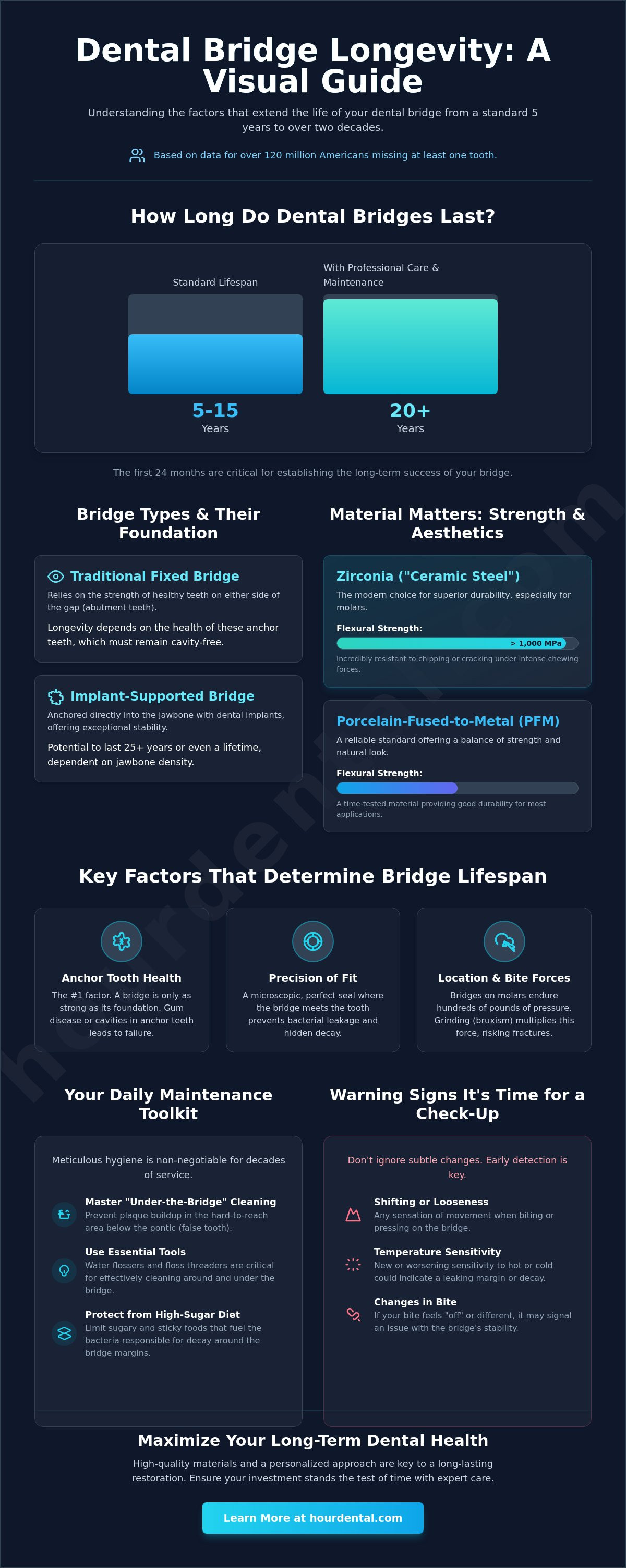
When you're investing in your smile, the first question is naturally: how long do dental bridges last? While the standard industry expectation usually falls between five and fifteen years, this isn't a rigid limit. With the right clinical precision and your commitment to daily care, it's entirely possible for a bridge to serve you for twenty years or more. We see this as a partnership between our technical work and your home routine. A bridge is a durable solution, but its environment determines its ultimate endurance.
The initial twenty-four months are often the most telling period for the longevity of your restoration. During this time, your gums settle around the new structure and you establish the cleaning habits that protect the underlying foundation. A successful outcome depends on the structural integrity of the Bridge (dentistry) and how well the anchor teeth, or abutments, are maintained. If the foundation stays strong during these first two years, the bridge is much more likely to reach that decade-plus milestone.
Fixed vs. Implant-Supported Bridge Longevity
A traditional fixed bridge relies on the strength of the healthy teeth on either side of the gap. These abutment teeth must remain cavity-free to support the weight and pressure of chewing. In contrast, implant-supported bridges are anchored directly into the jawbone. While our practice does not perform the surgical placement of implants, we recognize they offer exceptional stability, with the potential to last twenty-five years or even a lifetime. The density of your jawbone plays a huge role here. A strong bone foundation prevents the subtle shifting that can sometimes cut a traditional bridge's life short. Understanding how long do dental bridges last often comes down to evaluating the health of the bone and teeth supporting the device.
Material Matters: Porcelain vs. Zirconia
Material choice is a major factor in how your bridge handles daily wear and tear. Porcelain-fused-to-metal (PFM) has been a reliable standard for decades, offering a great balance of strength and a natural look. However, many of our neighbors in Dundalk are now choosing zirconia for their restorations. Often called "ceramic steel," zirconia boasts a flexural strength of over 1,000 MPa. This makes it incredibly resistant to chipping or cracking, especially for back-of-the-mouth restorations where chewing forces are highest. Choosing the right material for your specific bite ensures your restoration doesn't just look good, but stays functional for the long haul.
Key Factors That Determine How Long Your Bridge Lasts
Understanding the mechanics of your smile helps explain how long do dental bridges last and why some restorations endure for decades while others require early replacement. While high-quality materials are essential, the lifespan of a dental bridge is primarily dictated by the biological and physical environment of your mouth. Precision in the initial placement is the first line of defense. A bridge that fits with microscopic accuracy prevents bacterial "leakage" at the margins, which is where the crown meets the natural tooth. If this seal is imperfect, plaque can seep underneath, causing decay that you can't see or feel until the damage is advanced.
Mouth location also plays a significant role in wear and tear. Your molars are the workhorses of your mouth, enduring hundreds of pounds of pressure with every meal. Because of this intense bite force, bridges in the back of the mouth often face more structural stress than those in the front. If you struggle with bruxism, or chronic teeth grinding, this pressure is multiplied and can lead to porcelain fractures. We often recommend a custom night guard during a dental exam to protect your investment from the destructive forces of nighttime grinding.
The Health of Your Anchor Teeth
A bridge is only as stable as the natural teeth supporting it. These abutment teeth carry the load for the missing tooth, meaning they work twice as hard. If these anchors develop gum disease or cavities, the entire restoration becomes compromised. This is why we focus so heavily on what is a dental bridge and how it functions during our patient consultations. We want you to understand that protecting the natural foundation is the only way to ensure your smile remains functional. Recurrent decay under the crowns is the leading cause of bridge failure, making meticulous hygiene around the gum line non-negotiable.
Lifestyle and Diet Impacts
Your daily choices in Dundalk directly influence how long do dental bridges last. High-sugar diets create an acidic environment that encourages bacteria to gather at the bridge margins. Physical habits matter just as much. Chewing on ice, pens, or hard candies can cause micro-fractures in ceramic surfaces that eventually lead to a total break. Additionally, smoking significantly impacts the blood flow to your gums. Poor circulation slows down your body's ability to fight off infections, which can lead to gum recession. When gums recede, they expose the vulnerable edges of your bridge, inviting the very decay we work so hard to prevent.
How to Make Your Dental Bridge Last for Decades
While the manufacturing of your restoration is our responsibility, its daily survival is largely in your hands. If you are wondering how long do dental bridges last, the answer usually depends on how well you master the space between the bridge and your gums. This gap is a magnet for plaque and food debris. Without a specific strategy, bacteria can build up and lead to gum disease or decay in the anchor teeth. Proactive care isn't just about brushing; it's about using the right specialized tools to reach every hidden surface.
Standard floss often won't do the trick on its own because it can't easily reach the underside of the restoration. You'll need to incorporate tools like floss threaders or interproximal brushes to navigate the small spaces around the abutment teeth. These tiny brushes are specifically designed to sweep away plaque from the gaps that a standard toothbrush simply can't touch. Many of our patients in Dundalk find that water flossers are a game changer for flushing out food particles that get trapped after meals. Following a routine of proper care for a dental bridge can truly be the difference between a restoration that lasts ten years and one that serves you for twenty-five.
The Ultimate Hygiene Routine for Bridges
Brushing twice a day is the baseline, but the type of paste you choose matters. We recommend a non-abrasive fluoride toothpaste to avoid creating micro-scratches on the porcelain surface that can trap stains. Flossing under the fake tooth, or pontic, is a non-negotiable part of your day because this is where most failures begin. An antimicrobial mouthwash serves as an extra layer of protection, neutralizing the bacteria that your brush might miss in the tightest crevices of your gum line.
Professional Maintenance in Dundalk
Regular visits are about more than just a quick cleaning. These comprehensive dental check-ups allow us to inspect the margins of your bridge for any signs of early wear or seal failure. We use digital X-rays to see beneath the crowns, ensuring the anchor teeth remain healthy and strong. Over time, your bite can shift slightly. We can adjust the bridge to ensure pressure is distributed evenly, which prevents the ceramic from cracking under the stress of chewing.
If you have a habit of clenching your teeth at night, a custom nightguard is one of the best investments you can make for your oral health. It acts as a shock absorber, protecting the ceramic from the immense pressure of nocturnal grinding. This simple step, combined with professional cleanings, ensures your dental work remains a reliable part of your smile for as long as possible.
Warning Signs: When Does a Dental Bridge Need Replacing?
Even when you follow a strict hygiene routine, physical wear or biological changes can eventually signal that your restoration is reaching the end of its functional life. While we often discuss how long do dental bridges last in terms of decades, individual circumstances like changes in gum health or bite pressure can shorten that window. Recognizing the early warning signs of failure allows us to intervene before a simple replacement turns into a complex dental situation. We want our neighbors in Dundalk to feel empowered to monitor their own oral health and maintain their Lasting Confidence.
One of the most common indicators is a new sensitivity to hot or cold temperatures specifically at the gum line of your anchor teeth. This often suggests that the protective seal has been compromised, allowing stimuli to reach the sensitive nerves. You might also notice a subtle shifting or loose sensation when you chew or speak. If the bridge doesn't feel like a solid, immovable part of your mouth, the cement may have washed out or the supporting teeth could be weakened. Visual and sensory changes are equally important. Keep an eye out for:
- Visible gray lines or dark shadows appearing near the base of the bridge, which can indicate metal exposure or underlying decay.
- Persistent bad breath or a foul taste that doesn't go away with brushing, often caused by trapped bacteria under the pontic.
- A change in how your teeth fit together when you close your mouth.
Identifying Structural Failure
Structural failure isn't always painful. You might notice small cracks or chips in the porcelain surface, especially on molars that handle heavy chewing loads. Gum recession is another critical factor; as the tissue pulls away, it exposes the edge of the crown, making it harder to clean. At this stage, some patients evaluate a bridge vs partial denture to see which restorative path best fits their current lifestyle and oral health needs. Understanding how long do dental bridges last helps you decide if a repair is enough or if a total replacement is required to protect your smile.
When It Becomes a Dental Emergency
In some cases, a failing bridge becomes an urgent matter. Sudden pain or swelling in the gums around your abutment teeth often points to an infection that requires immediate attention. If your bridge completely detaches, don't try to glue it back yourself with over-the-counter products. Keep the area clean and avoid chewing on that side until you can see us. If you notice any of these signs, it's time to schedule emergency dental care to protect your remaining natural teeth and restore your comfort.
Expert Restorative Care at Hour Dental in Dundalk
Choosing where to receive your restorative work is just as important as the materials used in the bridge itself. At Hour Dental, Dr. Arundati Kharel Sigdel takes a meticulous approach to every restoration, ensuring that the question of how long do dental bridges last is answered with a decade or more of functional beauty. We understand that residents in Dundalk and surrounding areas like Essex want a dental home that combines clinical authority with a welcoming, neighborly vibe. Our focus is on maximizing your dental ROI by using high-quality materials and a precision fit that protects your natural teeth for the long term.
Families from all over Baltimore County visit us because we treat every patient like a member of our own community. We know that dental procedures can cause anxiety, especially when you're worried about the cost or the potential for failure. That's why we've designed our practice to be a safe haven where comfort and expertise meet. By focusing on the positive life impact of a full, healthy smile, we move beyond technical talk and help you reclaim your personal confidence. Our goal is to build an enduring, trust-based relationship that serves your family for generations.
A Foundation of Comfort and Precision
Longevity begins with a perfect fit. Even a microscopic gap can invite bacteria, so we take the time to ensure your bridge sits comfortably and securely. We provide gentle dental care in Baltimore that prioritizes your comfort from the first consultation to the final placement. Our personalized care plans don't just look at the missing tooth; they consider your entire oral health ecosystem. This comprehensive view is why our bridges often exceed the standard lifespan, giving you a result that feels as natural as it looks.
Your Next Steps for a Full Smile
If you're ready to restore your smile, the first step is a thorough evaluation. We'll sit down with you to discuss all your tooth replacement options in Dundalk, helping you weigh the benefits of fixed bridges against other solutions. We believe that financial accessibility shouldn't be a barrier to quality care. Our team works closely with you to navigate insurance benefits and ensure you understand how to maximize your coverage for restorative work. Whether you need a same-day evaluation for a loose bridge or are planning a new restoration, we are here to provide the immediate solutions you need for Lasting Confidence.
Reclaim Your Smile with Lasting Confidence
A dental bridge is a significant investment in your daily comfort and self-esteem. While industry standards for durability are well established, your commitment to specialized hygiene and professional maintenance determines exactly how long do dental bridges last in your unique case. By protecting your anchor teeth and choosing high-quality materials, you ensure your restoration remains a reliable part of your life for years to come. We've seen how the right care can extend the life of a bridge well beyond a decade.
At Hour Dental, Dr. Arundati Kharel Sigdel and our dedicated team are proud to serve families across Dundalk, Essex, and Baltimore with gentle and precise restorative care. We believe that everyone deserves a functional smile that feels natural and secure. Whether you're looking for a new bridge or need a same-day emergency restorative assessment for an existing one, we're here to provide the immediate solutions you deserve. Our practice is a safe haven for those who want a blend of clinical excellence and community warmth.
Schedule your restorative consultation at Hour Dental today! We look forward to welcoming you into our office and helping you achieve a healthy, vibrant smile that you'll carry with pride.
Frequently Asked Questions
Can a dental bridge last 20 years?
Yes, a dental bridge can last 20 years or more if you follow a meticulous oral hygiene routine and attend regular professional cleanings. While the average lifespan is often cited as 5 to 15 years, many patients in Dundalk maintain their restorations for decades by protecting the health of their anchor teeth. Using durable materials like zirconia and wearing a nightguard to prevent grinding are key factors in reaching this long-term milestone.
What is the most common reason for dental bridge failure?
The most common cause of failure is tooth decay developing underneath the crowns of the anchor teeth. When bacteria seep under the margins of the bridge, they can cause cavities that compromise the entire structure. This is why we emphasize the importance of using floss threaders and water flossers to clean areas that a standard toothbrush can't reach. Maintaining the health of the foundation is the best way to extend how long do dental bridges last.
Is it painful to have a dental bridge replaced?
Replacing a bridge is generally a comfortable experience similar to the initial placement. We prioritize a gentle approach and use local anesthesia to ensure the area is completely numb before we begin any work. Our goal is to alleviate any anxiety you might have by providing a stress-free environment. Most patients find that the relief of having a stable, functional restoration far outweighs any temporary discomfort during the appointment.
How much does it cost to replace a dental bridge in Baltimore?
The cost of replacement in the Baltimore area depends on the number of teeth involved and the materials you choose, such as porcelain or zirconia. Since every smile is unique, we provide a personalized estimate after a thorough exam to ensure there are no surprises. Many dental insurance plans categorize this as a major restorative procedure and may cover a portion of the cost depending on your specific policy and annual maximums.
Can you repair a chipped dental bridge without replacing the whole thing?
Minor chips in the porcelain surface can often be smoothed out or repaired with composite resin, but structural cracks usually mean the bridge needs replacement. If the integrity of the bridge is compromised, it can no longer support the pressure of chewing without risking further damage to your anchor teeth. We always evaluate the extent of the chip during a dental exam to determine if a simple repair is a safe and lasting option for you.
How do I know if my dental bridge is loose?
You'll likely notice a clicking sound or a subtle shifting sensation when you bite down or speak if your bridge is loose. Sometimes a foul taste or persistent bad breath centered around the restoration indicates that the dental cement has washed out, allowing bacteria to gather underneath. If you feel any movement, it's important to schedule an evaluation immediately to prevent the bridge from detaching or causing decay in the supporting teeth.
Does insurance cover dental bridge replacement?
Most dental insurance providers do cover bridge replacement, typically paying for a percentage of the cost if the restoration is no longer functional. It's important to check your plan for any missing tooth clauses or waiting periods that might apply to major restorative work. Our team in Dundalk is happy to help you navigate your benefits and request a pre-determination from your insurer so you know your out-of-pocket costs before treatment begins.
What happens if I don't replace a failing dental bridge?
Ignoring a failing bridge can lead to the loss of the natural anchor teeth due to severe decay or painful infections. When a bridge is no longer sealed properly, the teeth underneath are vulnerable to damage that might eventually require root canal treatment or even tooth extractions. Additionally, a broken bridge allows surrounding teeth to shift out of place, which can complicate your bite and lead to more expensive dental work in the future.


