
More than 120 million people across the United States are currently missing at least one tooth, which means you aren't alone if you're feeling self-conscious about a gap in your smile. It's completely normal to feel a bit of anxiety when your favorite foods become difficult to chew or when you find yourself hiding your laugh behind your hand. You might be asking yourself, what is a dental bridge, and could it be the reliable solution you need to get back to feeling like yourself? Our community practice believes that everyone deserves to eat with ease and smile with total confidence.
We've created this guide to help you discover how dental bridges work, the different types available, and how they can restore your chewing power. You'll learn about the modern materials used for a natural appearance and how these long-lasting solutions provide the durability your family needs. We will also walk through the practical steps of the process and what to expect regarding insurance coverage, giving you a clear path toward a healthier, more vibrant smile.
Key Takeaways
- Learn what is a dental bridge and how these custom-crafted restorations use your existing teeth to anchor a beautiful, natural-looking replacement.
- Explore the four main types of fixed bridges to identify which specialized solution provides the best support for your unique dental structure.
- Gain a clear understanding of the gentle preparation process to help alleviate any anxieties and prepare you for a comfortable, stress-free visit.
- Discover the specific tools and daily care routines, like the bridge threader technique, that protect your oral health and ensure your new smile lasts.
- Evaluate how a bridge compares to other restorative options to help you make an informed decision about regaining your bite and smile.
What is a Dental Bridge? Bridging the Gap for Your Smile
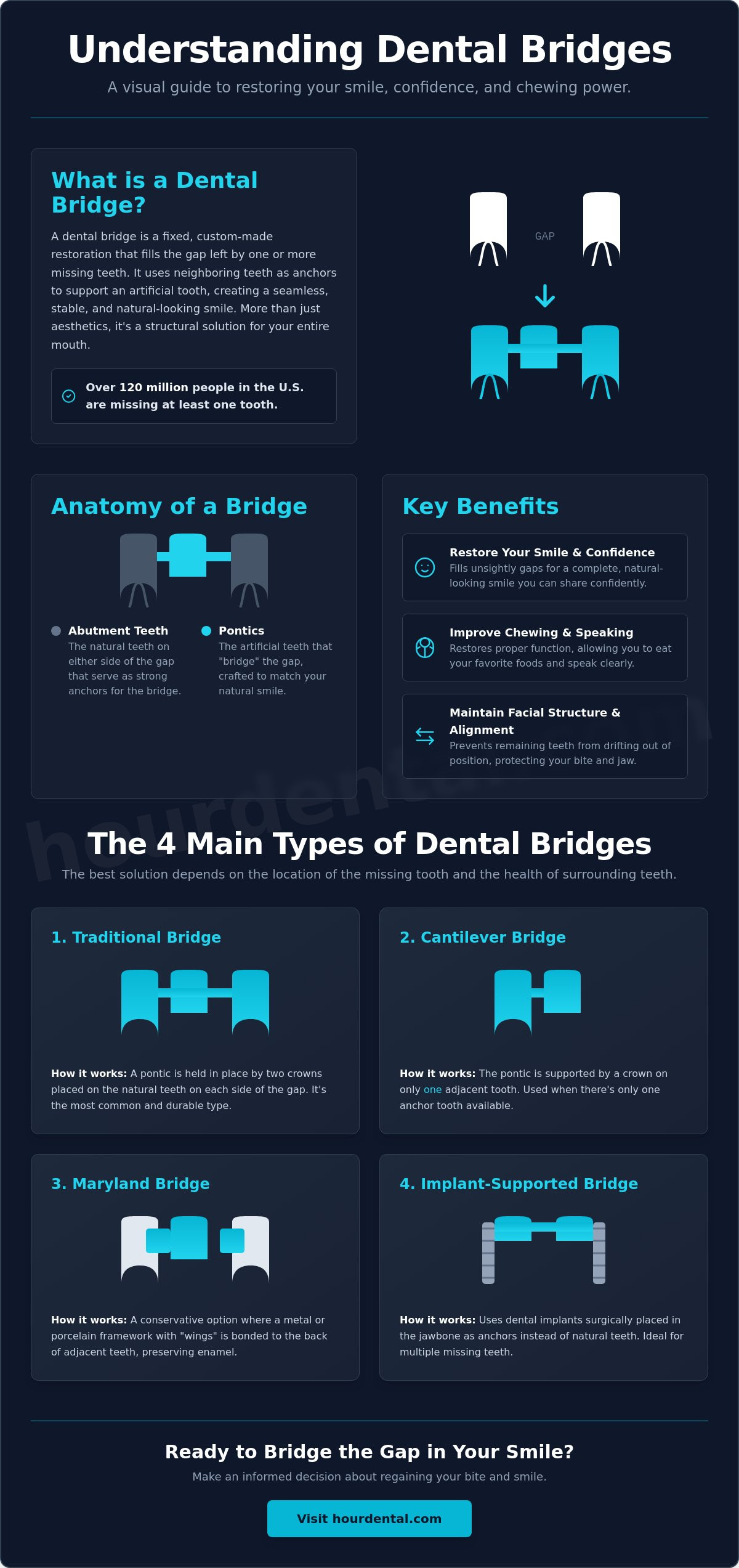
Missing a tooth can feel like a missing piece of your identity, but modern dentistry offers a reliable way to reconnect your smile and your self-esteem. At its heart, a dental bridge is a custom-made fixed restoration designed to fill the space where one or more teeth used to be. It's an established, time-tested solution that our team has used for years to help neighbors across our community regain their ability to eat and speak without a second thought. Unlike a removable appliance, this restoration is bonded into place, providing a permanent feel that mimics the stability of your natural teeth.
When you ask what is a dental bridge, it's helpful to think of it as a structural support system for your entire mouth. Beyond just filling a hole, it serves as a vital placeholder that keeps your remaining teeth in their proper positions. Without this support, surrounding teeth often begin to tilt or drift into the empty space, which can lead to a misaligned bite and eventual jaw discomfort. By choosing a bridge, you are making a proactive investment in the long-term alignment of your smile and the preservation of your natural facial structure.
The Anatomy of a Bridge: Abutments and Pontics
A bridge is typically composed of two main parts that work together to create a seamless look. The abutment teeth are the natural teeth on either side of the gap that act as sturdy anchors for the restoration. These anchors support the pontics, which are the artificial teeth crafted specifically to match the shade and shape of your surrounding smile. To ensure your restoration is both beautiful and durable, we utilize high-quality materials such as porcelain, zirconia, or gold. These materials are selected for their biocompatibility and their ability to withstand the daily pressures of chewing while looking completely natural.
Functional vs. Aesthetic Benefits
A bridge does much more than just complete your smile; it restores the essential mechanics of your mouth. It allows you to distribute the force of your bite evenly across all your teeth, which prevents unnecessary wear and tear on your remaining natural enamel. You will likely find that speaking becomes clearer and chewing your favorite local meals feels effortless again. This restoration provides a significant psychological boost, helping you feel relaxed and confident in every social interaction. It's about moving away from the anxiety of a missing tooth and toward a future of long-term personal confidence.
Exploring Your Options: The 4 Main Types of Dental Bridges
Understanding the different Types of dental bridges is a vital step in deciding how to care for your oral health and regain your smile. While the core definition of what is a dental bridge involves filling a gap between teeth, the specific technique used can vary significantly based on the location of your missing tooth and the health of your surrounding enamel. Our team focuses on providing a safe haven where you can explore these options in a relaxed, personalized setting, ensuring the solution we choose together supports your long-term confidence.
Traditional and Cantilever Bridges
Traditional bridges are the most frequent choice for our neighbors who have healthy, strong teeth on both sides of a gap. This design utilizes two porcelain crowns that are placed over your natural anchor teeth to secure the artificial tooth, or pontic, firmly in the middle. It is a sturdy, time-tested approach that provides excellent chewing power and a seamless look. Because this method relies on the strength of the neighboring teeth, we always begin with a thorough dental exam to ensure your anchors are healthy enough for the task.
A cantilever bridge is a more specialized solution used when there is only one anchor tooth available next to the missing space. While these aren't as common in modern practices due to the leverage they place on a single tooth, they remain a reliable option for specific areas of the mouth that don't experience heavy biting pressure. We carefully assess the structural integrity of your anchor tooth to make sure it can handle the load without shifting over time. Knowing what is a dental bridge and which version fits your unique anatomy helps you feel more prepared and less anxious about the restoration process.
Maryland and Implant-Supported Bridges
Maryland bridges offer a conservative alternative that many patients appreciate because they preserve more of your natural tooth enamel. Instead of using full crowns, this style utilizes metal or porcelain "wings" that are bonded discreetly to the backs of your existing teeth. This is often an ideal choice for missing front teeth where the aesthetic result is the primary goal and the biting force is relatively low. It is a gentle way to restore your smile without the need for extensive tooth reshaping.
For those missing several teeth in a row, an implant-supported bridge is often considered the gold standard for stability and comfort. This type doesn't rely on your natural teeth for support; instead, it is anchored by dental implants placed in the jawbone. This approach preserves the integrity of your surrounding healthy teeth while providing a rock-solid foundation for larger fixed bridges. While the timeline for this option is longer than traditional methods, the durability and natural feel it provides can be a life-changing improvement for your daily comfort and chewing ability.
The Procedure: What to Expect During Your Visit
Walking into a dental office shouldn't feel like a source of stress or uncertainty. At our practice, we treat every visit as an opportunity to build a relationship based on mutual respect and professional care. Your journey toward a complete smile begins with a thorough consultation where we listen to your concerns and evaluate your oral health. We take the time to explain what is a dental bridge in the context of your specific needs, ensuring you feel like a partner in your treatment plan. During this initial meeting, we review the four main types of dental bridges to determine which restorative approach will best serve your long-term confidence.
Gentle Preparation and Comfort
The next step involves preparing the anchor teeth that will support your new restoration. We understand that many people feel anxious about dental procedures, which is why we prioritize a relaxed, pain-free experience. By using local anesthesia, we ensure the tooth-shaping process is completely comfortable. For those who need a little extra reassurance, we specialize in gentle dental care in Baltimore to help you feel at ease from the moment you sit in the chair. Once the teeth are prepared, we take highly accurate digital or physical impressions. These detailed models serve as the blueprint for your custom-crafted bridge, ensuring a perfect fit with your unique gum line.
The Custom Fabrication Process
While your permanent bridge is being meticulously crafted in a dental laboratory, we provide a temporary bridge to protect your prepared teeth and maintain your smile's appearance. This interim step ensures you don't have to worry about sensitivity or gaps while you wait. The fabrication process is where art meets science. Technicians use your impressions to match the shade, translucency, and shape of your existing natural teeth, often utilizing durable materials like zirconia for a lifelike result. We focus on the fine details to make sure the transition between your natural enamel and the prosthetic is virtually invisible.
Your final visit is the most rewarding part of the process. We remove the temporary bridge and carefully place your custom restoration. We don't just bond it and send you on your way. Our team performs precise adjustments to your bite, ensuring the bridge feels natural when you speak and chew. We want you to leave our office feeling like a vibrant member of the community, ready to share your smile with friends and family across our local neighborhoods. This final fitting is the culmination of our goal: providing a safe haven for restorative care that lasts for years to come.
Maintaining Your Investment: Care and Longevity
Investing in your smile is a significant step toward long-term personal confidence, and protecting that investment requires a consistent daily routine. While we've already covered the basics of what is a dental bridge, its ultimate lifespan depends heavily on how well you care for the supporting teeth and gums. A well-maintained bridge can serve you reliably for a decade or more, allowing you to enjoy your favorite meals and local social gatherings without worry. Our practice is here to provide the gentle guidance and professional support you need to keep your restoration in peak condition. We view every patient relationship as a long-term commitment to your wellbeing and overall health.
Cleaning Under the Bridge
The space beneath your artificial tooth, or pontic, requires a bit more attention than your natural teeth because food particles can easily become trapped in the small gap. We often recommend using a "bridge threader" or specialized floss to navigate this specific area effectively. Using specialized floss with a stiffened end allows you to sweep away trapped food particles and bacteria, which effectively prevents painful gum inflammation under the prosthetic. For many of our neighbors in the surrounding residential areas, interdental brushes or water flossers are also excellent tools for maintaining a high level of hygiene. Preventing decay in your abutment teeth is the single most important factor in ensuring your bridge remains a durable, permanent fixture in your smile. If those anchor teeth stay healthy, your bridge stays strong.
Your diet also plays a role in the longevity of your dental work. While your new teeth are durable, they aren't indestructible. It's a good idea to be cautious with extremely sticky or hard foods, like ice or hard candies, which could potentially chip the porcelain or loosen the cement. Think of it as protecting a piece of fine craftsmanship. Brushing twice a day with a soft-bristled brush remains your first line of defense against the plaque that can accumulate at the gum line where the bridge meets your natural teeth. This simple habit keeps the foundation of your restoration clean and secure.
Signs Your Bridge Needs Attention
Even with the best care, you should stay mindful of how your restoration feels during your daily life. If you notice a "loose" sensation or a subtle change in how your teeth fit together when you bite down, it's time for a professional evaluation. Sensitivity to hot or cold temperatures around your anchor teeth can also indicate that the seal of a crown may have weakened over time. If you experience a sudden issue or accidental damage to your restoration, our team provides emergency dental care in Dundalk to give you immediate relief and peace of mind. We pride ourselves on being a reliable problem-solver for our community, offering urgent availability when you need it most.
Regular professional visits are the final piece of the puzzle. During your routine dental exams, we monitor the structural integrity of your bridge and the health of the surrounding tissue. These visits allow us to catch minor concerns before they become larger problems, ensuring your smile remains a source of pride for a lifetime. If it's been a while since your last cleaning, we invite you to contact our friendly team to schedule a check-up and keep your smile shining bright.
Making the Choice: Is a Dental Bridge Right for You?
Deciding how to restore your smile is a personal journey that involves balancing your unique health needs with your daily comfort and lifestyle. Now that you understand what is a dental bridge and how it functions as a permanent restoration, you can better evaluate if it fits your specific goals. Unlike removable options that can sometimes feel unstable, a bridge is designed to stay firmly in place. This means you don't have to worry about your teeth shifting while you're enjoying a meal at a local restaurant or speaking during a community gathering. We carefully look at the strength of your remaining teeth to ensure they can provide a sturdy, reliable foundation for years to come.
Bridge vs. Partial Denture
One of the most frequent questions our neighbors in the Dundalk area ask is whether they should choose a fixed bridge or a removable appliance. While partial dentures are often a budget-friendly choice, they require daily removal for cleaning and can sometimes feel less secure during vigorous chewing. You can read our detailed guide on bridge vs. partial denture to see which solution aligns best with your vision for your smile. A bridge offers a seamless, "set it and forget it" feel that many of our patients find much more natural for their active lives. This fixed stability helps you move through your day with long-term confidence.
Personalized Care at Hour Dental
Our practice is deeply rooted in the Maryland community, and we take pride in being a safe haven for families who want high-quality care in a relaxed, hospitable setting. Dr. Sigdel and our team focus on building enduring relationships, moving beyond quick technical fixes to ensure your overall wellbeing. We create a gentle, welcoming environment for every dental check up in Dundalk, making sure you feel heard and respected throughout the process. Whether you are visiting from nearby neighborhoods or have been a part of our practice for generations, we are here to help you regain your chewing power and your smile.
Choosing the right restorative path is about more than just filling a gap; it's about preserving the integrity of your bite and the natural shape of your face. We invite you to schedule a personalized evaluation where we can discuss your options in detail and answer any remaining questions you have about what is a dental bridge. Taking this next step is a vital commitment to your future health. We are honored to be your partners in achieving a lifetime of healthy smiles and lasting confidence.
Ready to Rediscover Your Confident Smile?
Restoring a full, vibrant smile is about much more than just the technical procedure; it's about reclaiming your ability to enjoy meals with friends and speak with total ease. You now have a clear understanding of what is a dental bridge and how this durable solution can protect your facial structure while preventing your natural teeth from shifting. Whether you are interested in a traditional fixed bridge or a conservative Maryland style, the right restoration provides the long-term confidence you deserve.
At our practice, we've spent years serving Dundalk and Baltimore families as a trusted community fixture. Led by Dr. Arundati Kharel Sigdel, DDS, our team is committed to providing a gentle and personalized experience in a safe haven for all our neighbors. We understand that dental needs can't always wait, which is why we offer same-day emergency appointments for those seeking urgent relief. Schedule your consultation at Hour Dental today to see if a dental bridge is right for you. We are here to help you smile brightly for many years to come.
Frequently Asked Questions
How long do dental bridges typically last?
A dental bridge typically lasts between 8 and 10 years with proper oral hygiene and regular professional check-ups. The longevity of your restoration depends heavily on the health of the anchor teeth and the surrounding gums. By maintaining a consistent routine of brushing twice a day and using specialized cleaning tools, you can ensure your investment remains a stable and beautiful part of your smile for a long time.
Is the dental bridge procedure painful?
The procedure is not painful because we utilize local anesthesia to completely numb the area before we begin any shaping or preparation. Our practice is a safe haven for patients who feel anxious, and we prioritize a gentle approach to make your visit as relaxed as possible. You might experience some mild sensitivity for a few days after the appointment, but this usually fades quickly as your mouth adjusts.
Can I eat normally with a dental bridge?
You can enjoy most of your favorite foods once your bridge is permanently bonded and you've moved past the initial adjustment period. We recommend starting with softer foods for the first few days to allow your gums to heal comfortably. While your bridge restores significant chewing power, it's a good idea to avoid biting down on ice or extremely hard candies that could potentially chip the porcelain materials.
How many teeth can a dental bridge replace?
A dental bridge is most effective for replacing one to three missing teeth in a single row. While it's possible for a bridge to span a larger gap, the anchor teeth must be exceptionally strong to support the additional pressure. During your consultation, we'll carefully assess your oral health to determine if a bridge is the most durable and reliable solution for restoring your bite alignment.
Will a dental bridge change the way I speak?
Most patients find that a bridge actually improves their speech by filling the gaps that can sometimes cause a lisp or whistling sound. When you first receive your new teeth, it's normal to have a brief adjustment period while your tongue gets used to the new dental structure. This transition typically lasts only a few days, and you'll soon feel more confident when speaking in social or professional settings.
How much does a dental bridge cost in Baltimore?
When you are researching what is a dental bridge and its associated costs, it's important to know that the price varies based on the type of bridge and the materials selected. Every patient's needs are different, so we recommend checking your specific insurance plan's annual maximums and deductibles. Many dental PPO plans cover a portion of the cost for major restorative services, and we can help you understand those details during your visit.
Can a bridge be replaced if it gets damaged?
Yes, a bridge can be replaced if it becomes worn, chipped, or loose over time. If you notice any changes in how your restoration feels or fits, we encourage you to schedule an evaluation as soon as possible. Because we are a reliable fixture in the community, we offer urgent availability for emergency situations to help you find a solution and restore your long-term personal confidence without unnecessary delay.
Is a dental bridge better than a dental implant?
The best choice depends on your individual health needs, bone density, and your personal preferences for treatment. A bridge is an excellent, non-surgical restoration that provides a natural-looking smile in a shorter timeframe than other options. While some patients may look at different restorative methods, a bridge remains a highly effective and time-tested way to regain your smile's function without the need for invasive surgery.


