 Comparison
Dental Inlay vs Onlay: Which Restoration Fits Your Tooth
Last Updated: November 26, 2026
Quick Summary
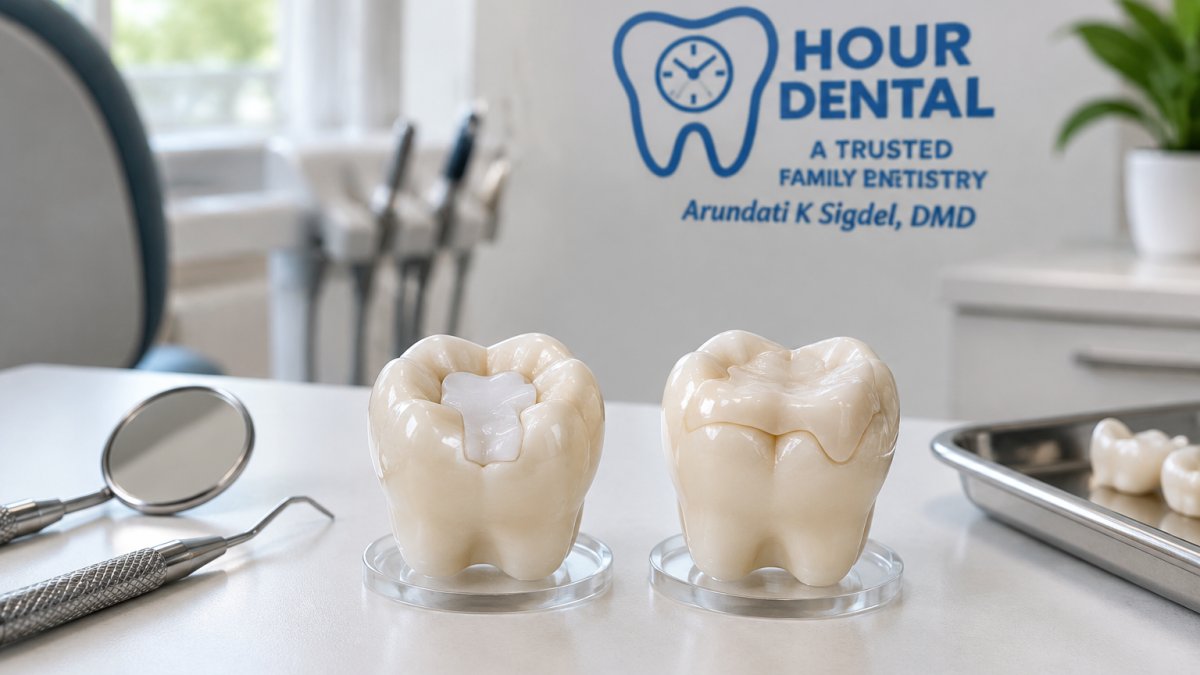
The dental inlay vs onlay difference comes down to how much of the tooth's chewing surface the restoration replaces. A dental inlay fills damage inside the cusps, while an onlay extends over one or more cusps. Both are custom-made restorations, but they suit different patterns of decay.
- An inlay repairs damage within the central chewing surface and leaves the cusps untouched and intact.
- An onlay covers at least one cusp and is sometimes called a partial crown.
- A direct filling suits small cavities, while an inlay may be recommended for larger damage.
- A crown covers the entire tooth above the gumline and is sturdier for badly broken-down teeth.
- Inlay and onlay restorations often take two visits, though same-day milling may shorten that to one.
Table of Contents
- What Is the Difference Between a Dental Inlay and an Onlay?
- Dental Inlay vs Filling: When a Direct Restoration Is Enough
- Dental Onlay vs Crown: Coverage, Prep, and Tooth Preservation
- Inlay vs Onlay vs Crown: A Decision Framework by Damage Level
- Dental Inlay Cost and What Insurance Typically Covers
- The Treatment Timeline: From Exam to Bonded Restoration
- Material Trade-Offs, Risks, and How Long Inlays and Onlays Last
- Book a Restoration Exam at Hour Dental in Baltimore
- Frequently Asked Questions
What Is the Difference Between a Dental Inlay and an Onlay?
The dental inlay vs onlay difference comes down to how much of the tooth's chewing surface the restoration replaces. For the broader context, see what restorative dental care includes.
That single distinction guides many treatment decisions. Below, we explain where each restoration sits, when a filling or crown may make more sense, and what to expect at each stage.
An inlay is a laboratory-made or digitally milled restoration that fits into the center of a back tooth, inside the raised points called cusps.
Inlays Stay Inside the Cusps
An inlay repairs damage that sits within the central chewing surface, the pits and fissures between the cusps. The cusps themselves stay untouched and intact.
Think of it as a custom piece that drops into a prepared hollow. Because the inlay does not extend over the cusp tips, it conserves more natural tooth structure than a crown. That makes it a conservative choice when decay or a cracked filling has not weakened the cusps.
Onlays Cover One or More Cusps
An onlay covers at least one cusp and sometimes all of them, which is where the "partial crown" name comes from. It bonds over the cusp and reshapes the chewing surface while leaving the tooth's outer walls largely in place.
This extra coverage matters when a cusp is cracked, undermined, or at risk of fracture. The onlay spreads chewing forces across the restored cusp instead of leaving it unsupported. Preparing the tooth for an onlay removes more structure than an inlay does.
Dental Inlay vs Filling: When a Direct Restoration Is Enough
A dental filling is placed directly into the tooth in a single visit, while a dental inlay is made outside the mouth and bonded in afterward.
A direct filling is generally considered when the cavity is small and the remaining tooth is strong. Composite resin is shaped and hardened on the spot, and it handles light to moderate wear well.
An inlay starts to make sense when a filling would be large enough to flex or wear quickly.
Dental Onlay vs Crown: Coverage, Prep, and Tooth Preservation
A dental crown covers the entire tooth above the gumline, while a dental onlay covers only the damaged portion and the cusps it needs to protect.
The main difference is preparation. A crown requires reducing the tooth all the way around so the cap fits over it. An onlay leaves the healthy walls intact and only reshapes the area being restored.
So when does the extra coverage of a crown earn its keep? If you are unsure whether your tooth has crossed that line, our guide to the hidden signs you might need a dental crown walks through the warning signs.
Inlay vs Onlay vs Crown: A Decision Framework by Damage Level
Use the location and extent of the damage to narrow the choice. The table below summarizes how we typically think about it.
| Damage pattern | Likely restoration | Why |
|---|---|---|
| Small cavity, intact cusps | Direct filling | Single visit, minimal removal |
| Moderate damage inside the cusps | Dental inlay | Preserves cusp tips, precise fit |
| One or more cusps cracked or undermined | Dental onlay | Covers and splints the cusp |
| Tooth badly broken down or cracked below gumline | Crown | Full coverage and strength |
This is a general guide, not a diagnosis. A clinical exam and imaging decide what your tooth actually needs, and only a dentist can make that call. For a broader look at how these treatments fit together, see our overview of common dental treatments from cavities to crowns.
Dental Inlay Cost and What Insurance Typically Covers
A dental inlay or onlay almost always costs more than a direct filling and less than a full crown, but the exact figure depends on four things: the material, how many surfaces of the tooth are restored, whether the restoration is lab-fabricated or milled in-office, and the fee schedule of the practice you visit. Rather than quote one number that will not fit your tooth, it helps to understand what drives the price so you can ask better questions before treatment.
What moves the price up or down
- Material. Material choice can affect the fee, and the total cost depends on your dentist's assessment and fee schedule.
- Number of surfaces. A one-surface inlay is less involved than an onlay that rebuilds two or three cusps. More surfaces mean more preparation, more laboratory work, and a higher fee.
- Lab versus chairside milling. A restoration made by an outside laboratory involves a second visit and a temporary; same-day milling can reduce visits but not necessarily the total fee.
- Practice and region. Fees can vary by practice, so ask each office for a written estimate.
How dental insurance usually handles inlays and onlays
Many dental plans classify inlays and onlays as basic or major restorative services, and coverage can differ from what a plan pays for a direct filling. Check your specific plan's terms. A common pattern is that a plan pays a higher share for a filling and a lower share for an indirect restoration, with the patient covering the difference. Three plan features decide what you actually owe:
- The coverage percentage for basic versus major restorative care.
- The annual maximum, which caps what the plan pays in a benefit year.
- Any waiting period before major restorative work is covered on a new plan.
How to verify your benefits before treatment
Ask the front office for a pre-treatment estimate, which is a written breakdown of the practice fee, the expected insurance payment, and your estimated out-of-pocket portion.
At Hour Dental in Baltimore, we provide a written estimate before treatment begins and explain how your plan is expected to apply. You can review our insurance options and coverage details to see how claims and estimates are handled, and ask us to confirm your remaining annual maximum before we schedule the bonding visit.
The Treatment Timeline: From Exam to Bonded Restoration
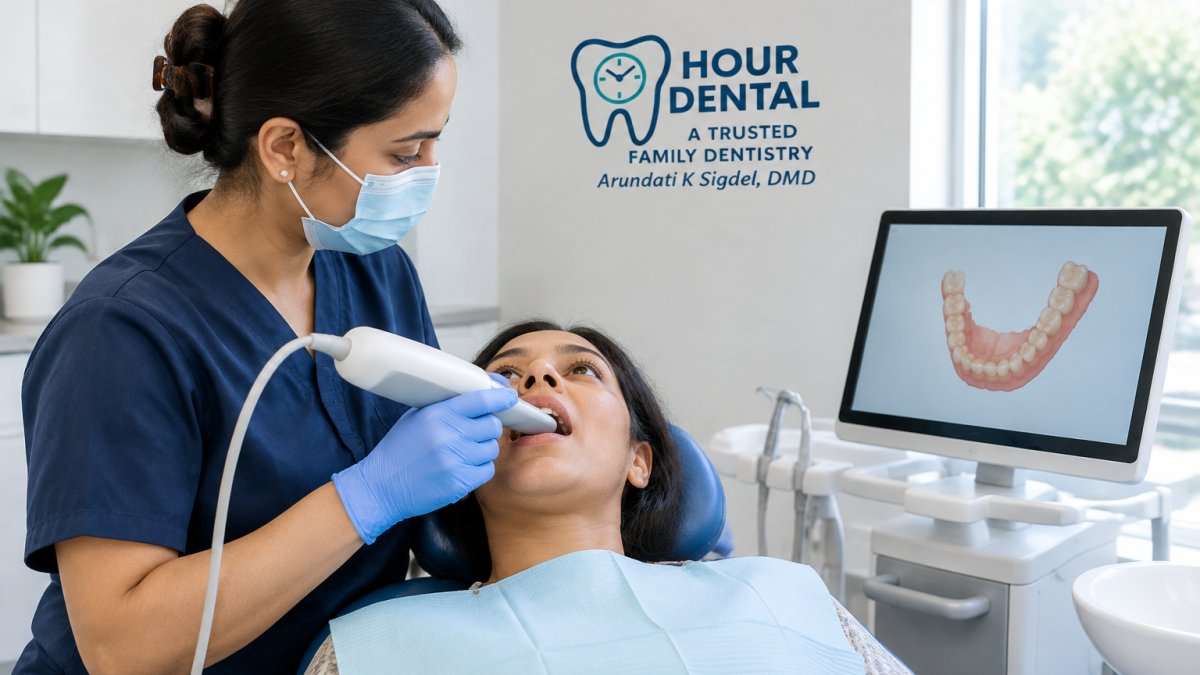
Inlay and onlay restorations often take two visits, though some same-day milling options may shorten that to one. The first visit is diagnosis and preparation; the second is bonding the finished restoration.
- Exam and imaging. We review the tooth, take X-rays or a digital scan, and confirm the restoration type.
- Tooth preparation. The damaged area is cleaned out and shaped for the restoration.
- Scan or impression. A digital scan or traditional impression captures the exact fit.
- Temporary restoration. A temporary protects the tooth between visits.
- Bonding. The final inlay or onlay is checked for fit and bite, then bonded with dental cement.
- Follow-up. We check the bite and comfort, and schedule routine care.
Watch out: biting on a temporary before it is fully set, or skipping the bite check at bonding, can leave the restoration feeling high and cause soreness. Tell us right away if your bite feels uneven.
Material Trade-Offs, Risks, and How Long Inlays and Onlays Last
Material-by-material trade-offs
- Porcelain and ceramic. Tooth-colored and natural-looking, with good wear resistance and color stability. They are strong in compression but more brittle than metal, so a heavy clenching or grinding habit raises the risk of a chip. A chipped ceramic restoration is often replaced rather than repaired.
- Composite resin. Tooth-colored and the easiest of the group to repair or add to chairside, which makes it forgiving for a tooth that may need future work. It wears faster than ceramic or gold under heavy force and can stain over time at the margins.
- Gold. Extremely durable, resistant to fracture, and gentle on the opposing tooth because it wears at a rate similar to enamel. It is the most visible option and the least tooth-colored, which is why it is used most often on back teeth where appearance matters less.
How long inlays and onlays last
Longevity depends on the material, your bite forces, and your oral hygiene. Well-maintained indirect restorations can serve for many years, and longevity depends on material, bite forces, and oral hygiene.
Risks and limitations to know about
- Sensitivity after bonding. Some teeth feel temperature-sensitive for a short period after the cement sets; this usually settles but should be reported if it persists.
- Debonding. A restoration can loosen if the bond is compromised, which is why the bite check at bonding and regular exams matter.
- Fracture. Heavy chewing, grinding, or a restoration that sits high can crack ceramic or composite.
- Recurrent decay. Decay can develop at the margin if plaque is not removed, so brushing, flossing, and routine exams protect the investment.
When a filling or crown may be the better choice
A direct filling remains appropriate when the cavity is small and the cusps are intact, because it preserves more tooth and usually costs less.
Book a Restoration Exam at Hour Dental in Baltimore
Choosing between a dental inlay, onlay, or crown is easier when a dentist examines the tooth and explains the options in plain language. Hour Dental provides comprehensive family and emergency dental care in a comfortable, patient-focused environment, with same-day emergency care available.
Get started with Hour Dental and schedule a consultation so a dentist can help you choose the right treatment for your tooth.
Ready to find out which restoration fits your tooth? Our team in Baltimore makes the next step simple.
Frequently Asked Questions
What are the disadvantages of onlays?
Onlays usually need two visits because the restoration is made in a lab from a dental impression or digital scan, and a temporary restoration sits in place between appointments. They cost more than a direct filling, and some insurance plans classify them as a major rather than basic service. There is also a small risk of sensitivity or recurrent decay at the margin if oral hygiene slips. For a tooth with heavy damage, though, an onlay preserves more natural tooth structure than a full crown.
Do dentists still do inlays?
Yes. Inlays remain a standard indirect restoration for cavities that are too large for a filling but leave the cusps intact. Many practices now use digital scans and ceramic or composite resin materials instead of older impression methods, which makes the fit more predictable. Your dentist will confirm whether an inlay suits your tooth during a dental examination, since the decision depends on how much healthy tooth structure remains.
How much does a dental inlay cost?
Costs for a dental inlay or onlay depend on the material, the tooth, and the practice, so ask for a written estimate. Gold and porcelain sit at the higher end; composite resin often costs less. Dental insurance may cover part of the cost as a basic or major restoration, so check your plan's classification before treatment. For current pricing, contact Hour Dental or visit the website for a quote.
Why would a dentist recommend an inlay instead of a filling?
A dental inlay vs filling decision comes down to size and location. Fillings are placed directly and work well for small to moderate cavities. Once decay spreads across the chewing surface but the cusps are still sound, an inlay restoration gives a better fit and stronger bond than layered filling material. It also avoids the extra tooth reduction a crown requires, which helps preserve natural tooth structure for the long term.
How does an onlay compare with a crown?
An onlay is a partial crown: it covers one or more cusps and the chewing surface but leaves healthy sides of the tooth intact. A full crown caps the entire tooth and needs more tooth preparation. When a damaged tooth has enough sound structure left, an onlay is the more conservative treatment. A crown is usually the better choice when the tooth is cracked below the gumline or too broken down to support a partial restoration.