 Comparison
Dental Implant Alternatives in Baltimore: Costs and Options
Last Updated: November 21, 2026
Quick Summary
Dental implant alternatives in Baltimore include dental bridges, partial dentures, and complete dentures, each replacing missing teeth without implant surgery. Fixed options like bridges feel more natural, while removable dentures usually cost less at the start. The right choice depends on how many teeth are missing and the condition of your remaining teeth.
- Fixed options like bridges stay in place and feel more natural during eating and speaking.
- Removable partial and full dentures are often less expensive at the start but may need relining.
- A Maryland bridge typically involves less tooth removal than a traditional bridge.
- Ask for an itemized estimate covering imaging, extractions, grafting, and follow-up care.
- Dental insurance often has annual maximums, so a single bridge or implant can exceed coverage.
Table of Contents
- Why Patients in Dundalk Look for Implant Alternatives
- Comparing Fixed and Removable Tooth Replacement Options
- Dental Bridge vs. Implant: Replacing One Tooth or Several
- Partial Dentures for Missing Teeth and Their Trade-Offs
- Full Dentures vs. Dental Implants for Replacing All Teeth
- Estimating Real Costs and Local Factors That Affect Affordability
- Dental Financing and Payment Plans in Baltimore County
- Booking Your Consultation to Compare Options at Hour Dental
- Frequently Asked Questions
Why Patients in Dundalk Look for Implant Alternatives
Dental implants are among the most durable ways to replace a missing tooth, but they are not the only option, and many patients in Dundalk and across Baltimore County look for dental implant alternatives because of cost.
The search for alternatives usually comes down to a few practical questions. How much will treatment cost up front? How much will it cost over time?
Implants also require surgery and a healing period, which not every patient can schedule right away, so many people explore dental implant alternatives such as bridges and dentures.
Comparing Fixed and Removable Tooth Replacement Options
Tooth replacement options generally fall into two groups: fixed and removable. A fixed option stays in the mouth and is cemented or bonded to existing teeth or implants. A removable option is taken out for cleaning and at night.
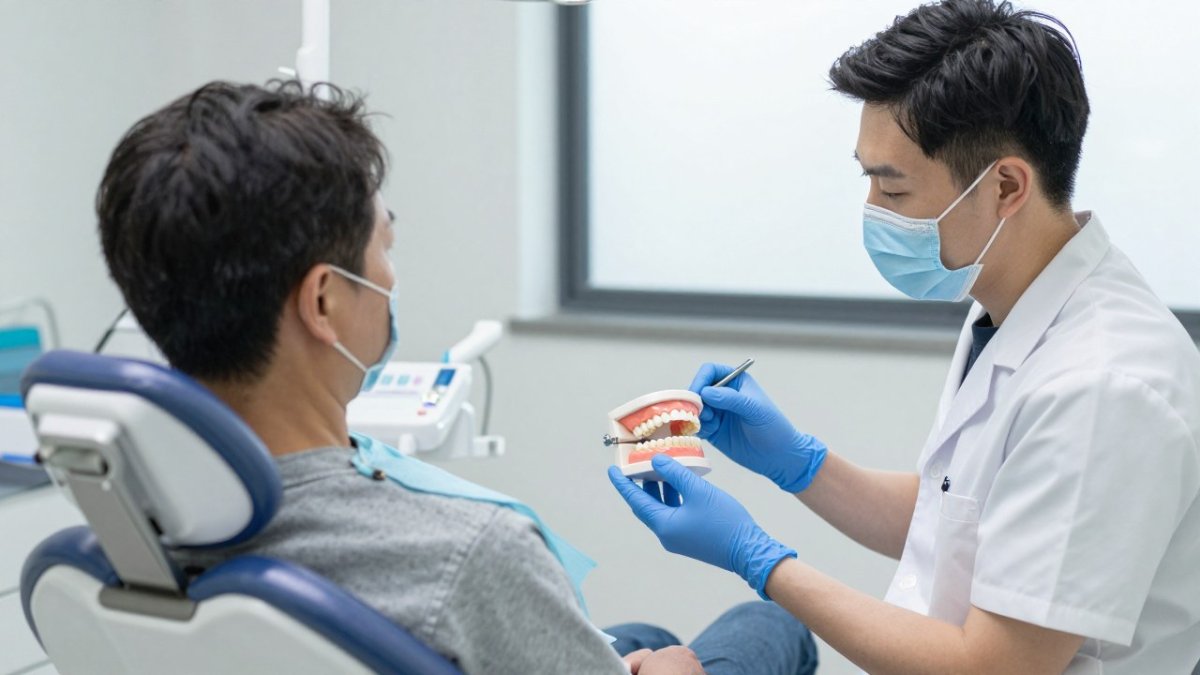
Fixed options, such as bridges, typically feel more natural because they stay in place during eating and speaking. They usually require healthy neighboring teeth or implant support.
The better choice depends on how many teeth are missing, the condition of the remaining teeth, and how much maintenance a patient is willing to do. A treatment plan from a qualified dentist can show which path fits.
Dental Bridge vs. Implant: Replacing One Tooth or Several
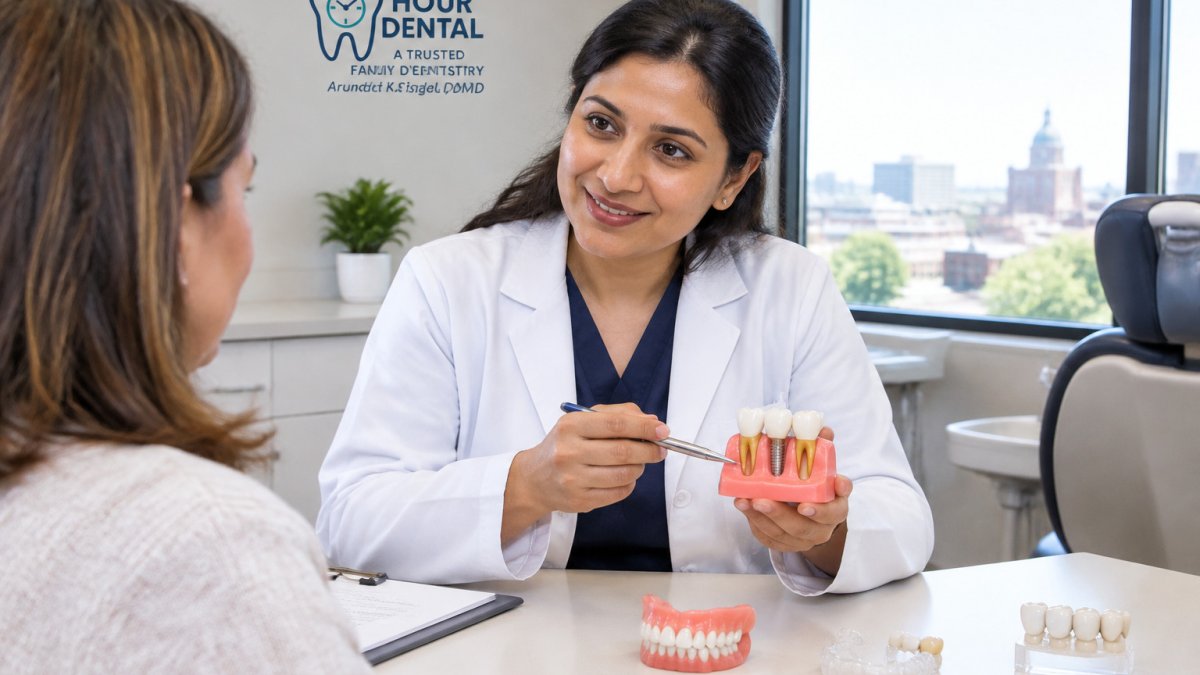
A dental bridge uses the teeth on either side of a gap as anchors for a replacement tooth or teeth. An implant is a titanium post placed in the jawbone that supports a crown.
For a single missing tooth with healthy neighbors, a bridge can be a practical alternative to an implant. For several missing teeth in a row, an implant-supported bridge may offer more stability.
Traditional and Maryland Bridges
A traditional bridge is anchored by crowns on the teeth beside the gap. This approach requires reshaping those anchor teeth, which is a permanent change. A Maryland bridge, also called a resin-bonded bridge, uses metal or porcelain wings bonded to the back of neighboring teeth. It typically involves less tooth removal, though it may not suit every bite or every patient.
Implant-Supported Bridges
An implant-supported bridge attaches to two or more implants rather than to neighboring teeth. This keeps healthy teeth intact and can spread chewing forces across several posts. Because it still involves implant surgery, it is usually more costly up front than a traditional bridge.
Partial Dentures for Missing Teeth and Their Trade-Offs
A partial denture replaces several missing teeth and attaches to the remaining natural teeth with clasps or precision attachments. It is removable, which makes cleaning straightforward, but it may feel bulky at first and can need periodic adjustment as the mouth changes.
Partial dentures are often one of the lower-cost ways to replace multiple teeth. The trade-offs include less stability than a fixed bridge, possible pressure on remaining teeth from the clasps, and the need to remove the appliance at night.
Full Dentures vs. Dental Implants for Replacing All Teeth
When all teeth in an arch are missing, patients usually compare complete dentures with an implant-supported denture. Complete dentures rest on the gums and are removed for cleaning.
Implant-supported dentures attach to a few implants and stay more secure. They generally cost more and require surgical placement and healing. Some patients choose a mix of approaches over time, starting with dentures and adding implants later.
Estimating Real Costs and Local Factors That Affect Affordability
Cost is the reason most Dundalk patients start comparing implant alternatives, but a single headline price is a poor way to compare them. The number that matters is the total cost of getting a working, comfortable smile and keeping it that way. That total is built from several line items, and two offices can quote very different totals for what sounds like the same treatment.
What goes into a tooth-replacement estimate
Ask for an itemized estimate rather than a package price. A complete estimate for any option usually includes:
- Diagnostic imaging. A panoramic X-ray or a cone-beam CT scan is often needed to plan a bridge, denture, or implant. Some offices include imaging in the treatment fee and some bill it separately.
- Extractions. Removing a broken or infected tooth is a separate procedure with its own fee, and surgical extractions cost more than simple ones.
- Bone grafting or ridge preservation. If the jaw has shrunk after tooth loss, grafting may be recommended before an implant or to prepare for a denture. This is a common add-on that patients do not expect.
A common pattern is that the lowest advertised price covers only the prosthesis and leaves imaging, extractions, and grafting to be added later. Comparing itemized estimates side by side prevents that surprise.
Why the same option costs different amounts in Baltimore County
Fees for the same bridge or denture can differ from one Dundalk or Baltimore County practice to another for reasons that have nothing to do with quality.
Watch out: a quote that is dramatically lower than every other estimate you collect usually means something is excluded, so ask specifically what is not included before you treat it as the cheapest option.
Long-term total cost of ownership
The first bill is only part of the story. Each option has a maintenance profile that changes its cost over the years:
- Traditional bridges generally need replacement after roughly a decade or more, depending on care, and the anchor teeth underneath can develop problems that require further treatment.
- Partial dentures typically need relining as the gums and jaw change, and clasps can wear or break. Many patients replace a partial denture after several years of use.
- Complete dentures usually need a reline within the first year or two as the ridge shrinks, and a new denture is commonly needed after several years.
A less expensive option that needs frequent repair or early replacement can cost more over ten years than a more durable one. Ask each provider how long the prosthesis is expected to last, what maintenance it needs, and whether the practice offers any replacement or repair policy.
How Dundalk patients can compare local providers
Baltimore County has a wide range of practices, from general dental offices in Dundalk to specialists in the surrounding area, and access matters as much as price. When comparing, ask each office:
- How far is the office from your home or work, and how many visits will the treatment require? A lower fee that requires several trips can cost more in time and transportation.
- How soon can you get a consultation, and is a consultation fee charged?
- Will the office provide a written, itemized estimate before treatment begins?
Collecting two or three itemized estimates is the most reliable way to see what a treatment really costs in your situation.
The table below lists the main line items that make up a tooth-replacement estimate, so you can compare itemized quotes side by side.
| Cost item | What it covers | Note |
|---|---|---|
| Diagnostic imaging | Panoramic X-ray or cone-beam CT | Sometimes billed separately |
| Extractions | Removing a broken or infected tooth | Surgical extractions cost more |
| Bone grafting | Rebuilding a shrunken jaw ridge | Common add-on patients don't expect |
| The prosthesis | Bridge, partial, or complete denture | Priced per unit, per teeth, or per arch |
| Temporary teeth | Restoration while the final one is made | May carry a separate fee |
| Lab fees | Dental laboratory fabrication | Quoted inside or listed separately |
| Follow-up care | Denture adjustments and relines | Part of the real cost |
Dental Financing and Payment Plans in Baltimore County
Most patients do not pay the full cost of a bridge or denture in one visit, so understanding how insurance, financing, and lower-cost care pathways work is as important as comparing treatment options. The key is to know what each route actually covers before you commit.
How dental insurance handles tooth replacement
Dental insurance is not medical insurance, and its limits shape what you pay. A few mechanics are worth knowing:
- Annual maximums. Most dental plans cap what they will pay per year, often at a relatively modest amount. A single bridge or implant can exceed that maximum, which means the rest is your responsibility even if the procedure is "covered."
- Frequency limits. Many plans pay for a bridge or denture only once every several years, and replacement before that period may not be covered.
- Missing-tooth clauses. Some plans will not pay to replace a tooth that was missing before you enrolled, so check the plan's effective date and exclusions.
Coverage for implants versus bridges versus dentures varies widely by plan, so review your specific policy documents or call your insurer with the procedure codes your dentist provides.
Payment plans and financing
Many practices offer in-house payment plans that split the patient portion into monthly installments, sometimes with no interest for a defined period. Third-party dental financing companies are another route; they typically involve a credit application and may offer promotional no-interest periods or longer-term plans with interest.
Watch out: promotional financing often carries deferred interest, meaning that if the balance is not paid within the promotional period, interest can be applied retroactively from the start. Read the terms before signing.
Lower-cost care pathways in the Baltimore area
Not every patient knows that several lower-cost routes exist in and around Baltimore County:
- Dental schools. Dental schools in the Baltimore area may offer patient clinics where treatment is provided by supervised students. Ask any school directly about its fees and schedule.
- Community and public health clinics. Some community health centers and public health dental programs serve patients on income-based fees. Availability and eligibility vary, so check directly with each program.
- Dental hygiene and preventive programs. Some community programs focus on cleanings and preventive care, which helps protect remaining teeth and may reduce the need for more expensive treatment later.
These pathways are not available to every patient, and eligibility rules differ, so treat them as options to investigate rather than guarantees. A conversation with the practice about your budget, insurance, and timeline is the fastest way to find the combination that works.
Booking Your Consultation to Compare Options at Hour Dental
The best way to choose between these options is a consultation where a dentist examines your mouth, reviews your goals, and explains the trade-offs for your situation. At your visit, it helps to ask how many teeth will be replaced, what maintenance each option requires, what the itemized cost includes, and how long treatment will take.
You can schedule your visit through our online booking system. Hour Dental welcomes Dundalk and Baltimore County families who want to compare their options.
Frequently Asked Questions
What is the cheaper alternative to dental implants?
For many patients, a traditional or Maryland bridge or a removable partial denture usually costs less upfront than a dental implant. Bridges typically require preparing neighboring teeth, while partial dentures avoid surgery but need periodic adjustments and replacement over time. Costs vary with the number of teeth, materials and the condition of your mouth, so the most useful step is a consultation where the dentist can outline a treatment plan and itemize fees. Ask whether the quoted price includes exams, X-rays, lab work and follow-up visits.
What can be done instead of a dental implant?
Common alternatives include fixed dental bridges, removable partial dentures, complete dentures and, for some patients, snap-in or implant-supported overdentures. Each option has different trade-offs in stability, chewing comfort, maintenance and lifespan. A bridge relies on healthy neighboring teeth for support, while a denture rests on the gums and may need relining over time. Your dentist can explain which options fit your bone and gum health and your goals.
How can I get dental implant alternatives if I can't afford them?
Start by asking your dentist for an itemized estimate that compares a bridge, partial denture or full denture against an implant option. Many practices offer in-house payment plans or work with third-party financing, and some dental schools or community programs provide lower-cost care. Check whether your dental insurance covers any part of a bridge or denture, since many plans have annual maximums that apply to restorative work. Verify any financing terms, interest rates and fees in writing before you commit.
Can a dental bridge replace multiple missing teeth?
Yes. A bridge can replace several missing teeth in a row by attaching artificial teeth to crowns placed on the teeth on either side of the gap. A three-unit bridge replaces one tooth, while longer bridges can span more spaces if the supporting teeth are strong enough. For larger gaps or several separate missing teeth, a partial denture or implant-supported bridge may be more suitable. Discuss the number of supporting teeth and their health with your dentist.