 Listicle
When Is a Dental Problem an Emergency?
Last Updated: October 25, 2026
Quick Summary
A dental emergency is any oral condition that threatens a tooth, causes uncontrolled bleeding, or signals spreading infection, and it needs professional attention the same day. Severe throbbing pain, facial swelling with fever, a knocked-out adult tooth, or a broken tooth with pain all warrant an immediate call. Facial swelling that affects breathing or swallowing means going to an emergency room.
- Pain that wakes you at night or throbs without relief usually signals deep decay, an abscess, or nerve involvement.
- For a knocked-out adult tooth, the first 60 minutes give the best chance of saving it.
- Handle a knocked-out tooth by the crown, rinse gently, and keep it in milk or saline.
- Never place aspirin directly on your gums because it can burn tissue.
- Cover a sharp broken tooth edge with dental wax and avoid chewing on that side.
Table of Contents
- Dental Emergency Symptoms You Should Never Ignore
- Severe Tooth Pain Emergency: When a Toothache Needs Same-Day Help
- Swelling, Fever, and Other Signs That Need Urgent Care
- Knocked-Out Tooth Emergency Treatment: The First 60 Minutes
- Broken, Cracked, or Loose Teeth: What Counts as an Emergency
- Emergency Dental Care for Wisdom Tooth Pain
- What to Do While You Wait for Your Appointment
- Getting Same-Day Emergency Dental Care in Baltimore
- Frequently Asked Questions
Dental Emergency Symptoms You Should Never Ignore
Knowing the signs you need emergency dental care can mean the difference between saving a tooth and losing it. A dental emergency is any oral condition that threatens a tooth, causes uncontrolled bleeding, or signals spreading infection, and it needs professional attention the same day. At Hour Dental, we've learned that the hardest part for most patients is simply deciding whether their problem is "wait and see" or "call now." Below, we break down the warning signs that should never wait, the first-aid steps that actually help, and how to get same-day care in Baltimore.
Here's what most guides get wrong: they treat every ache as an emergency. That causes unnecessary panic and wasted visits. The real skill is spotting the handful of symptoms that genuinely cannot wait until Monday morning.
American Dental Association guidance on dental emergencies
Severe Tooth Pain Emergency: When a Toothache Needs Same-Day Help
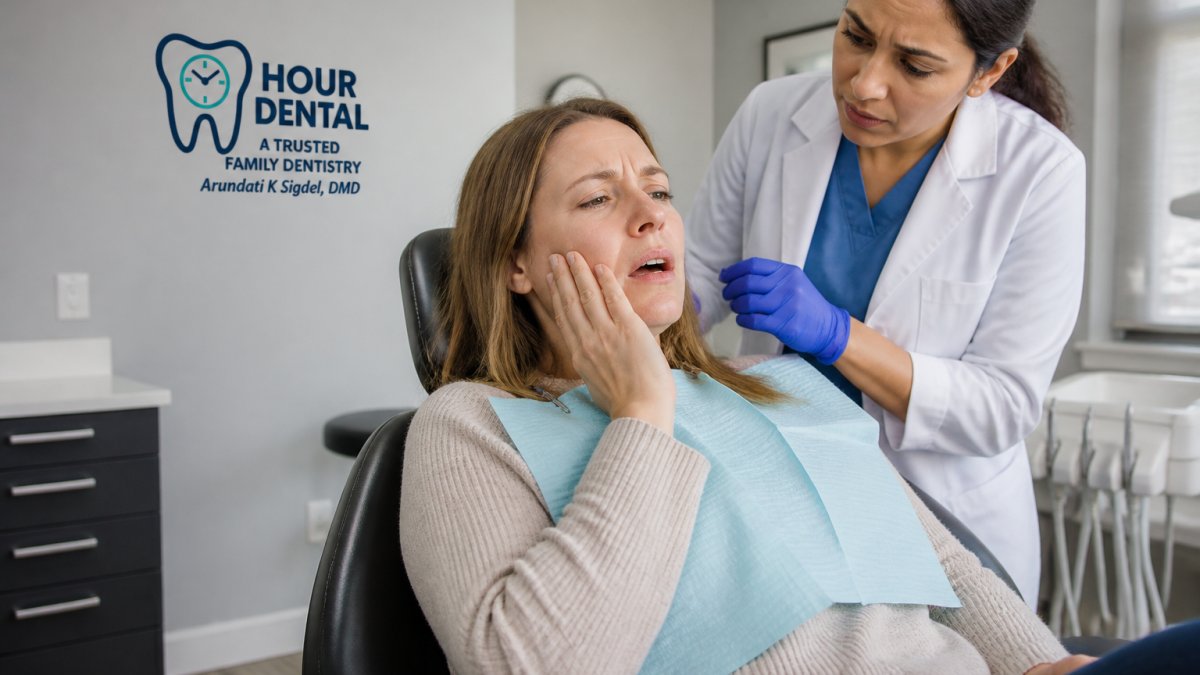
A severe tooth pain emergency is pain that wakes you at night, throbs without relief, or stops you from eating and sleeping. That level of pain usually signals deep decay, an abscess forming, or nerve involvement, and it rarely resolves on its own.
Watch for these patterns:
- Pain that lingers after hot or cold foods disappear
- Sharp pain when biting down, suggesting a fracture
- Throbbing pain with a bad taste or odor, a possible abscess
- Pain that spreads to your jaw or ear
A common mistake is waiting for a toothache to "settle down." In practice, dental pain that escalates over more than a day tends to get worse, not better. If you're in this situation, call our team and describe the pain honestly; we can tell you whether same-day care makes sense.
Swelling, Fever, and Other Signs That Need Urgent Care
Facial swelling paired with fever is the most serious dental emergency symptom on this list. Swelling that spreads toward your eye or throat, or that comes with fever and difficulty swallowing, can indicate an infection moving beyond the tooth. Seek care immediately, and go to an emergency room if breathing or swallowing becomes difficult.
Other urgent signs include:
- Bleeding that won't stop after 10-15 minutes of firm pressure
- A swollen, tender area under the jaw
- Pus or a foul taste near a tooth
- Jaw swelling that changes how your face looks
We treat these situations seriously because infections in the mouth can spread quickly. MedlinePlus overview of tooth abscesses
Knocked-Out Tooth Emergency Treatment: The First 60 Minutes
Knocked-out tooth emergency treatment is time-critical: the first 60 minutes give you the best chance of saving an adult tooth. Handle the tooth by the crown, never the root. If it's dirty, rinse it gently with water, then try to reinsert it in the socket and bite down softly on clean gauze. If reinsertion isn't possible, keep the tooth in a cup of milk or saline and call us right away.
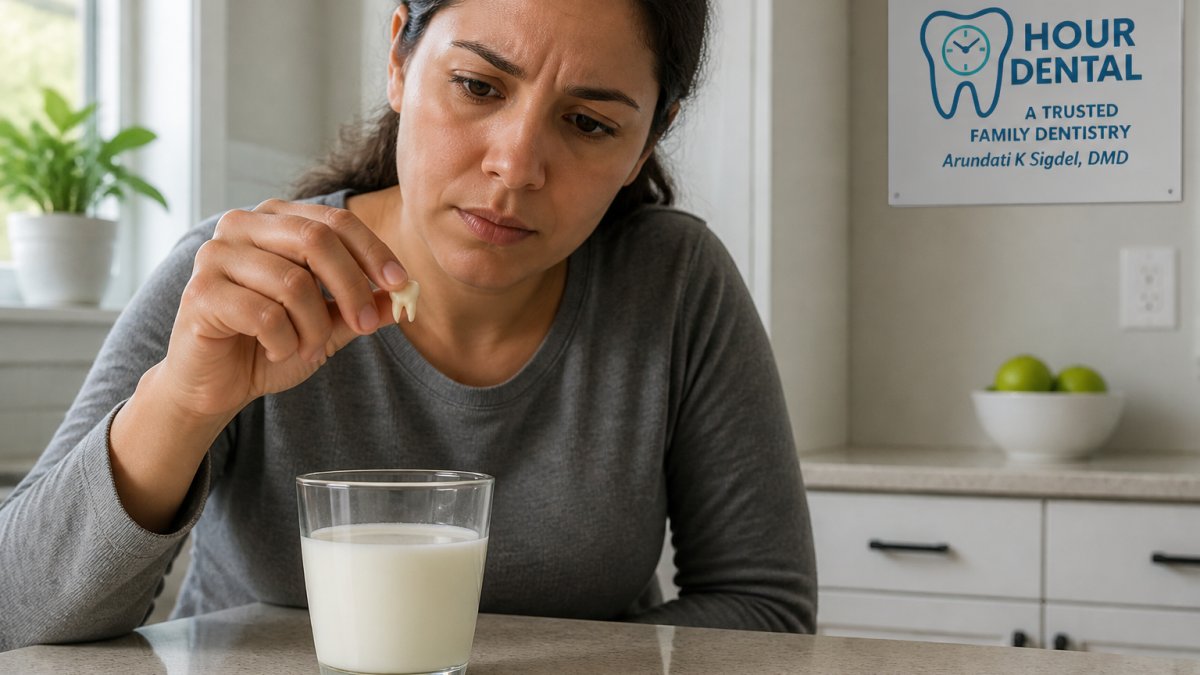
Do not scrub the tooth, wrap it in tissue, or let it dry out. Baby teeth are different: do not try to reinsert them, and call us for guidance.
Broken, Cracked, or Loose Teeth: What Counts as an Emergency
A broken or cracked tooth counts as an emergency when it exposes the nerve, causes constant pain, or leaves a sharp edge that cuts your tongue or cheek. A loose adult tooth also warrants a same-day call, especially after an injury, because it may point to damage in the bone or ligaments holding it in place.
If the break is small and painless, you can usually wait for a regular appointment. Cover any sharp edge with dental wax from a drugstore and avoid chewing on that side. For anything painful or bleeding, call us first.
Emergency Dental Care for Wisdom Tooth Pain
Emergency dental care for wisdom tooth pain is often about a partially erupted tooth trapping food and bacteria, which leads to swelling and throbbing at the back of the jaw. That flap of gum, called a pericoronal infection when inflamed, can escalate quickly.
Rinse gently with warm salt water, keep the area clean, and call us. We can assess whether the tooth needs treatment or removal. Don't ignore pain that spreads toward your ear or throat.
What to Do While You Wait for Your Appointment
While you wait, focus on controlling pain and protecting the tooth. Over-the-counter pain relievers such as ibuprofen or acetaminophen, taken as directed on the label, can take the edge off. A cold compress helps with swelling. Avoid very hot, cold, or sugary foods.
For more detailed at-home options, our guide to emergency tooth pain relief tips for 2026 covers safe remedies and over-the-counter choices in plain terms.
Watch out: never place aspirin directly on your gums. It can burn tissue and won't help the tooth.
Getting Same-Day Emergency Dental Care in Baltimore
Getting same-day emergency dental care in Baltimore starts with one call to a practice that keeps room in its schedule for urgent cases. We do exactly that at Hour Dental, and our team can talk through your symptoms and get you seen quickly. You can review our emergency dental services or follow our step-by-step guide to book an emergency dental cleaning online if that's what you need. When you're ready, you can schedule an appointment online with text and phone confirmation.
| Symptom | Urgency | First Step |
|---|---|---|
| Severe, throbbing toothache | Same-day | Call us for a same-day visit |
| Facial swelling with fever | Immediate | Call us; ER if breathing is affected |
| Knocked-out adult tooth | Within 60 minutes | Keep tooth in milk, call us |
| Broken tooth with pain | Same-day | Cover sharp edge, call us |
| Mild, painless chip | Routine | Book a regular appointment |
Frequently Asked Questions
What are the signs of a dental emergency?
The main dental emergency symptoms are severe or throbbing tooth pain, facial or jaw swelling, a fever with mouth pain, bleeding that will not stop, a knocked-out or badly broken tooth, and a wisdom tooth causing swelling or pain. Any of these can point to infection or trauma that gets worse with time. If you have trouble swallowing or breathing, call 911 or go to an emergency room right away.
Is severe tooth pain considered a dental emergency?
Yes, severe tooth pain that keeps you awake or stops you from eating is a dental emergency. Constant throbbing pain often signals an infection or a damaged nerve, and waiting can let it spread. Call a dentist the same day. If the pain comes with swelling, fever, or a bad taste in your mouth, treat it as urgent and seek care without delay.
What should I do if a tooth gets knocked out?
Pick the tooth up by the crown, never the root, and rinse it gently with water without scrubbing. Try to place it back in the socket and bite down softly on a clean cloth. If it will not stay, keep it in a cup of milk or saliva and call a dentist immediately. Knocked-out tooth emergency treatment works best within 60 minutes, so do not wait until morning.
Can I wait until morning to see a dentist for a toothache?
Mild, occasional discomfort can often wait for a regular appointment. Severe tooth pain emergency signs, such as constant throbbing, swelling, fever, or pain that wakes you up, should not wait. Infections can spread quickly, and same-day care is safer. If you are unsure, call the office and describe your symptoms so the team can advise you.
A toothache at 2 a.m. or a knocked-out tooth on a Saturday shouldn't leave you guessing. Hour Dental offers same-day emergency dental care, a comfortable environment designed to ease dental anxiety, and comprehensive family services under one roof. Get started with Hour Dental and get the relief you need today.