Approximately 2 million emergency room visits in the United States each year are caused by dental pain, and the 18 to 44 age group is the most prone to these painful infections. If you're currently dealing with a tooth abscess emergency, you know that the throbbing, unbearable pain and facial swelling can feel like a biological ticking clock. It's completely natural to feel anxious about the costs or the procedure itself, especially when you're just looking for a safe haven to find relief.
We understand that you want to protect your long-term personal confidence without the guesswork of hospital visits. In this guide, you'll learn to distinguish common myths from life-saving facts and discover exactly when your dental infection requires immediate emergency intervention. We'll walk through the clear signs of a spreading infection and provide the next steps you need to secure immediate pain relief and prevent serious complications. As a trusted community fixture that has served local families for years, we prioritize accessible care that puts your comfort first while helping you achieve vibrant health.
Key Takeaways
- Identify the three specific types of dental infections and why a tooth abscess emergency requires professional drainage rather than a "wait-and-see" approach.
- Uncover the hidden dangers of "DIY draining" and why your immune system cannot clear a localized collection of pus without expert help.
- Learn the critical difference between the temporary relief of an ER visit and the permanent solutions provided by a dentist, such as root canals or extractions.
- Discover effective first aid steps you can take at home, including a specific sleeping position, to reduce throbbing pain before your appointment.
- Find out how our experienced team in Dundalk and Essex offers a gentle, stress-free environment to restore your long-term personal confidence.
Recognizing the Urgency of a Tooth Abscess Emergency
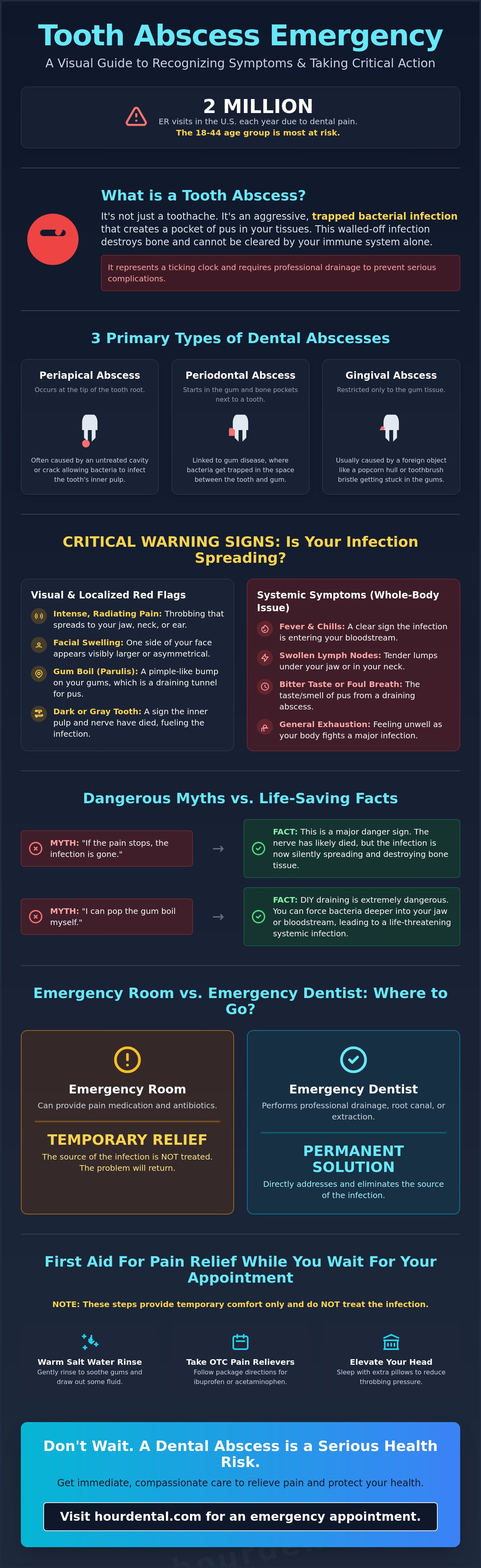
When you feel a sharp, persistent throb in your jaw, it is easy to hope that a good night's rest or some over-the-counter relief will make it disappear. However, a dental abscess is never just a simple toothache; it is an active, aggressive bacterial infection that has created a localized collection of pus within your tissues. This condition represents a tooth abscess emergency because the infection is trapped and will continue to destroy bone and soft tissue until it is professionally drained. Our neighbors in the Dundalk and Essex areas often tell us they felt a sense of dread when the pain started, but understanding what is happening inside your mouth can help you take the first step toward a safe haven of relief.
Not every infection is the same, and identifying where the trouble started is the first task for a dental professional. For a comprehensive overview of dental abscesses, one must look at the three primary types: periapical, periodontal, and gingival. A periapical abscess occurs at the very tip of the tooth root, often caused by an untreated cavity or a crack that allowed bacteria to reach the internal pulp. Periodontal abscesses start in the bone and gum pockets, while a gingival abscess is restricted purely to the gum tissue. Regardless of the type, the pressure from the trapped infection is what causes that signature, agonizing discomfort.
The most undeniable sign that you are facing a tooth abscess emergency is pain that dictates your entire day. If your discomfort is so intense that it prevents sleep or radiates outward toward your ear, neck, and jawline, the infection has likely progressed beyond the tooth's boundaries. This type of radiating pain is a clear signal that the body is struggling to contain the bacteria. Seeking immediate care is the only way to stop the cycle of pain and protect your long-term personal confidence.
Visual Red Flags You Can't Ignore
Your mouth often provides visible clues before the infection becomes life-threatening. You might notice a small, pimple-like bump on your gums known as a parulis or gum boil. This is a tunnel the infection has created to try and vent pus. If you see this, or if you notice your face looks asymmetrical due to localized swelling, the situation is urgent. Additionally, a tooth that has turned dark or grayish often indicates internal pulp necrosis, meaning the living tissue inside has died and is now fueling an infection.
Systemic Symptoms: When the Infection Spreads
An abscess becomes a whole-body issue once the bacteria attempt to enter your bloodstream. If you begin to experience fever, chills, or a general sense of exhaustion, the infection is no longer localized. Many patients report a persistent bitter taste or foul breath that doesn't go away with brushing; this is often the taste of a draining abscess. You should also check the area under your jaw or along your neck. Swollen, tender lymph nodes are a major indicator that your immune system is working overtime to fight a spreading dental emergency.
Debunking Common Tooth Abscess Myths (Wait-and-See is Dangerous)
Many people hope that their immune system will eventually win the battle against a dental infection, but a tooth abscess is a different kind of adversary. Unlike a common cold, an abscess is a localized collection of bacteria that is physically walled off from your body’s blood supply. This means your white blood cells, the very soldiers meant to fight infection, simply cannot reach the source of the problem. Because of this structural barrier, a tooth abscess emergency requires a mechanical solution, such as professional drainage or a root canal treatment, to physically remove the pathogens.
It is also vital to avoid the dangerous urge to perform "DIY" dentistry. Attempting to pop a gum boil with a needle or your finger can have catastrophic results. Instead of draining the infection out, the pressure often forces bacteria deeper into your jawbone or even into your bloodstream. While warm salt water rinses are a wonderful way to find temporary comfort, they are palliative measures only. They cannot penetrate the tooth or bone to address the Symptoms and causes of a tooth abscess at their root.
Myth: 'If the Pain Stops, the Infection is Gone'
Perhaps the most dangerous misconception is that the absence of pain equals recovery. In reality, when a throbbing ache suddenly vanishes without treatment, it usually signals that the infection has successfully destroyed the tooth's internal nerve. Once the nerve is dead, you can no longer feel the warning signs, yet the bacteria continue to eat away at the surrounding bone undetected. Pulp necrosis is the silent stage of a tooth abscess emergency where the infection moves from the tooth into the deeper structures of the face.
Myth: 'Antibiotics Alone Will Fix It'
Antibiotics are a helpful support tool, but they are rarely a standalone cure for an abscess. Since there is no blood flow to the center of a pus pocket, the medication cannot travel where it is needed most. Relying on old prescriptions or unfinished bottles is particularly risky as it encourages antibiotic resistance and fails to stop the underlying decay. To truly resolve the issue, you need the expertise of an emergency dentist Dundalk MD who can provide a definitive clinical intervention. If you are feeling uncertain about your symptoms, speaking with a gentle professional can help you find a clear path back to a healthy smile.
Emergency Room vs. Emergency Dentist: Where Should You Go?
Deciding where to turn during a tooth abscess emergency can be overwhelming, especially when you are dealing with a $700 average bill for a hospital visit. Every year, approximately 2 million emergency room visits in the United States are attributed to dental pain. While a hospital is a vital resource for life-threatening situations, it is rarely the right place to fix the source of a dental infection. Emergency rooms are designed to stabilize patients; they typically provide antibiotics and pain medication, but they lack the specialized equipment and training to perform definitive dental procedures. To truly resolve the infection, you need a professional who can address the tooth itself.
Choosing an emergency dentist is often the most direct path to relief and is significantly more cost-effective than a hospital department. While an ER visit focuses on temporary management, a dental practice offers long-term solutions that protect your oral health. Our team serves as a safe haven for residents in Dundalk and Essex, providing the clinical expertise needed to stop an infection before it compromises your long-term personal confidence. Understanding the tooth abscess symptoms and causes can help you determine the severity of your situation and choose the right level of care.
When to Head Directly to the Hospital
There are specific moments when a dental infection becomes a medical crisis that requires a hospital's intervention. If you experience swelling that makes it difficult to swallow or breathe, you may be facing Ludwig’s Angina, a serious condition where the infection spreads to the floor of the mouth. Another critical indicator is Trismus, which is the inability to open your mouth fully. If these symptoms are accompanied by a high fever, rapid heart rate, or confusion, the infection may have entered the bloodstream. In these rare, life-threatening cases, the ER is the necessary first stop to ensure your systemic safety.
Why a Dentist is Better for Non-Life-Threatening Abscesses
For the vast majority of cases, a dentist provides the most effective severe tooth pain help because they have the diagnostic power of digital X-rays to pinpoint the infection's origin. Once the source is identified, a dentist can perform immediate root canal treatments or tooth extractions to remove the diseased tissue and stop the pain at its source. Hospitals simply aren't equipped for these mechanical solutions. By visiting a local expert, you receive personalized care in a relaxed environment, ensuring that your tooth abscess emergency is handled with both clinical precision and a gentle, neighborly touch.
Immediate Steps to Take While Waiting for Your Appointment
The hours between realizing you have a tooth abscess emergency and sitting in a dental chair can feel incredibly long. While you wait for professional care, your primary goal is to manage the intense pressure and prevent the infection from worsening. It is a common mistake to apply a heating pad to a swollen cheek, but this can actually draw the infection further into your soft tissues. Instead, focus on gentle, cooling relief and strategic positioning to keep your discomfort manageable. These steps are not a substitute for a clinical procedure, but they serve as a bridge to help you reach our safe haven for treatment.
One of the most effective ways to reduce that relentless, throbbing sensation is to change how you rest. When you lie flat, blood pressure increases in your head, which often intensifies the pain of an abscessed tooth. Try to remain in an upright position, even when sleeping, by propping yourself up with several pillows. This simple adjustment helps drainage and reduces the fluid pressure around the root of the tooth. For pain management, many patients find that over-the-counter NSAIDs like ibuprofen are effective for reducing inflammation, while acetaminophen can help with the pain itself. Always follow the dosage instructions on the packaging and consult a pharmacist if you have questions about your specific health history.
Managing Pain and Swelling Safely
To address external swelling, use a cold compress on the outside of your face for 20 minutes at a time, followed by a 20-minute break. This helps numb the area and constricts blood vessels to slow the inflammatory response. You can also perform a warm salt water rinse by dissolving half a teaspoon of salt in eight ounces of water. Swish gently to help soothe the gum tissue and clear away debris. During this time, it is vital to avoid hard, crunchy, or very hot foods. An infected tooth is structurally weakened and can fracture easily under pressure, leading to more complex complications.
What to Prepare for Your Emergency Visit
Being prepared for your visit can help alleviate some of the stress associated with urgent care. Gather your identification, insurance information, and a current list of any medications you're taking. It's also helpful to note exactly when the pain started and if specific triggers, like cold water or biting down, make it worse. If you feel nervous about the procedure, don't hesitate to tell us. We specialize in making patients feel understood and can utilize painless tooth extraction Baltimore techniques to restore your comfort without the fear. If you're ready to find relief and move toward vibrant health, contact our compassionate team today for the immediate care you deserve.
Fast, Compassionate Emergency Abscess Care at Hour Dental
Facing a tooth abscess emergency is a vulnerable experience that requires more than just clinical skill; it requires a safe haven where your anxieties are understood. At Hour Dental, we have established ourselves as a reliable community fixture for families throughout Dundalk, Essex, and the surrounding Baltimore neighborhoods. Dr. Arundati Kharel Sigdel leads our team with a philosophy rooted in professional reassurance and gentle hospitality. We recognize that acute distress cannot wait, which is why we prioritize same-day assessments for patients experiencing severe infection or swelling. Our goal is to move you from a state of uncertainty toward a feeling of being cared for and understood.
While the immediate priority is always pain relief and stabilizing the infection, our commitment to your well-being extends far beyond the initial visit. We believe in the positive life impact of comprehensive care, transitioning you from emergency stabilization to a personalized plan for long-term oral health. By addressing the root cause of your abscess through treatments like root canals or necessary tooth extractions, we help you regain your lasting confidence and prevent future dental crises from disrupting your life. We don't just treat symptoms; we build enduring, trust-based relationships with every neighbor who walks through our doors. To see how other high-standard practices exemplify this commitment, you can discover Star Dental Care and their award-winning approach to patient health.
Our Emergency Protocols for Dundalk & Baltimore
When you arrive at our office, we utilize a highly organized diagnostic process to identify the exact nature of your infection. Using modern digital imaging, we can see exactly how far the abscess has progressed into the bone or surrounding tissues. Whenever possible, our first priority is saving your natural tooth through meticulous root canal treatment or protective porcelain crowns. For our neighbors who feel significant apprehension about dental procedures, we offer sedation options to ensure your emergency visit is as relaxed and stress-free as possible. We treat every patient with the mutual respect and humility that has made us a trusted local expert for generations.
Affordable Care When You Need It Most
We understand that a tooth abscess emergency often brings financial concerns alongside physical pain. Hour Dental is dedicated to providing accessible care that fits the budgets of our local multi-generational families. We participate with a wide variety of insurance providers to help ease the financial burden of urgent treatments. Our team is here to solve your problem quickly and effectively, grounding our practice in the community we call home. Don't let an infection compromise your health or your peace of mind any longer. Contact Hour Dental immediately for emergency abscess treatment and take the first step toward vibrant health.
Take Control of Your Dental Health and Find Lasting Relief
A dental infection is a serious matter that requires swift, professional intervention to protect your overall well-being. We have explored why a tooth abscess emergency cannot be resolved with home remedies or antibiotics alone; it requires a structural solution that only a dentist can provide. While the emergency room is essential for life-threatening symptoms, visiting a local expert is the most effective and affordable way to address the infection at its source and save your natural smile. By understanding these life-saving facts and taking immediate steps to seek care, you are choosing a path toward long-term personal confidence and vibrant health.
Led by Dr. Arundati Kharel Sigdel, our team has been a safe haven for residents in Dundalk, Essex, and Baltimore for years. We prioritize your comfort and offer same-day emergency appointments to ensure you don't have to endure unbearable pain a moment longer. Our compassionate approach is designed to alleviate your anxieties and provide the gentle care your family deserves. Call Hour Dental Now for Same-Day Emergency Relief and let us help you restore your comfort. We look forward to welcoming you into our community and helping you achieve the healthy, pain-free life you deserve.
Frequently Asked Questions
Can a tooth abscess go away on its own with salt water rinses?
No, a tooth abscess will not go away on its own with salt water rinses. While warm salt water is an excellent tool for soothing inflamed gum tissue and keeping the surface clean, it cannot penetrate the tooth or bone to reach the bacterial source. You need a clinical procedure to physically remove the infection and protect your long-term personal confidence. Relying on rinses alone allows the bacteria to continue destroying the surrounding bone.
How long can I safely wait before seeing a dentist for an abscess?
You should not wait at all when you are dealing with a tooth abscess emergency. Because these infections are trapped within your hard tissues, they can spread to your jawbone, neck, or bloodstream in a matter of hours or days. Seeking immediate care from an experienced professional in the Dundalk or Essex area ensures the infection is contained before it becomes a systemic health risk that requires a hospital visit.
Will the ER pull my tooth if I have an abscess emergency?
Hospital emergency rooms generally do not pull teeth or perform root canal treatments. While an ER is a vital resource for life-saving stabilization and antibiotics for severe facial swelling, they lack the specialized dental instruments required for extractions. For a permanent solution to the infection, you must visit a dental office where the underlying cause can be treated directly by a problem-solver who understands oral anatomy.
What happens if a tooth abscess pops on its own?
If an abscess pops on its own, you might feel a sudden rush of foul-tasting liquid and a temporary decrease in pressure and pain. This does not mean the infection has been cured. The bacteria are still present at the root of the tooth, and the "pimple" will likely return or the infection will spread deeper into your jaw if it isn't professionally cleaned and drained by a clinical expert.
Can a tooth abscess cause a fever or body aches?
Yes, a fever or body aches are clear indicators that a dental infection has become a systemic issue. When bacteria enter your bloodstream, your body responds with a fever to fight the invaders. If you feel these symptoms alongside dental pain, it's a sign that you need urgent care to prevent the spread of the infection. We prioritize these cases to help our neighbors find a safe haven of relief.
Is a root canal the only way to treat an abscessed tooth?
A root canal treatment is the primary way to save a natural tooth, but it's not the only option. If the damage to the tooth structure is too extensive, a tooth extraction may be necessary to fully remove the source of the infection. Our team focuses on the most gentle and effective solution to restore your health and comfort as quickly as possible while maintaining your long-term confidence.
How do I know if my tooth infection has spread to my jaw or blood?
You can tell an infection has spread if you experience facial swelling that makes it hard to swallow, a high fever, or "jaw lock" where you cannot open your mouth fully. Systemic spread often causes a rapid heart rate or a feeling of general confusion. These are critical signs of a tooth abscess emergency that require immediate medical attention at a hospital to ensure your systemic safety.
What is the fastest way to stop abscess pain at home?
The fastest way to manage pain at home is to stay in an upright position and apply a cold compress to your cheek. Sleeping with your head elevated prevents blood pressure from building up in the infected area, which reduces that relentless throbbing sensation. Using over-the-counter pain relievers as directed can provide temporary comfort while you wait for your appointment with our nurturing team in Baltimore.


