 Comparison
How to Decide If Professional Teeth Whitening Is Worth It
Last Updated: November 8, 2026
Quick Summary
Professional teeth whitening is worth it for patients with stubborn extrinsic stains, healthy teeth and gums, and a need for a noticeable change in a short time. It is less likely to help with intrinsic discoloration or existing restorations, so a dental consultation is the best way to decide.
- Professional whitening is dentist-supervised and usually completed in one visit, with gum protection.
- It works best on extrinsic stains from coffee, tea, red wine and tobacco.
- Whitening does not change the color of crowns or veneers, which can leave a mismatch.
- Compare total cost over time, since at-home kits are repurchased as shade fades.
- Temporary tooth sensitivity is the most common side effect and usually fades within a few days.
Table of Contents
- What Professional Teeth Whitening Actually Does
- Professional Teeth Whitening Cost Compared to Other Options
- Professional Teeth Whitening vs At-Home Kits
- How Long Professional Teeth Whitening Lasts and Maintenance
- Is Professional Teeth Whitening Bad for Your Teeth?
- Who Gets the Most Value From Professional Whitening
- Booking a Whitening Consultation at Hour Dental
- Frequently Asked Questions
What Professional Teeth Whitening Actually Does
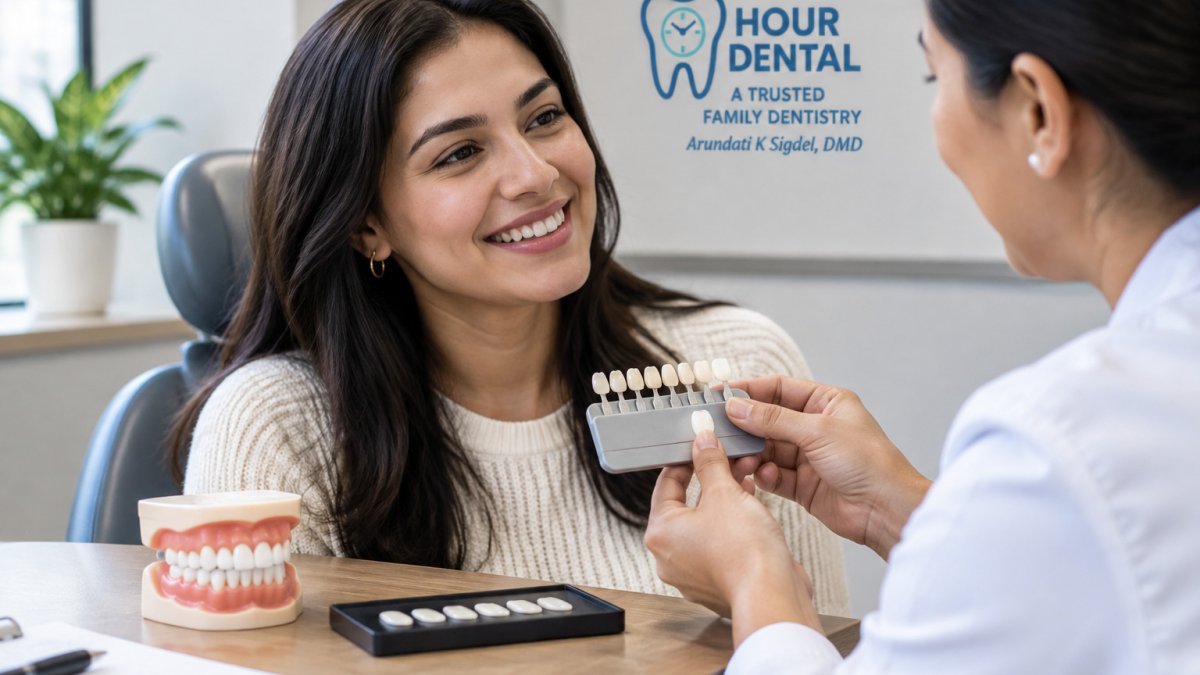
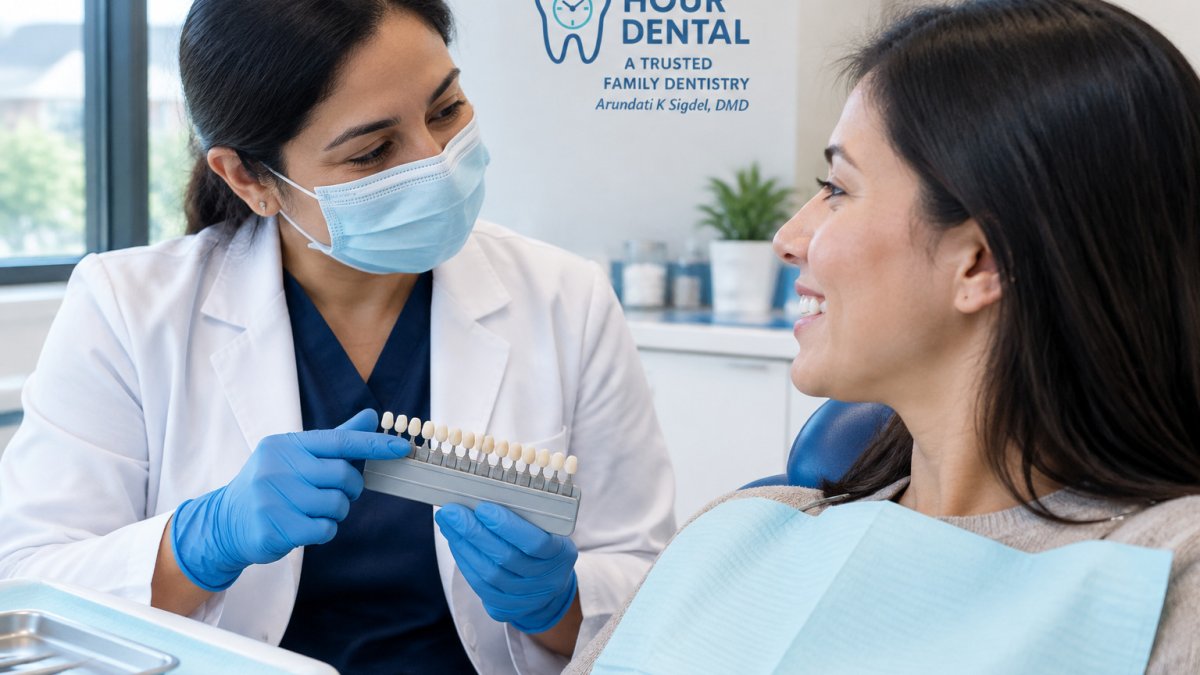
Professional teeth whitening is a dentist-supervised procedure that uses a bleaching agent, usually hydrogen peroxide or carbamide peroxide, to lighten tooth shade. A consultation can help you understand what the treatment can and cannot change before anything begins.
The bleaching agent works by breaking down stain molecules inside the enamel. It targets extrinsic stains from coffee, tea, red wine and tobacco, which sit on or just below the tooth surface. Intrinsic stains, which come from within the tooth or from medications taken during childhood, often respond less predictably.
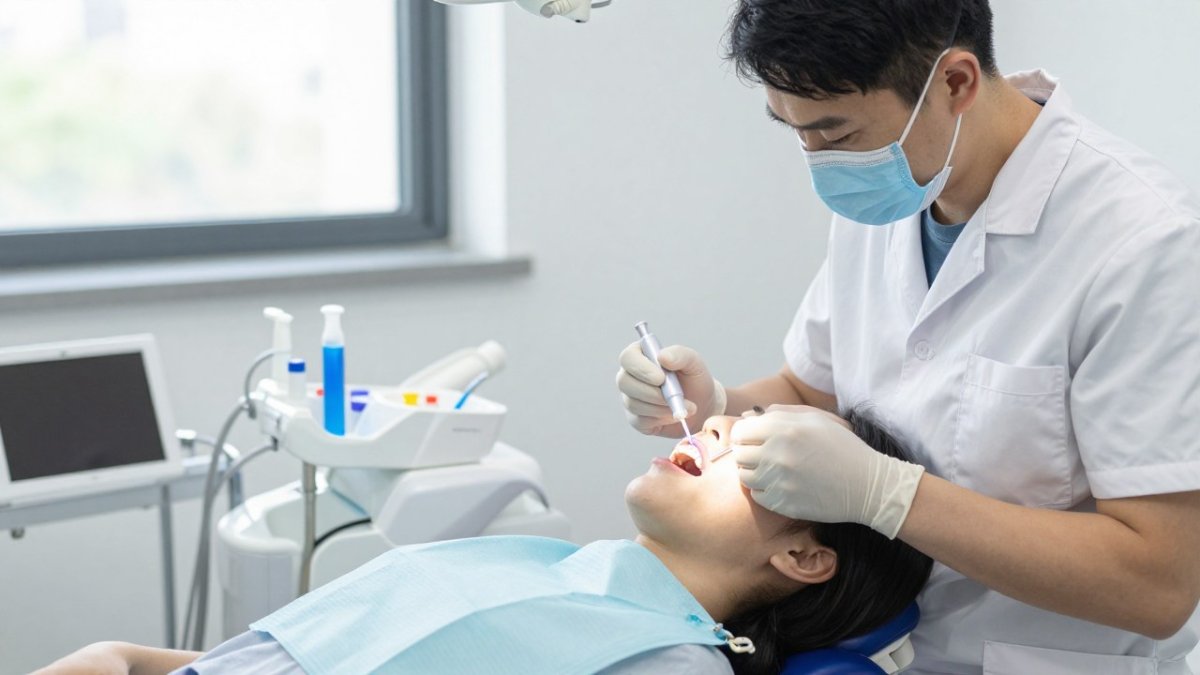
Whitening does not change the color of crowns, veneers, or other dental restorations, which can leave a mismatch after treatment. A consultation can help identify whether whitening is a realistic option for your teeth.
Professional Teeth Whitening Cost Compared to Other Options
Professional whitening usually costs more upfront than at-home products, but the sticker price is only part of the story. You can see the clinic's whitening offering and price context before deciding. The useful comparison is total cost of ownership: what you pay on day one, how long that result lasts, and what you spend to maintain it. Pricing for in-office and laser whitening varies widely by practice and treatment type, so the most reliable way to compare is to request an itemized quote.
Over-the-counter options are generally priced lower per kit than in-office treatment. For cheaper alternatives, explore affordable cosmetic dentistry options, payment plans and insurance. Prices vary by retailer and by practice, so check current pricing directly with the product seller.
| Option | Typical Upfront Cost (USD) | Setting | Typical Course | Realistic Maintenance |
|---|---|---|---|---|
| Crest 3DWhitestrips | $45 to $80 per kit | At home | Several days to a few weeks of daily use | Repeat kits as shade slips; cost recurs each time |
| Opalescence Go | $100 to $150 per kit | At home | A short course of trays, often days | Additional trays or a refill kit |
| In-office whitening | $300 to $1,000+ per visit | Dental office | Usually one visit, sometimes a follow-up | Periodic touch-up trays or repeat visits |
| Laser whitening | Often $500 to $1,000 | Dental office | One visit | Touch-up trays or repeat visits |
The trade-off is worth weighing. At-home kits may look inexpensive at first, but repeated purchases add up over time. In-office treatment involves a dentist examining your teeth, protecting your gums, and confirming the result in one appointment. Neither option wins automatically; the right answer depends on how often you would repurchase and how much supervision you need.
Watch out: quoted fees may not include everything. Ask whether the fee covers the exam, shade assessment, gum protection, desensitizing treatment, and any take-home trays, because some practices itemize those separately.
Cost alone does not settle the question. Consider how fast you want results, whether you need supervision, and how much you value a single visit over several weeks of home trays. For a precise quote, contact our office; we do not publish fixed prices here.
Professional Teeth Whitening vs At-Home Kits
The main difference is control. Professional treatment is applied by a dental team, often with gum protection and a stronger gel, and is usually completed in one visit. To see where whitening fits among other options, explore the best ways to improve smile aesthetics. At-home kits spread results over days or weeks and depend on consistent use.
At-home kits can work well for mild surface stains and for patients who want to stay on a lower budget. They also carry a higher risk of uneven results and over-use, especially with products bought without dental guidance.
Professional whitening is often a fit for patients who want faster, more predictable results or who have sensitivity concerns they want monitored.
How Long Professional Teeth Whitening Lasts and Maintenance
Results are not permanent, and no honest answer can promise a fixed number of months. What a dentist can do is explain why whitening fades and which variables are under your control. The bleaching agent lifts stain molecules from inside the enamel, but the enamel surface keeps interacting with whatever passes through your mouth. New extrinsic stain deposits gradually, and the underlying natural shade of the tooth does not change. That is why longevity is best described as a range shaped by habits rather than a guaranteed period.
A common pattern is that patients who limit staining drinks and do not smoke hold their shade noticeably longer than patients who do not. Coffee, tea, red wine, cola, and tobacco are the most frequently cited culprits because they contain chromogens that bind to enamel. Acidic drinks add a second problem: they soften enamel temporarily, which can make the next exposure to a staining drink more likely to leave a mark.
Maintenance is more practical than it sounds. Most practitioners recommend:
- Drinking staining beverages through a straw and rinsing with water afterward rather than sipping slowly over hours.
- Brushing with a fluoride toothpaste twice daily and flossing once daily, since clean enamel stains more slowly than plaque-covered enamel.
- Keeping routine dental cleanings, because professional polishing removes surface stain that whitening alone will not address.
- Asking whether a take-home touch-up tray is available at the time of treatment, so a small amount of gel can refresh the shade without a full in-office session.
Watch out: over-the-counter whitening toothpaste and charcoal products are abrasive. Used aggressively, they can wear enamel and make teeth look more yellow over time, because the dentin beneath the enamel is naturally yellower. Abrasion is not the same as whitening.
Touch-up timing varies by patient. A reasonable approach is to reassess shade at each cleaning and use a touch-up tray only when the change is visible to you, rather than on a fixed calendar. Patients who want a predictable maintenance budget should ask their dental office about touch-up costs before treatment begins.
Is Professional Teeth Whitening Bad for Your Teeth?
When a dentist supervises the procedure, professional whitening is generally considered safe for healthy teeth and gums. The most common side effect is temporary tooth sensitivity, which typically fades within a few days. Some patients also notice mild gum irritation.
Sensitivity can be reduced with a lower-concentration gel, shorter application times, and a desensitizing toothpaste before and after treatment. If discomfort lasts longer than a few days, contact your dentist promptly. Whitening is not recommended for everyone, including patients with untreated cavities, cracked teeth, or certain gum conditions, so a dental examination comes first.
Who Gets the Most Value From Professional Whitening
Professional whitening tends to offer the most value for patients with stubborn extrinsic stains, healthy teeth and gums, and a need for a noticeable change in a short time. It is often a good fit for people preparing for a major event or who want a single appointment rather than weeks of home use.
It is less likely to deliver strong value for patients whose discoloration comes from intrinsic causes, who have extensive dental restorations, or who are not willing to maintain results over time. In those cases, a consultation can outline other cosmetic options.
Booking a Whitening Consultation at Hour Dental
Deciding whether professional whitening is worth the cost starts with an honest look at your teeth. Hour Dental, led by Dr. Arundati Kharel Sigdel, provides cosmetic smile enhancement services for patients in Dundalk, Highlandtown, and Baltimore County, MD. You can contact our office to schedule a consultation or book online to arrange your visit.
Frequently Asked Questions
Is professional teeth whitening worth it?
For many people it is, especially when they want a faster, more noticeable change under a dentist's supervision and have realistic expectations. Results depend on the type and depth of staining, and whitening does not change the color of crowns, veneers or fillings. Pricing varies by practice and treatment type, so Hour Dental can give current prices and a candidacy assessment at a consultation.
How much does professional teeth whitening usually cost?
Costs depend on the treatment method, the number of visits and the practice, so there is no single fixed price. Many sources list in-office treatment as a higher upfront investment than at-home kits. For current pricing at Hour Dental, check the website or contact the office for a quote tailored to your needs.
Does professional teeth whitening actually work?
Professional whitening can lighten extrinsic stains from coffee, tea, tobacco and aging noticeably in a single appointment or short course. Intrinsic stains and discoloration from some medications or dental restorations may respond less predictably. A consultation helps determine whether whitening is a suitable option for your teeth.