 ultimate-guide
Preventive Dental Care for Children: A Parent's Guide
Table of Contents
- What Preventive Dental Care for Children Actually Includes
- First Dental Visit Age: When to Schedule the First Appointment
- How to Brush Toddler Teeth Without a Meltdown
- Pediatric Dental Sealants: A Simple Barrier Against Cavities
- Maryland Healthy Smiles Dental Program: Coverage for Eligible Children
- Building a Home Routine That Prevents Cavities
- When to Call a Dentist: Warning Signs Parents Should Not Ignore
- Frequently Asked Questions
Last Updated: September 21, 2026
What Preventive Dental Care for Children Actually Includes
Preventive dental care for children is the set of routine services and daily habits that stop cavities and gum problems before they start, rather than treating damage after it appears. At Hour Dental, we see the difference this approach makes every week: children who come in early and come in regularly tend to need far less drilling later.
The core idea is simple. Cavities are largely preventable, and the window to build good habits is short. According to the American Academy of Pediatric Dentistry, children should see a dentist by their first birthday, yet many families wait until a visible problem appears. By then, the appointment is no longer preventive.
The Four Core Services at Every Checkup
A well-run pediatric checkup covers four things:
- Cleaning and polish to remove plaque and tartar a toothbrush cannot reach
- Fluoride varnish to strengthen enamel and slow decay
- Sealants on the back teeth once they erupt
- A growth and bite check to catch spacing or alignment issues early
Hour Dental provides these services for the whole family under one roof, which means you are not bouncing between offices for a cleaning, a sealant, and a bite assessment.
First Dental Visit Age: When to Schedule the First Appointment
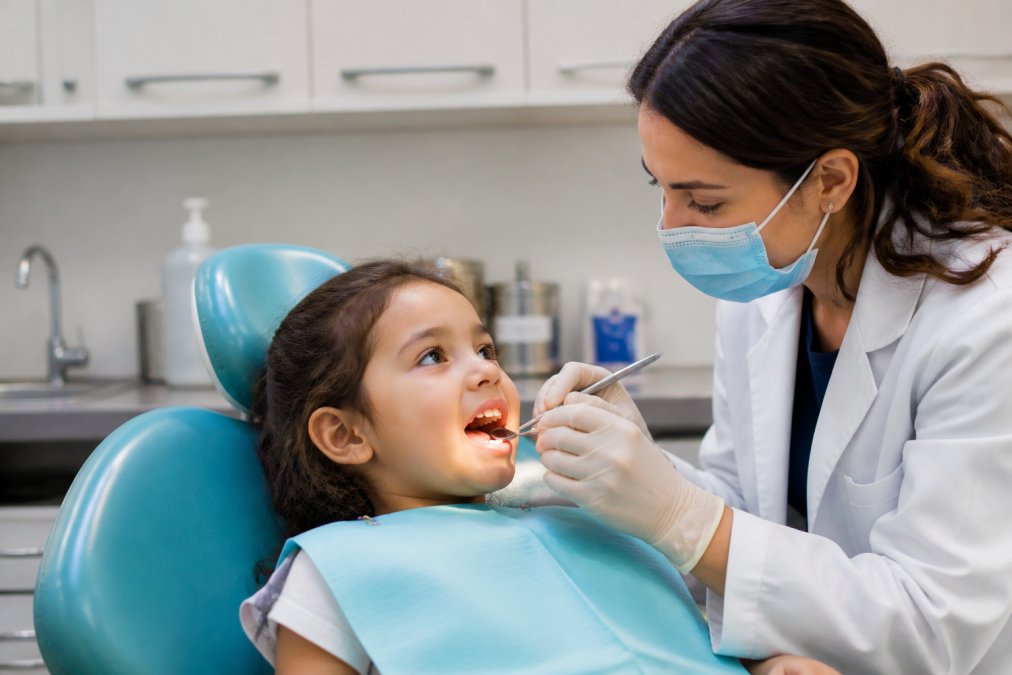
The first dental visit should happen by your child's first birthday, or within six months of the first tooth appearing, whichever comes first. This early visit is short and low-pressure. It is mostly about getting your child comfortable and giving you guidance on feeding, fluoride, and cleaning.
What most guides miss is that the first visit is really for the parent. You leave knowing exactly how to clean a small mouth, what to expect as teeth come in, and which habits set up a cavity-free childhood. The exam itself takes minutes.
How to Brush Toddler Teeth Without a Meltdown
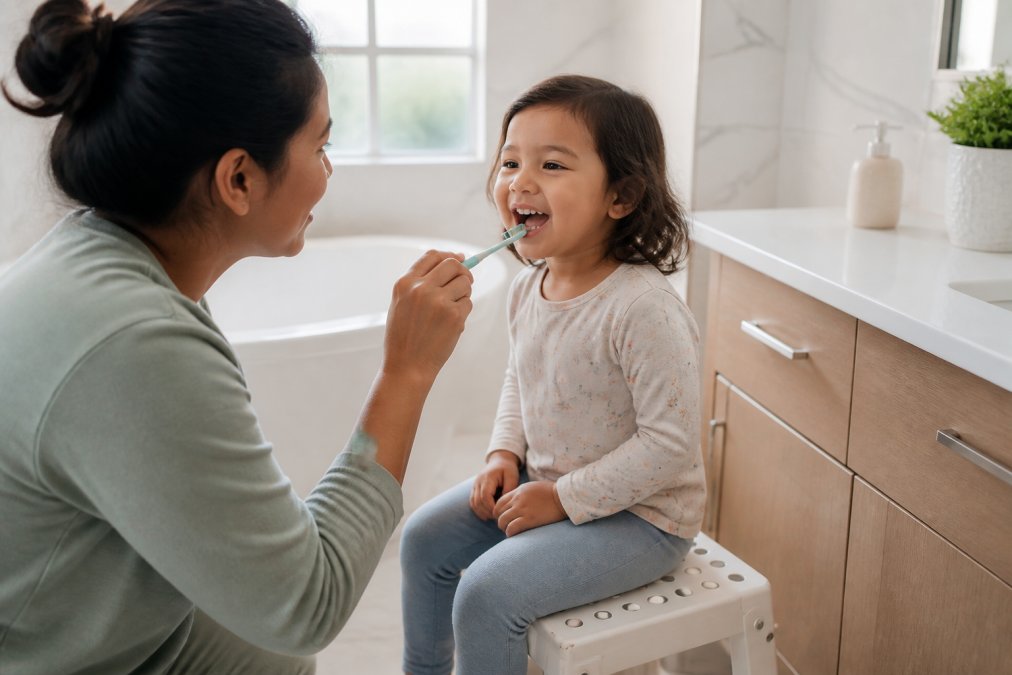
Brushing a toddler's teeth is a two-minute negotiation, and the winning strategy is routine, not force. Children resist surprises, so the goal is to make brushing the boring, predictable part of the day that always happens.
A Step-by-Step Routine That Works
- Let your child hold a spare toothbrush while you brush with the real one
- Sit or stand behind your child so you can reach the back teeth easily
- Use a soft brush and a rice-grain-sized smear of fluoride toothpaste for children under three
- Brush in small circles for two minutes, front and back
- Finish with the same phrase every night, then move straight to the bedtime story
A common mistake is letting a toddler "do it themselves" too early. Independence matters, but a child under six lacks the dexterity to clean the back molars. Let them practice, then go over every surface yourself.
Pediatric Dental Sealants: A Simple Barrier Against Cavities
Pediatric dental sealants are thin plastic coatings painted onto the chewing surfaces of back teeth to block food and bacteria from settling into the grooves. The application is painless, takes only a few minutes per tooth, and no drilling is involved.
Sealants work best on permanent molars, which usually erupt around age six and again around age twelve (the CDC). The grooves on these teeth are narrower than a toothbrush bristle, so even careful brushing can miss them. A sealant closes that gap.
Sealants are not a substitute for fluoride or brushing. They protect the chewing surface only, not the sides between teeth. Think of them as one layer in a routine, not a shield that replaces the rest.
Maryland Healthy Smiles Dental Program: Coverage for Eligible Children
The Maryland Healthy Smiles Dental Program is the state's dental coverage for children who qualify for Medicaid, and it covers preventive services such as exams, cleanings, fluoride, and sealants. Eligibility is tied to household income and Medicaid enrollment.
Because eligibility rules and covered services can change, confirm your child's specific coverage directly with the program before scheduling. The Maryland Department of Health maintains the current eligibility and enrollment details. If you are unsure whether your family qualifies, ask our front desk at Hour Dental, and we can point you to the right resource.
| Service | Typical Age | Frequency | Why It Matters |
|---|---|---|---|
| First exam | By age 1 | Once | Establishes a dental home |
| Cleaning | Age 1 onward | Every 6 months | Removes plaque and tartar |
| Fluoride varnish | Age 1 onward | Every 6 months | Strengthens enamel |
| Sealants | Age 6 and 12 | Once per molar | Blocks grooves from decay |
Building a Home Routine That Prevents Cavities
A cavity-prevention routine at home comes down to three habits: brush twice daily with fluoride, limit sugary drinks to mealtimes, and never put a child to bed with a bottle. These three changes do more than any single product on the shelf.
Juice and milk in a sippy cup throughout the day keep teeth bathed in sugar. Water between meals is the simplest fix, and it is free. For a Baltimore family on a tight budget, that single swap often matters more than any specialty toothpaste.
When to Call a Dentist: Warning Signs Parents Should Not Ignore
Call a dentist if your child has tooth pain, a visible dark spot, swelling in the gums or face, bleeding that does not stop, or a knocked-out or cracked tooth from a fall. These are not wait-and-see problems.
For a dental emergency in the Dundalk or Highlandtown area, same-day care matters. Hour Dental offers same-day emergency dental care for sudden pain or injury, so you are not waiting weeks while your child is uncomfortable. If a permanent tooth is knocked out, keep it moist and call immediately.
For routine care, look for a dental home near you that will see your whole family. Hour Dental has served the Dundalk community for over 40 years, with a calming environment designed for anxious patients of every age.
Cavities in children are common, but they are not inevitable, and the families who avoid them are rarely doing anything complicated. They started early, kept a simple routine, and stayed consistent with checkups. If you are looking for a gentle, long-term dental home in Baltimore for your family, Hour Dental offers preventive cleanings, sealants, fluoride, and same-day emergency care in a comfortable, patient-focused setting. Dr.
Frequently Asked Questions
At what age should a child have their first dental visit in Maryland?
Most dental professionals recommend scheduling a child's first dental visit by their first birthday or within six months of the first tooth appearing. This early visit lets the dentist check development, discuss feeding and hygiene habits, and catch problems before they grow. In the Baltimore area, Hour Dental welcomes young children and can help families start a comfortable routine early. If your child is older and has never seen a dentist, book an appointment now rather than waiting.
What does preventive dental care include for children?
Preventive dental care for children typically includes professional cleanings, fluoride treatments, dental sealants, oral exams, and parent education on brushing and diet. The goal is to stop cavities and gum problems before they start. Regular checkups also let the dentist track jaw growth and tooth eruption. At home, parents support this care by helping children brush twice daily, limiting sugary drinks, and scheduling visits every six months unless the dentist recommends otherwise.
Are pediatric dental sealants recommended for children in Baltimore?
Yes. Pediatric dental sealants are widely recommended for children once their permanent molars come in, usually around age six and again around age twelve. Sealants are a thin coating painted on the chewing surfaces of back teeth, where grooves trap food and bacteria. They are quick, comfortable, and can lower the risk of cavities on those teeth. Ask your child's dentist whether sealants make sense based on their cavity risk and tooth development.
Does Maryland Medicaid cover preventive dental care for children?
Maryland's Medicaid program includes dental coverage for eligible children through the Maryland Healthy Smiles Dental Program. Covered services generally include exams, cleanings, fluoride, sealants, and restorative care. Eligibility depends on family income and other factors, so check the Maryland Department of Health website or call the program directly for current details. If you are unsure whether your child qualifies, the office staff at a local practice can often help you understand your options.
How often should children visit the dentist for cleanings?
Most children should see a dentist every six months for a cleaning and exam. Children with a higher cavity risk, braces, or ongoing treatment may need visits every three to four months. The dentist will set a schedule based on your child's needs. Consistent visits make it easier to catch small problems early, which usually means simpler and less costly treatment. Mark the next appointment before you leave the office so it does not slip.
How can I help my child prevent cavities at home?
Brush your child's teeth twice a day with fluoride toothpaste, using a rice-grain smear for children under three and a pea-sized amount for older children. Help with brushing until around age eight, when most children have the coordination to do it well alone. Limit juice and sugary snacks, offer water between meals, and do not put a child to bed with a bottle. These daily habits, paired with regular dental visits, do most of the work in preventing cavities.