
Imagine walking into a welcoming office right here in Dundalk, perhaps near the North Point Blvd area, and finally addressing that nagging tooth pain with total peace of mind. You're certainly not alone in your concerns; over 1.5 million crowns are placed annually in the United States, yet many patients still feel a sense of dread about the unknown. Understanding the dental crown procedure steps is the first step toward replacing that anxiety with a sense of long-term personal confidence. It's completely natural to worry about potential discomfort or the confusion of choosing between modern materials like zirconia and porcelain.
We agree that your dental care should feel like a neighborly visit rather than a clinical chore, which is why we've designed this guide to be your roadmap. You'll discover the exact journey of restoring a tooth, from the initial consultation to the final, gentle placement of your new crown. We'll preview the entire timeline, including how 2026 digital technologies like intraoral scanners make the process faster and more comfortable than ever before. By the time you finish reading, you'll have a clear, stress-free understanding of how to achieve the Healthy Smiles you deserve for years to come.
Key Takeaways
- Understand the specific dental crown procedure steps we use in our Dundalk office to ensure a comfortable and predictable restoration experience.
- Compare modern materials like porcelain and zirconia to find the perfect balance between natural beauty and long-term durability for your smile.
- Learn how to prepare for your consultation and what to expect during the first 24 hours of recovery for a smooth, pain-free transition.
- Discover how 2026 digital technologies and precise X-ray assessments help Dr. Sigdel create custom-fitted caps that protect your teeth from further decay.
- Gain peace of mind regarding your family's budget with insights into affordable restorative care and making the most of your dental insurance.
Understanding Dental Crowns: When Does a Tooth Need a Cap?
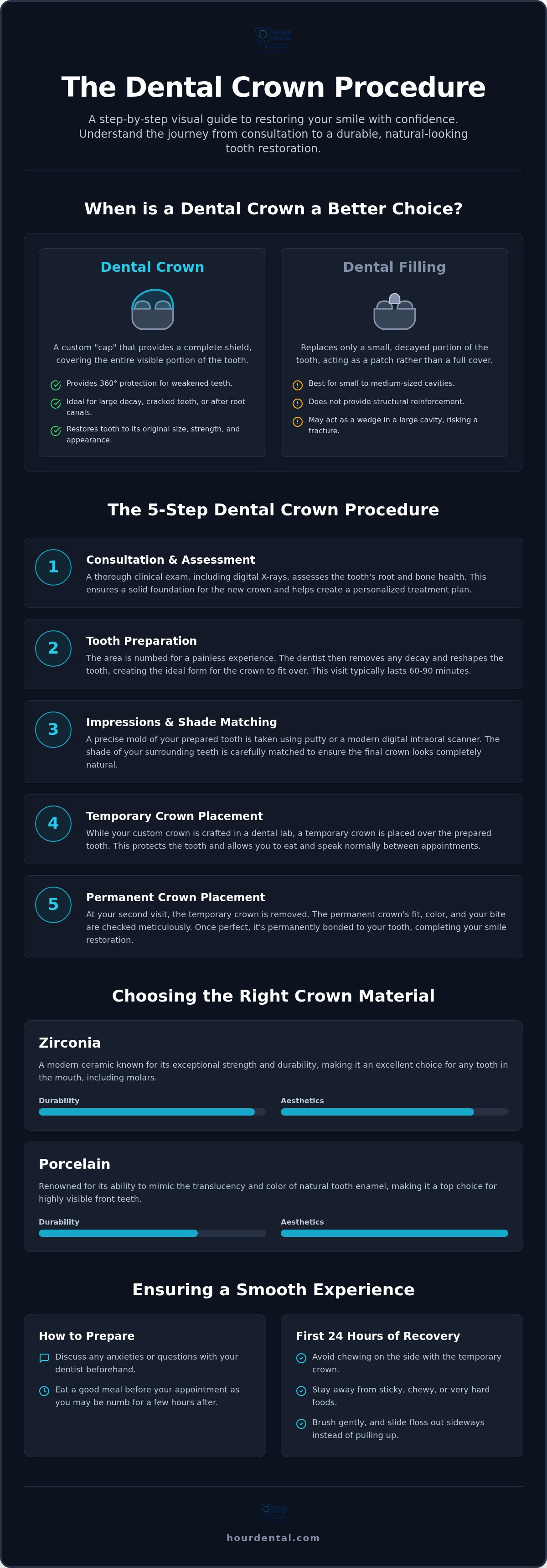
A dental crown is essentially a protective helmet for your tooth. Many of our neighbors in the Dundalk area come to us wondering, what is a dental crown? Simply put, it is a custom-made "cap" that fits over your natural tooth to restore its size, strength, and appearance. While a filling replaces a small portion of a tooth, a crown provides a complete shield. We often recommend this treatment when a tooth has deep decay, a large failing filling, or has recently undergone root canal therapy. It is a reliable way to ensure your smile remains both beautiful and functional for the long haul.
Following the dental crown procedure steps ensures that your tooth remains functional for years. Without this protection, a weakened tooth is at high risk for a catastrophic break that might require a full extraction. By capping the tooth, we maintain your natural bite alignment and prevent your other teeth from shifting out of place. This is a vital part of our mission at Hour Dental to build long-term personal confidence through reliable, community-focused care. We want you to feel secure every time you enjoy a meal or share a laugh with friends.
Crowns vs. Fillings: Why a Simple Filling Isn’t Always Enough
Composite fillings are excellent for small cavities, but they have structural limitations. If a cavity is too large, the remaining tooth walls become thin and prone to snapping under pressure. A crown provides 360-degree protection by encircling the entire visible portion of the tooth. The structural integrity of a tooth is its ability to withstand the intense pressure of daily chewing without cracking or breaking. While a large filling can act like a wedge that splits a tooth over time, a crown holds everything together securely. This comprehensive coverage is why crowns are the preferred choice for teeth that have lost more than half of their original structure.
Emergency Situations Requiring Immediate Crown Assessment
If you are in Baltimore or Dundalk and feel a sharp, sudden pain when you release your bite, you might have a cracked tooth. These situations require urgent attention to save the tooth from further damage. Our emergency dental services are designed to provide same-day assessments for our local community. We focus on stabilizing the area and relieving your discomfort before starting the permanent restorative process. Acting quickly often means the difference between a simple crown and losing the tooth entirely. We are here to provide a safe haven when dental emergencies strike, ensuring you get back to your routine without unnecessary worry.
The Dental Crown Procedure: 5 Essential Steps
Restoring your smile is a journey we take together at our Dundalk office, where we prioritize your comfort as much as the clinical outcome. The process typically requires two visits, ensuring every detail is perfect before the final restoration is bonded in place. During your first appointment, we perform a thorough clinical exam and utilize digital X-rays to assess the underlying health of the tooth. This diagnostic phase allows Dr. Sigdel to map out the dental crown procedure steps tailored specifically to your needs. By understanding the health of the root and surrounding bone, we ensure your new crown has a solid, healthy foundation for years of use.
Step 1: Numbing and Tooth Preparation
We know that many of our neighbors feel a bit of "dental dread," so we use advanced numbing techniques designed for a virtually painless experience. Once you're fully comfortable and relaxed, we begin reshaping the tooth by removing any existing decay or old, failing filling material. This step involves gently thinning the enamel to create space for the new cap to sit flush with your other teeth. Most preparation visits last between 60 and 90 minutes; we encourage you to sit back and relax while we handle the technical work with a gentle touch. Our goal is to make this visit feel like a productive pause in your day rather than a stressful event.
Step 2: Impressions and Creating Your Custom Shade
Precision is vital for a natural-looking result that feels right when you chew. We take highly detailed impressions to capture the unique topography of your bite and the exact dimensions of the prepared tooth. Whether we use traditional putty or modern digital scanners, these molds act as a blueprint for the dental lab. We also spend time color-matching the porcelain to your surrounding natural teeth. By selecting the perfect shade and translucency, we ensure your crown is indistinguishable from the rest of your smile. This personalized attention to detail is what helps our patients regain their long-term personal confidence.
Step 3: The Temporary Crown Phase
While a professional dental lab crafts your permanent porcelain restoration, we place a temporary crown to protect your tooth. This acrylic cap is a vital placeholder that prevents sensitivity and keeps your teeth from shifting out of alignment. Because the temporary is held in place with light adhesive, you'll need to follow a few simple rules for the next week or two. We recommend avoiding sticky foods like taffy or gum, and very hard foods like raw carrots, which could dislodge the temporary. If you ever have questions about your restoration during this phase, you can always reach out to our friendly team for quick guidance.
The fabrication phase usually takes about two weeks, during which expert technicians build your crown layer by layer. Once it arrives back at our office, you'll return for the final seating. We'll check the fit, ensure your bite is perfectly aligned, and then bond the permanent crown into place. This final step completes the transformation, leaving you with a durable, beautiful restoration that functions just like a natural tooth.
Choosing the Right Material: Porcelain vs. Zirconia vs. Metal
Selecting the material for your new restoration is a significant decision that impacts both your appearance and your long-term comfort. This choice is usually made during the initial consultation of the dental crown procedure, where we evaluate the location of the tooth and your specific bite patterns. At Hour Dental, we prioritize materials that offer a blend of durability and a lifelike appearance. We want you to feel confident that your investment will stand the test of time while looking completely natural in your smile.
Understanding the different dental crown procedure steps helps you see why material choice matters so much. For instance, the preparation of the tooth can vary slightly depending on whether we use a thinner porcelain shell or a more robust zirconia cap. Many of our patients seeking affordable dental crowns in Baltimore find that porcelain-based options provide the best value by combining high-end aesthetics with reliable strength. By following these established dental crown procedure steps, we ensure your chosen material is perfectly bonded for a result that feels as good as it looks.
Porcelain and Ceramic Crowns for a Natural Smile
Porcelain is often considered the gold standard for restoring front teeth because of its incredible ability to mimic natural enamel. These ceramic materials are designed to be translucent, allowing light to reflect off them just like your original teeth. For Dundalk residents looking for a "smile makeover," porcelain is the ideal choice to ensure a seamless transition between the crown and surrounding teeth. It's a gentle, biocompatible option that resists staining, helping you maintain a bright, healthy look for many years. We take great pride in selecting a shade that perfectly matches your unique smile.
Zirconia and Metal Alloys for Maximum Durability
When we're restoring back molars that endure the heaviest chewing forces, strength becomes the top priority. Zirconia is an incredibly tough, tooth-colored material that's perfect for patients who struggle with bruxism, or chronic teeth grinding. It provides the wear and tear resistance of metal without the silver or gold color. In some specific cases, gold or metal alloys remain the best choice for hidden teeth because they require the least amount of natural tooth removal. We'll help you weigh these functional needs against your aesthetic goals to find the perfect fit for your smile, ensuring your restoration lasts for a decade or more.
Preparation and Recovery: Ensuring a Smooth Experience
Completing the clinical dental crown procedure steps is a major milestone for your oral health, but the journey to long-term personal confidence continues at home. Success depends on a partnership between our Dundalk team and your daily care routine. We want you to feel fully prepared for the 24 hours following your appointment so you can relax and enjoy the results of your restoration. Most patients find that with a few simple precautions, the transition from a damaged tooth to a beautiful porcelain crown is remarkably easy and stress-free.
Before your first visit, we recommend having your medical history ready and a list of any questions you might have about the process. We believe in mutual respect and open communication; knowing your concerns helps us tailor our gentle touch to your specific needs. If you're feeling anxious, don't hesitate to mention it. We've built our reputation as a community fixture by turning clinical visits into comfortable, neighborly experiences for families across Baltimore.
Managing Sensitivity and Discomfort Post-Procedure
It's perfectly normal to experience some mild sensitivity to hot or cold temperatures immediately after we shape the tooth or place the final crown. This usually happens because the tooth's nerve is adjusting to the new restoration. You can manage this with standard over-the-counter pain relievers or by using a desensitizing toothpaste for a few days. Gum tenderness is common and typically lasts for 2 to 3 days as the soft tissues adjust to the new restoration. If you notice a sharp pain when biting down or if your discomfort seems to be increasing after the third day, please reach out to us for a quick adjustment.
Aftercare Tips for a Crown That Lasts Decades
A high-quality porcelain crown can last for many years if you treat it with the same care as your natural teeth. While the crown itself cannot decay, the tooth structure underneath is still vulnerable at the gumline. Maintaining routine dental check-ups in Dundalk allows us to monitor the margins of your crown and ensure everything remains sealed and secure. To protect your investment, follow these daily habits:
- Floss carefully: Instead of pulling the floss upward, which might snag the edge of a temporary crown, slide it out sideways through the gap.
- Watch your diet: Avoid biting down on ice, hard candies, or non-food items like pen caps to prevent chipping the porcelain.
- Keep it clean: Brush twice daily with a soft-bristled brush to keep the surrounding gums healthy and vibrant.
If you're ready to restore your smile with a team that treats you like family, schedule your consultation with Dr. Sigdel today to begin your journey toward lasting confidence.
Affordable Restorative Care: Why Choose Hour Dental in Dundalk?
Dr. Arundati Kharel Sigdel, DDS, leads our practice with a humble yet confident approach that prioritizes mutual respect in every interaction. Located conveniently in the Henger utca / North Point Blvd area, Hour Dental has become a reliable community fixture for those seeking a safe haven for their dental needs. We know that the prospect of restorative work can be daunting for many patients. We've cultivated a relaxed and personalized experience that alleviates anxiety from the moment you walk through our doors. Your comfort matters. Our commitment to the Dundalk community is rooted in the belief that everyone deserves a functional, beautiful smile without sacrificing their peace of mind or their family's financial stability.
Accessibility is a cornerstone of our practice. We specialize in providing high-quality porcelain crowns that offer natural-looking results while remaining conscious of your budget. Our team is highly experienced in assisting Baltimore residents with insurance navigation and exploring available options to ensure that essential restorative care is never out of reach. By combining clinical authority with a welcoming, neighborly vibe, we ensure that your journey through the dental crown procedure steps is as smooth as possible. We don't just fix teeth; we focus on the long-term personal confidence that comes from a healthy, restored smile. We are here to help.
A Neighborly Approach to Family Dentistry
Our practice is proud to serve multi-generational families from Essex, Rosedale, and Highlandtown, building enduring relationships that span decades. We view ourselves as problem-solvers who provide immediate solutions for urgent needs, such as cracked or broken teeth, while always keeping your long-term wellbeing in mind. Whether you are a new patient or have been visiting us for years, you can expect a nurturing environment where your comfort is our primary mission. This trust-based approach allows us to provide a level of care that goes far beyond a single procedure, creating a legacy of Healthy Smiles within our local community.
Schedule Your Consultation Today
Taking the first step toward a restored smile is easy with our streamlined booking process. When you arrive for your first restorative consultation at Hour Dental, please bring your identification, insurance information, and a list of any current medications or health history. This helps Dr. Sigdel personalize your care plan from the very beginning. We are ready to guide you through every stage of the process with a gentle touch and professional expertise. Your new smile is waiting. Schedule your dental crown consultation at Hour Dental today!
Your Path to Long-Term Personal Confidence
Restoring a damaged tooth doesn't have to be a source of stress or uncertainty. By understanding the clear dental crown procedure steps, you can approach your treatment with the peace of mind that comes from being well-informed. We've explored how modern materials like porcelain and zirconia provide a lifelike appearance while ensuring your bite remains strong for years to come. Whether you're dealing with a sudden crack that requires an emergency assessment or you're planning a restorative makeover, our team is here to guide you with a gentle touch.
Led by Dr. Arundati Kharel Sigdel, DDS, our Dundalk practice is a safe haven for families seeking high-quality, affordable care. We offer same-day emergency appointments for those urgent moments when you need immediate relief and professional expertise. You deserve a smile that reflects your best self and a dental home that treats you like a neighbor. It's time to reclaim your comfort and your confidence with a team that truly cares about your long-term wellbeing and your family's budget.
Restore your smile with a gentle touch, book your consultation at Hour Dental!
Frequently Asked Questions
How many appointments are needed for a dental crown procedure?
A standard dental crown procedure typically requires two separate appointments scheduled about two weeks apart. During the first visit, we prepare the tooth and take impressions, while the second visit focuses on the final seating and bonding of your custom restoration. This timeline allows the dental lab enough time to craft a porcelain or zirconia cap that matches your smile perfectly.
Is the dental crown procedure painful?
You shouldn't feel any pain during the actual procedure because we use advanced local numbing techniques to ensure your comfort. Our Dundalk team is committed to a gentle touch, especially for patients who might feel anxious about dental work. While you may experience some mild sensitivity or gum tenderness for a few days afterward, this is easily managed with over-the-counter solutions.
How long does a permanent dental crown last?
A high-quality permanent crown can last between 5 and 15 years, though many restorations last even longer with excellent home care. The lifespan depends heavily on the material chosen and your daily oral hygiene habits. Regular check-ups in our Baltimore area office allow us to monitor the integrity of the crown and ensure the underlying tooth remains healthy for the long term.
What should I do if my temporary crown falls off?
If your temporary crown comes loose, please call our office immediately to schedule a quick visit for re-cementing. The temporary cap serves a vital role in the dental crown procedure steps by protecting the prepared tooth and preventing it from shifting. If you're unable to come in right away, you can use a small dab of temporary dental adhesive from a local pharmacy as a short-term fix.
How much does a dental crown cost in the Baltimore area?
The cost of a dental crown in the Baltimore area varies depending on the specific material used and your individual insurance coverage. At Hour Dental, we focus on providing affordable restorative care and work closely with you to maximize your benefits. We'll provide a clear, personalized estimate during your consultation so you can plan for your family's budget without any surprises.
Can I get a crown on the same day as my root canal?
Yes, we can often begin the crown preparation immediately after your root canal treatment is completed to protect the weakened tooth right away. While the permanent crown won't be ready until it returns from the lab, placing a temporary cap ensures the tooth is stabilized. This combined approach saves you time and helps prevent the tooth from fracturing before the final restoration is seated.
What is the difference between a dental cap and a dental crown?
There is no functional difference between a dental cap and a dental crown; both terms refer to the same restorative treatment. "Cap" is a common term used by many of our neighbors, while "crown" is the clinical term we use to describe the protective cover. Regardless of the name, the goal is to restore the tooth's shape, strength, and appearance for long-term personal confidence.
How do I care for my crown to prevent cavities underneath it?
You can prevent cavities underneath your crown by maintaining a diligent routine of brushing twice a day and flossing every evening. It is vital to focus on the gumline where the crown meets your natural tooth, as this is where plaque can accumulate. Routine professional cleanings at our Dundalk office are also essential for removing debris that home brushing might miss.


