 how-to
How to Transfer Dental Records: Step-by-Step Guide
Table of Contents
- Why You Might Need to Transfer Dental Records
- Understanding the Dental Records Release Form Template
- Step-by-Step Process for Transferring Your Records
- How Long Does It Take to Transfer Dental Records
- Can a Dentist Withhold Records for Non-Payment
- Common Mistakes to Avoid When Transferring Records
- What Information Is Included in Your Dental Records
- Making the Transition to Your New Dental Home
- Frequently Asked Questions
Last Updated: September 25, 2026
Why You Might Need to Transfer Dental Records
Moving to a new dentist happens for many reasons. Maybe you relocated to a different neighborhood in Baltimore. Perhaps your current provider doesn't offer a service you need. Or you're simply looking for a practice that feels like a better fit for your family's dental care.
Whatever the reason, transferring dental records is a straightforward process. Your records belong to you, and you have the right to request them at any time. These documents contain important information about your dental history, past treatments, and any ongoing health concerns. A new dentist needs this information to provide you with the best possible care.
The good news: this process typically takes just a few simple steps. Most dental offices handle record transfers regularly and can complete them quickly. Understanding how the process works helps you avoid delays and ensures your new dentist has everything needed to continue your care seamlessly.
Understanding the Dental Records Release Form Template
A dental records release form is a document that authorizes your current dentist to share your records with another provider. This form protects your privacy while allowing the transfer to happen legally. Most dental practices have their own version of this form, though they all serve the same purpose.
The form typically includes basic information: your name, date of birth, and the name of your new dentist or dental practice. You'll also need to specify which records you want transferred. Some people request everything, while others ask for specific items like X-rays or treatment notes.
You don't need a special template to request your records. Your current dentist's office can provide their standard release form. If they don't have one ready, you can ask them to prepare a simple written authorization. Many dental practices in Baltimore now handle this digitally, making the process even faster.
The form should clearly state:
- Your full legal name and date of birth
- Your current dentist's practice name
- Your new dentist's name and practice location
- What records you're requesting
- Your signature and date
- Permission for electronic or physical transfer
Step-by-Step Process for Transferring Your Records
Transferring dental records involves coordinating between your old and new dental offices. The process is simple when you follow these steps in order.
Step 1: Request Your Records from Your Current Dentist
Contact your current dental office and let them know you're switching providers. Call, email, or visit in person to make your request. Be clear and specific: "I'd like to request my complete dental records to be transferred to [New Dentist Name] at [New Practice Address]."
The office staff will likely ask for your new dentist's contact information. Provide the full name of the practice and the address. Some offices may also ask for a phone number or fax number. Having this information ready speeds up the process.
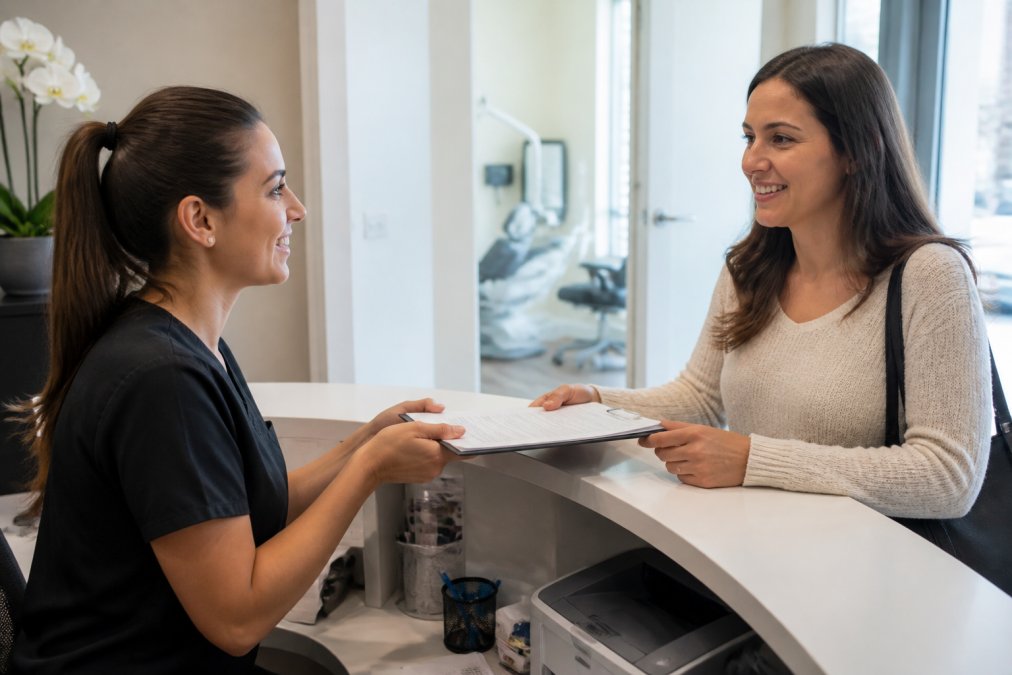
Don't assume the offices will connect on their own. Taking an active role ensures the transfer actually happens. Ask your current dentist's office for a timeline: "When can I expect these records to be sent?" Most practices respond within 3 to 5 business days.
Step 2: Complete the Release Form
Your current dentist's office will provide a release form. Read it carefully to make sure all the information is correct. Check that your name, date of birth, and your new dentist's information are accurate.
Sign and date the form. Some offices may ask you to initial specific sections. If they offer digital signing, that's usually faster than printing and mailing. Once signed, return the form to the office. Keep a copy for your records.
If your current office doesn't have a standard form, you can write a simple letter. State your name, date of birth, and request for records to be sent to your new dentist. Include your signature and the date. This informal approach works just fine.
Step 3: Provide Your New Dentist's Information
Your new dental practice needs to know records are coming. Contact your new dentist's office and let them know you've requested your records. Provide the name and address of your previous dental office.
Ask your new dentist's office if they need anything else from you. Some practices have a preferred method for receiving records, electronic transfer, fax, or physical copies. Knowing this helps your old office send records in the format your new dentist prefers.
This step is especially important if you're switching to a practice like Hour Dental in Baltimore. Our team can guide you through the process and let you know exactly what we need to get you set up properly.
Step 4: Follow Up on the Transfer
After a week, check in with both offices. Ask your current dentist if the records have been sent. Contact your new dentist to confirm they've received them. This simple follow-up prevents records from getting lost in the shuffle.
If records haven't arrived after 10 business days, contact your old office again. Ask them to resend or confirm the transfer was completed. Sometimes emails get missed or records are sent to the wrong fax number. A quick call usually resolves the issue.
Keep documentation of your requests. Write down the dates you called, who you spoke with, and what they said. This record helps if there are any delays or mix-ups.
How Long Does It Take to Transfer Dental Records
Most dental offices complete record transfers within 5 to 10 business days. However, the exact timeline depends on how quickly both practices respond. Some offices are faster, especially if they use electronic systems.
Several factors affect speed:
- Whether the transfer happens electronically or by mail
- How busy the offices are during that time
- Whether your old office has all records readily available
- How quickly your new office processes incoming records
If you need records urgently, for example, before a scheduled appointment, let both offices know. Many practices will prioritize rush requests. Electronic transfers are typically faster than physical copies sent by mail.
Plan ahead when possible. If you're scheduling your first appointment at a new practice, request your records at the same time. This gives everyone time to complete the transfer before you arrive.
Can a Dentist Withhold Records for Non-Payment
A dentist cannot permanently withhold your dental records just because you owe money. However, they may delay the transfer temporarily if you have an unpaid balance. This is a legal gray area that varies by situation.
Here's what you should know: your records are your property. You have the right to access them. A dentist cannot use your records as use to force payment of a bill.
That said, if there's a legitimate dispute about payment or if you owe a significant amount, some offices may take longer to process your request. The best approach is to settle any outstanding balance before requesting records. This removes any potential complications and ensures a smooth transfer.
If you believe a dentist is wrongfully withholding your records, contact your state dental board. They can investigate and take action if necessary. Most dentists understand their legal obligations and cooperate with record transfer requests promptly.
Common Mistakes to Avoid When Transferring Records
Understanding what not to do helps prevent delays and frustration.
Waiting too long to request records. Don't assume you can get records months after leaving a practice. Offices purge old files periodically. Request records as soon as you know you're switching dentists.
Not providing complete information. Make sure you give your old office the correct name and address of your new dentist. A small error in spelling or address can cause the transfer to fail.
Assuming offices will contact each other. Don't rely on the two practices to communicate on their own.
What Information Is Included in Your Dental Records
Your dental records contain a complete history of your oral health. Understanding what's included helps you know what to expect during the transfer.
Making the Transition to Your New Dental Home
Switching dental practices is a fresh start. You have the opportunity to choose a dentist who truly meets your needs and makes you feel comfortable.
Frequently Asked Questions
Do I need to sign a release form to transfer my dental records?
Yes. Your current dentist is required to have your written authorization before releasing your records. A dental records release form gives them legal permission to send your information to your new provider. Your signature confirms you understand who will receive your records and why. This protects your privacy and ensures your records go to the right place.
How long does it take to transfer dental records to a new dentist?
Most dental offices can transfer records within 5 to 10 business days after receiving your signed release form. Some practices may complete the transfer faster if you request it in person. Electronic transfer between offices is typically quicker than mailed records. Contact your new dentist's office to confirm they received your records before your first appointment, especially if you need treatment soon.
Can a dentist withhold my records if I have an unpaid balance?
No. Your dental records belong to you, not the practice. While a dentist may pursue payment for services rendered, they cannot use your records as leverage. If a dentist refuses to release your records due to non-payment, you can contact your state dental board.
Is there a fee to transfer dental records?
Some dental offices charge a small administrative fee to copy and send your records, though many do not. Fees vary by practice and typically range from minimal to modest amounts if charged at all. Ask your current dentist about any costs before requesting the transfer. If a fee seems unreasonable, check your state's dental board guidelines or ask your new dentist if they can request the records directly.